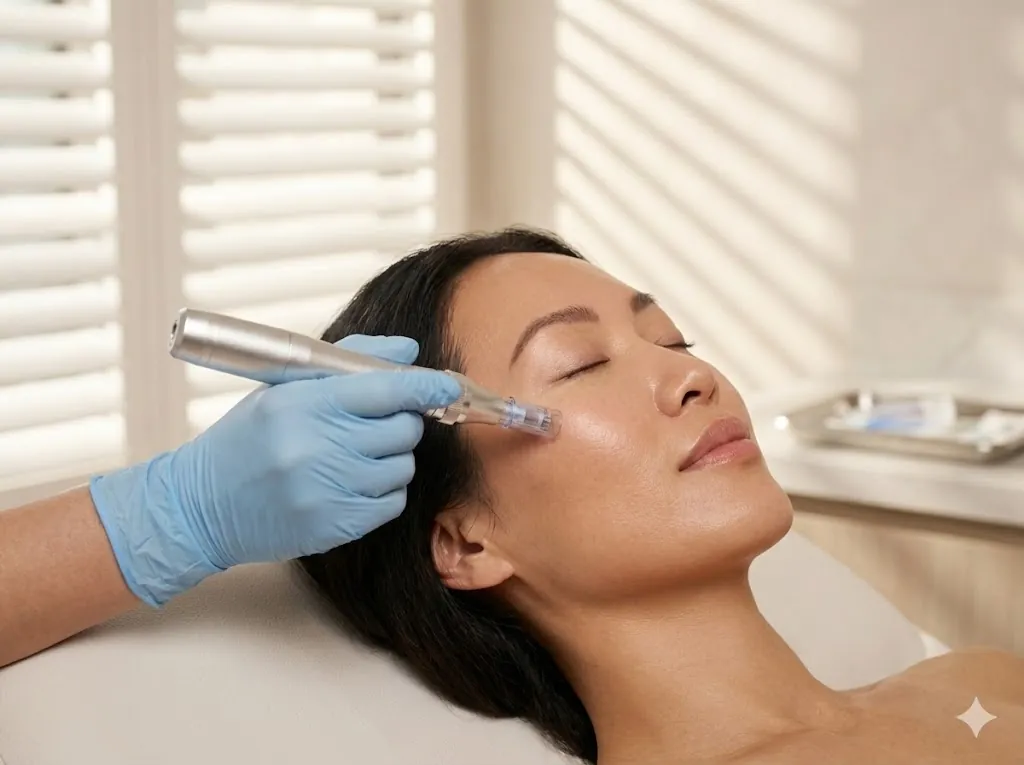
Microneedling can reduce the appearance of certain acne scars by triggering collagen renewal in the skin, and it is offered as part of acne scar care across Metro Vancouver, including at a physician-led skin clinic in Burnaby, BC. It works best on shallow rolling or boxcar scars; a physician assessment determines whether it or another option, such as laser resurfacing, suits a particular scar pattern.
Microneedling improves many atrophic acne scars by creating controlled micro-injuries that prompt the skin to build new collagen and elastin while loosening the fibrous bands that pull scars downward. Rolling and boxcar scars tend to respond better than deep ice-pick scars, results build over a series of sessions, and a physician assessment decides whether it suits a given scar type and skin tone.
Why Do Acne Scars Form, and Why Are They Hard to Treat?
Acne scars represent one of the most emotionally and clinically challenging concerns patients bring to Skin Art MD in Burnaby. Unlike post-inflammatory hyperpigmentation — which is pigment-based and generally resolves with time — true acne scars involve structural damage to the dermis.
Collagen fibers are disrupted, and the altered skin architecture tends to persist unless targeted treatment intervenes.
This is why microneedling, also known as collagen induction therapy or skin needling, has a substantial body of published evidence for acne scar revision. Learn more about Microneedling and how it is applied across scar types and skin tones at our clinic.
Before deciding whether to proceed, it is worth understanding how this treatment works at the cellular level — and what the evidence does and does not show.
What Happens in the Skin During Microneedling?
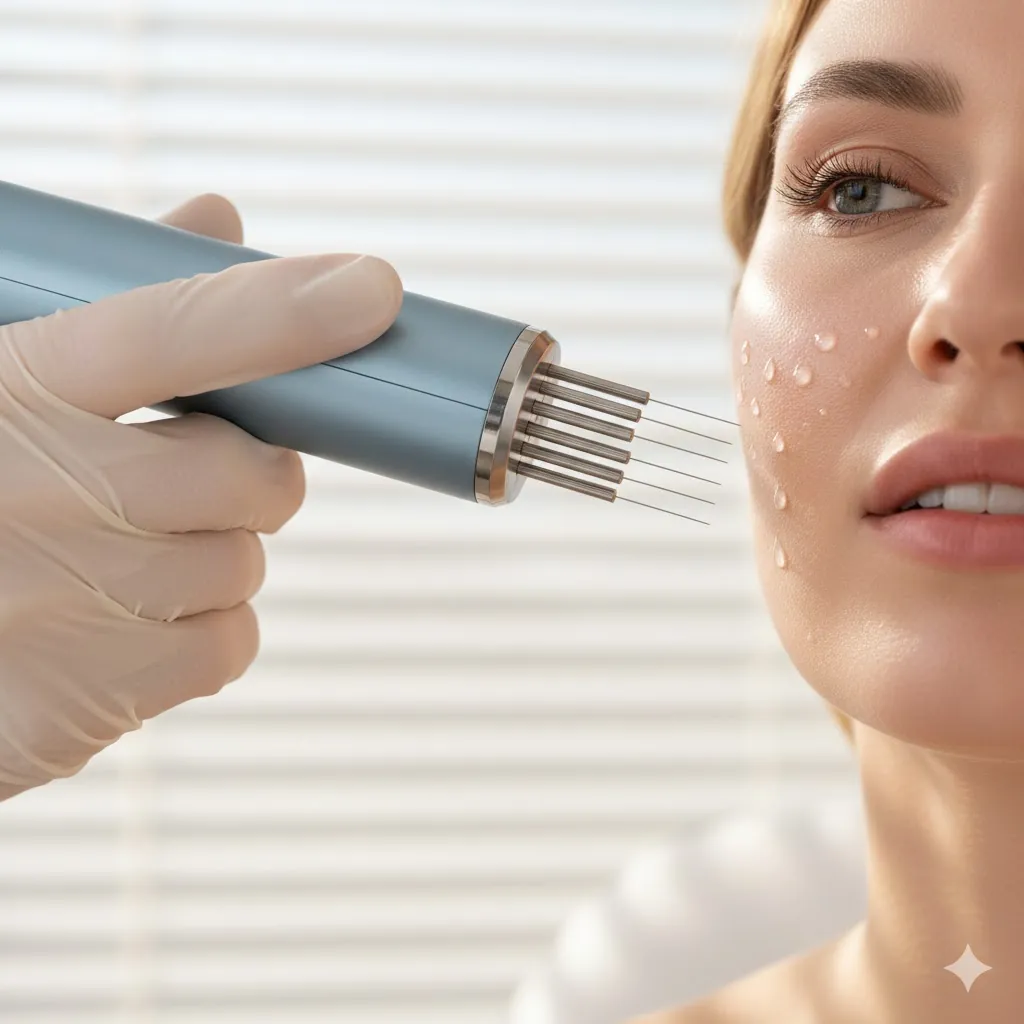
Microneedling operates on a fundamental principle of controlled wound healing. When a microneedling device creates thousands of micro-channels in the skin — typically ranging from 0.5 mm to 2.5 mm in depth depending on the indication — it triggers a cascade of biological events that ultimately remodel the dermis.
Phase 1: Hemostasis and Inflammation (Days 1–3)
Immediately following micro-injury, platelets aggregate and release growth factors including platelet-derived growth factor (PDGF) and transforming growth factor-beta (TGF-β).
These signals recruit neutrophils and macrophages to the wound site, initiating the inflammatory phase. This is not incidental to the outcome — it is the mechanism.
The growth factor release, particularly TGF-β1 and TGF-β3, begins the signaling cascade that drives fibroblast activation.
Phase 2: Proliferation and Collagen Induction (Days 4–21)
Activated fibroblasts migrate into the wound zone and begin synthesizing new collagen — primarily Type I and Type III collagen, the structural proteins responsible for dermal integrity and scar filling.
Critically, microneedling appears to upregulate the TGF-β3 isoform, which is associated with scarless wound healing, over TGF-β1, which tends to produce fibrotic tissue. This isoform balance is one reason collagen induction therapy tends to produce organized, functional collagen rather than hypertrophic scar tissue.
Concurrently, keratinocyte migration resurfaces the micro-channels, and new elastin fibers begin forming alongside the collagen matrix. Angiogenesis — the formation of new capillaries — improves local perfusion, supporting the regenerative process.
Phase 3: Remodeling (Weeks 3–12 and Beyond)
Collagen remodeling continues for months after the initial wound healing. Type III collagen is gradually replaced by the more structurally robust Type I collagen.
For acne scars specifically, the tethered fibrous bands that pull the scar base downward are mechanically disrupted by the needles, while new dermal volume fills the defect from below. This dual mechanism — physical disruption plus biological regeneration — is why microneedling addresses atrophic acne scars more effectively than purely surface-level treatments.
What Does the Clinical Evidence Show?
Published studies report improvement in atrophic acne scar depth and texture after a series of microneedling sessions, with biopsy-confirmed increases in collagen and elastin, although results vary by scar type.
Fabbrocini et al., published in the Journal of Cutaneous and Aesthetic Surgery, conducted a prospective study in patients with post-acne atrophic scars. They documented statistically significant improvement in scar depth and surface texture following a series of microneedling sessions, with histological confirmation of increased collagen and elastin in treated areas. Participants with Fitzpatrick skin types IV–VI — a population that must be approached cautiously with ablative lasers due to dyspigmentation risk — showed favorable outcomes without significant post-inflammatory hyperpigmentation.
Aust et al., in Plastic and Reconstructive Surgery, published early biopsy-confirmed data showing that microneedling induced substantial increases in collagen and elastin deposition compared to baseline. The study used immunohistochemical staining to confirm the structural nature of improvement — not merely surface-level change, but genuine dermal remodeling at depth.
Osman et al., writing in the Journal of Cosmetic Dermatology, examined split-face comparisons between microneedling alone and microneedling combined with topical growth factors. Their data reinforced both the standalone efficacy of collagen induction therapy and its synergistic potential when paired with bioactive adjuvants — a finding that informs combination protocols at Skin Art MD when addressing complex scar presentations.
Dogra and colleagues, writing in Dermatologic Surgery, supported microneedling's use across a range of acne scar morphologies, including rolling, boxcar, and ice-pick subtypes — though results vary by scar type, and ice-pick scars in particular may require adjunctive modalities.
These studies collectively demonstrate that microneedling stimulates genuine structural repair in the dermis, works across a broad range of skin types, and achieves this through well-characterized cellular mechanisms. Medical-grade microneedling devices are used within regulated practice settings.
How Does Microneedling Compare With Other Acne Scar Treatments?
Microneedling relies on non-thermal micro-injury and is used across skin types I–VI, while fractional CO₂ laser, RF microneedling, medium-depth peels and subcision differ in mechanism, typical downtime and the scar types they address.
| Modality | Mechanism | Typical downtime | Skin types | Typical scar types |
|---|---|---|---|---|
| Microneedling | Controlled micro-injury → collagen induction | 24–72 hrs | All (I–VI) | Rolling, boxcar, superficial atrophic |
| Fractional CO₂ Laser | Ablative thermal injury → remodeling | 5–10 days | Generally I–III | Boxcar, rolling (deeper remodeling) |
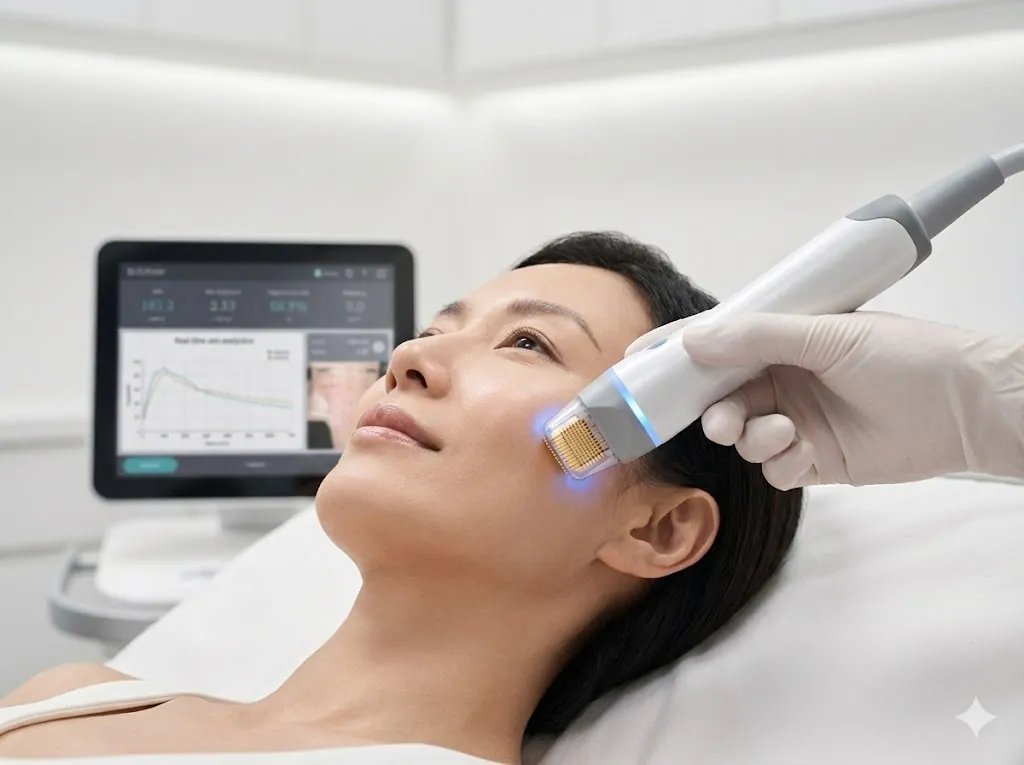
| Fractional RF Microneedling | Thermal RF via insulated needles | 3–5 days | All (I–VI) | Rolling, boxcar, laxity |
| Medium-Depth Chemical Peels | Controlled chemical exfoliation | 7–14 days | Generally I–IV | Superficial, early atrophic |
| Subcision + Filler | Mechanical band release + volume fill | 3–7 days | All | Deep rolling, tethered scars |
Each modality has clinical contexts where it fits. At a consultation, scar morphology, skin type and treatment goals are assessed by a physician before any pathway is chosen.
What Does a Physician Assess Before Microneedling for Acne Scars?
A physician looks at scar type, skin type, whether acne is still active and the person's medical history, because these factors shape whether microneedling is appropriate and whether it should be combined with other techniques.
Not every patient presenting with acne scars will respond identically to microneedling, so candidate selection is a critical step. At Skin Art MD, Dr. Sharon Fong, a physician at the clinic, evaluates each patient individually before any protocol is discussed.
Scar Morphology Assessment
- Rolling scars: Gradual sloped depressions — generally well suited to microneedling alone; the needle depth and fibrous band disruption are well-matched to this morphology.
- Boxcar scars: Sharper-edged depressions — respond well to microneedling, particularly when combined with energy-based adjuvants in more resistant cases.
- Ice-pick scars: Deep narrow channels extending into the deep dermis — microneedling can improve surface texture and superficial components but may require adjunctive techniques (TCA cross, subcision).
- Hypertrophic or keloid scars: Raised scar tissue — microneedling is generally contraindicated for active keloids; physician assessment required before any procedure.
Skin Type Considerations
One of microneedling's significant advantages over ablative lasers is its tolerability across all Fitzpatrick skin types, including types IV, V, and VI. Because it creates no thermal injury, it carries substantially lower risk of post-inflammatory hyperpigmentation in darker skin tones — a critical consideration for the diverse patient population across Burnaby and Greater Vancouver.
Active Acne Status
Microneedling should not be performed over active acne lesions. Patients with ongoing breakouts are typically counseled to stabilize their acne first — often through medical management — before beginning scar revision. Performing skin needling over inflamed skin risks spreading bacteria and worsening the condition.
Additional Candidacy Factors
- Oral prescription acne medication: Most protocols recommend a waiting period after a course of oral prescription acne medication before starting microneedling, as these medications affect wound healing. The interval should be confirmed with the treating physician.
- Platelet or clotting disorders: May affect candidacy due to the hemostatic component of the healing process.
- Pregnancy and nursing: Deferred until the postpartum period is complete.
- Active skin infection: Any active bacterial, viral, or fungal infection in the treatment zone is a contraindication.
What Happens During a Microneedling Session, Step by Step?
A session involves numbing cream for 30–45 minutes and about 20–30 minutes of treatment for the full face, followed by a few days of redness and mild flaking while collagen remodeling continues over the following weeks.
Before Your Session A topical numbing cream — typically lidocaine-based — is applied to the treatment area 30–45 minutes before the procedure. This significantly reduces discomfort and allows treatment at clinically effective depths.
During the Procedure A medical-grade microneedling device is passed over the treatment area in multiple directions. The physician or trained provider adjusts needle depth based on the specific region being treated — deeper over thicker-skinned areas like the cheeks, shallower near the periorbital zone. The full face typically takes 20–30 minutes. A sterile hyaluronic acid serum or growth factor solution is often applied simultaneously, taking advantage of the open micro-channels for enhanced uptake.
Immediately After Skin appears red — similar to a moderate sunburn. Some pinpoint bleeding is normal and resolves quickly. Mild swelling may be present for up to 24 hours.
Recovery Timeline
- Days 1–2: Redness and mild sensitivity; mineral SPF is mandatory outdoors
- Days 2–4: Mild dryness or flaking as skin resurfaces
- Days 5–7: Skin returns to normal appearance in most patients; makeup can typically be resumed after 24–48 hours
- Weeks 4–12: Progressive improvement in scar texture and depth as collagen remodeling continues
How Many Sessions? Most patients require 3–6 sessions spaced 4–6 weeks apart for significant acne scar improvement. Maintenance sessions may be recommended annually. Visible change typically builds through the middle of a series as collagen deposition accumulates.
What Can't Microneedling Do, and When Is It Not Performed?
Microneedling may only partly improve deep ice-pick and deep boxcar scars, its results build over months rather than days, and it is not performed over active infection, open acne lesions or skin with a history of keloids.
Realistic expectations are essential:
- Deep ice-pick scars and very deep boxcar scars may achieve partial but not complete improvement with microneedling alone
- Results accumulate over months, not days; immediate post-procedure appearance is not predictive of final outcome
- Ongoing maintenance is often advisable as natural aging processes continue
Contraindications include:
- Active infection (bacterial, viral, or fungal) in the treatment zone
- Active inflammatory acne with open lesions
- History of keloidal scarring
- Blood-thinning medications (physician assessment required)
- Recent use of oral prescription acne medication (physician assessment required)
- Immunosuppression (physician assessment required)
How Does Skin Art MD Approach Acne Scar Treatment?
At Skin Art MD in Burnaby, we approach acne scar revision as a precision medicine problem, not a one-size-fits-all service.
Physician-Led Care Every treatment protocol is designed and overseen by a physician, so the scar assessment is grounded in medical judgment — not just a menu selection.
Medical-Grade Technology We use medical-grade microneedling devices — not the consumer-grade pens widely available outside clinical settings. Clinical parameters including needle depth, speed, and pass technique are calibrated to the individual's anatomy and scar morphology.
Personalized Treatment Plans No two scar presentations are identical. We assess morphology, distribution, skin type, and lifestyle factors before recommending a course of treatment. Combination approaches — pairing microneedling with PRP or growth factors — are available when the clinical picture warrants it.
Bilingual Staff Our clinic serves a diverse community across Greater Vancouver. Consultations are available in both English and Mandarin Chinese (普通话 / 國語), so language is not a barrier to understanding the options and making an informed decision.
Frequently Asked Questions
How long does it take to see results from microneedling for acne scars?
Most patients begin noticing textural improvement 4–6 weeks after their first session as initial collagen synthesis peaks. Significant scar filling and surface smoothing typically becomes apparent after sessions three and four. Full collagen remodeling continues for up to 12 months following a completed series.
Does microneedling hurt?
With topical anesthetic applied prior to the procedure, most patients describe the sensation as mild pressure or warmth. Comfort varies by treatment depth and individual sensitivity, which is why our team customizes numbing protocols for each patient.
Is microneedling safe for darker skin tones?
This is one of microneedling's key clinical advantages over ablative laser modalities. Because there is no thermal energy involved, the risk of post-inflammatory hyperpigmentation is substantially lower across Fitzpatrick types IV–VI compared to CO₂ laser or certain chemical peels, which matters for the diverse population across Burnaby and Greater Vancouver. A physician assessment still decides suitability for each person.
How many sessions will I need?
For acne scars, most patients benefit from 4–6 sessions spaced 4–6 weeks apart. The exact protocol depends on scar severity, morphology, and individual healing response. A physician assessment at Skin Art MD helps determine the appropriate plan.
Can microneedling be combined with other treatments?
Yes. Skin needling synergizes well with platelet-rich plasma (PRP), topical growth factors, and hyaluronic acid serums. Combination protocols are designed on a case-by-case basis during the consultation.
What is the downtime after microneedling?
Most patients return to regular activities within 24–48 hours. Skin will appear red or pink for 1–3 days, and mild flaking may occur as new skin surfaces. SPF protection is mandatory during the healing phase.
What Is the First Step?
The first step is a physician assessment of scar type, skin tone and goals, because these determine whether microneedling is appropriate and how a plan would be structured.
The evidence supporting microneedling — from its cellular mechanism through to clinical outcomes across skin types — is substantial, and medical-grade device technology continues to improve the precision and tolerability of treatment.
Understanding the specific scar types, skin tone, and treatment goals allows our team to recommend a protocol suited to the individual presentation. Consultations at Skin Art MD in Burnaby are available in English and Chinese — book a consultation.
This article is for educational purposes only and does not constitute medical advice. Please consult with a qualified healthcare professional before undergoing any treatment.