

PRP Therapy in Burnaby (Platelet-Rich Plasma)
A treatment made from your own blood, for skin and scalp
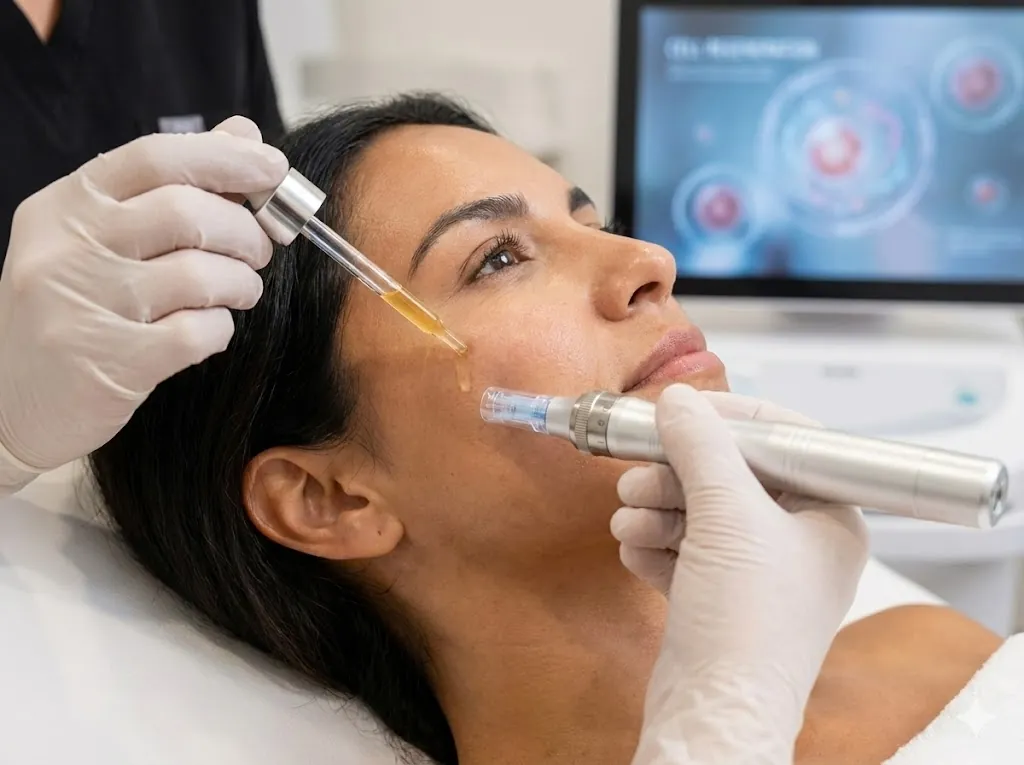
PRP, sometimes called the vampire facial, uses a concentration of platelets from your own blood, applied by injection or microneedling. A physician assessment decides whether it suits you.
- 30-60
- Mins Typical Session
- 1-3 days
- Typical Redness or Swelling
- 3-6 mo
- For Gradual Change to Develop
- 30-60
- Mins Typical Session
- 1-3 days
- Typical Redness or Swelling
- 3-6 mo
- For Gradual Change to Develop
What Is PRP Platelet-Rich Plasma?
PRP stands for platelet-rich plasma. A small sample of your own blood is spun in a centrifuge to concentrate the platelets, which carry growth factors, and the PRP is then applied to the skin or scalp by injection or microneedling. At Skin Art MD in Burnaby, a physician assessment decides suitability.
PRP uses components of your own blood and is intended to support collagen production and tissue repair. Effects develop gradually and vary by person. Hair-focused PRP is described on our PRP hair page.
Collagen Stimulation
Intended to support collagen and elastin production over time, for skin that looks smoother and firmer.
Skin and Scalp Applications
PRP can be applied to the face, neck and other areas, and to the scalp in a hair-focused protocol.
Autologous
Because PRP is made from your own blood, the risk of allergic reaction to the material is low. Injection-related effects such as bruising can still occur.
How Does PRP Work?
The procedure uses sterile technique and is performed in the clinic.
Collection
A small amount of blood is drawn from your arm, similar to a routine blood test.
Separation
The blood is spun in a specialized centrifuge to separate the plasma and concentrate the platelets.
Activation
The PRP is prepared, with platelets and their growth factors concentrated.
Delivery
PRP is injected or applied via microneedling (e.g., Sylfirm X) into the target area.
Who Is PRP Considered For?
A physician assessment decides whether PRP suits you.
Often Discussed For People Who
- +Are interested in skin rejuvenation using their own blood components
- +Those wanting to improve skin texture and restore glow
- +People looking to stimulate collagen production
- +Want to support tissue repair after other treatments, as advised by their physician
- +Individuals desiring a healthy, youthful appearance
May Not Be Suitable If You
- –Pregnant or breastfeeding individuals
- –People with active skin infections
- –Have a platelet or clotting disorder, or take blood thinners (tell your physician; do not stop prescribed medication on your own)
- –Have active cancer, recent chemotherapy or another serious medical condition (a physician will advise)
- –Have an autoimmune condition that affects the skin or healing (assessed case by case)
- –Need a predictable outcome: response to PRP varies from person to person
Sterile Protocols
Handling blood products requires strict sterile protocols, and safety is the priority.
Physician-Led Safety
Blood is handled using sterile technique under physician oversight to reduce infection risk.
Combination With Microneedling
PRP can be applied with microneedling, including Sylfirm X RF microneedling, depending on your plan.
Skin and Hair Protocols
Separate protocols exist for facial rejuvenation and for scalp (see our PRP hair page).
Comfort
Numbing cream is used where appropriate so the treatment is comfortable.
Which Areas Can PRP Treat?
PRP can be used on delicate areas that some devices do not suit. Your physician will advise which are appropriate.
Under Eyes
Under-eye crepey skin and fine lines.
Scalp
Discussed in a hair-focused protocol, see our PRP hair page.
Full Face
Overall texture, glow and fine lines.
Neck & Décolletage
Neck lines and sun-related skin changes.
Acne Scars
Supports skin healing in the area; acne scarring is assessed by a physician first.
Hands
Skin quality on the back of the hands.
What Happens at a PRP Visit?
A physician-led procedure with sterile technique. A visit typically takes 30-60 minutes, including the blood draw, preparation and treatment, with numbing cream where appropriate.
Pre-Treatment
Tell your physician about blood thinners and other medications before treatment
Stay well-hydrated before your appointment
Inform your doctor about any medications or health conditions
Arrive with clean skin in the treatment area
Avoid caffeine on the day of treatment
During Treatment
Blood Collection
A small amount of blood is drawn from your arm, similar to a routine blood test.
PRP Separation
The blood is spun in a specialized centrifuge to separate the plasma and concentrate the platelets.
PRP Preparation
The concentrated PRP is prepared, containing platelets and growth factors.
Application
PRP is injected or applied via microneedling into the target area.
Post-Treatment
Avoid touching or rubbing the treated area for 24 hours
Stay out of direct sunlight and use SPF protection
Avoid strenuous exercise for 24-48 hours
Keep the area clean and moisturized; avoid scrubs and exfoliating products for about 24 hours
Effects develop gradually over 3-6 months, and maintenance is planned with your physician. Contact us about spreading redness, fever or worsening pain
*Individual results vary.
PRP in Burnaby: Common Questions
Does PRP hurt?+
Most people find it tolerable. Numbing cream is applied before microneedling or injection where appropriate, and you may feel pressure, pinching or brief stinging during treatment. The blood draw feels like a routine blood test. Mild tenderness at the treated area can last a day or two.
How many sessions do I need?+
For facial skin, a short series of 1-3 sessions spaced 4-6 weeks apart is common. Scalp protocols usually involve more sessions; see our PRP hair page. After a course, maintenance is often once or twice a year. Your physician confirms the plan after assessment.
Is there downtime?+
Downtime is usually short. Mild redness, swelling or bruising at treatment sites typically settles within 1-3 days, and most people return to their routine the same day. For about 24 hours avoid touching the area, scrubs and exfoliating products; avoid strenuous exercise for 24-48 hours and use sunscreen.
Is a PRP facial the same as a vampire facial?+
"Vampire facial" is a popular name for PRP applied with microneedling, so the two terms usually describe the same idea. PRP can also be injected into specific areas, or applied with Sylfirm X RF microneedling. Which method suits your skin is decided at your assessment.
How long do results last?+
It varies by person and by area. Changes build gradually and fade over time as the skin keeps ageing, so many plans include maintenance once or twice a year after the initial course. No fixed duration can be promised; your physician reviews your response before suggesting more sessions.
Is PRP safe?+
PRP is made from your own blood, so the risk of allergic reaction to the material is low. As with any injection, bruising, swelling or infection can occur, and a physician will go over risks before treatment.
When will I see results?+
Some people notice improved skin glow within 2-4 weeks, and further change develops over 3-6 months. Response varies.
Is PRP used for hair?+
A hair-focused PRP protocol is available after physician assessment. See our PRP hair page for details.
Where can I get PRP in Burnaby?+
Skin Art MD is a physician-led skin clinic at #101 – 4378 Beresford St, Burnaby, BC V5H 0H6, near Metrotown SkyTrain Station (Expo Line). We are open Tuesday to Sunday, 10:00–18:00, and closed on Monday. Phone: +1 (604) 639-2581.
Who may not be able to have PRP?+
Pregnancy or breastfeeding, active skin infection in the area, certain blood disorders and some serious medical conditions are among the reasons it may not be suitable. A physician assessment decides.
What are the possible side effects of PRP?+
Temporary redness, swelling, bruising and tenderness at treatment sites are common and usually settle within a few days. Less commonly, infection or uneven results can occur, and bruising is more likely with blood thinners. Your physician goes over risks before treatment; contact us about spreading redness, fever or worsening pain.
How strong is the evidence for PRP?+
It depends on the use. For some applications, such as certain types of hair thinning, studies report benefit in some people, but protocols differ and results are inconsistent. Evidence for facial rejuvenation is smaller and still developing. Your physician explains what is realistic for you before you decide.
Interested in PRP?
Book an assessment at our Burnaby clinic to discuss PRP for skin or scalp.
Related treatments
Related articles
How it works, who it suits, and what recovery looks like:
- PRP Hair Restoration: The Science Behind It
A science deep dive into how PRP stimulates hair regrowth, what the clinical evidence shows, and how suitability for treatment is assessed.
- PRP for Hair Loss: The Mechanism, Evidence, and Honest Limits
How platelet-rich plasma actually works at the follicle level, what controlled trials have demonstrated, and who it is commonly considered for.
- The Science of O-Shot Burnaby: PRP for Intimate Health
Discover the science behind the O-Shot in Burnaby: how PRP growth factors are thought to support intimate tissue repair, what early research shows, and how a physician assessment at Skin Art MD decides suitability.
- PRP Vampire Facial in Burnaby: How the Skin Rejuvenation Trend Works
The "vampire facial" uses growth factors from your own blood alongside microneedling. The Skin Art MD team explains how PRP combined with microneedling works on skin texture, tone, and glow.
