
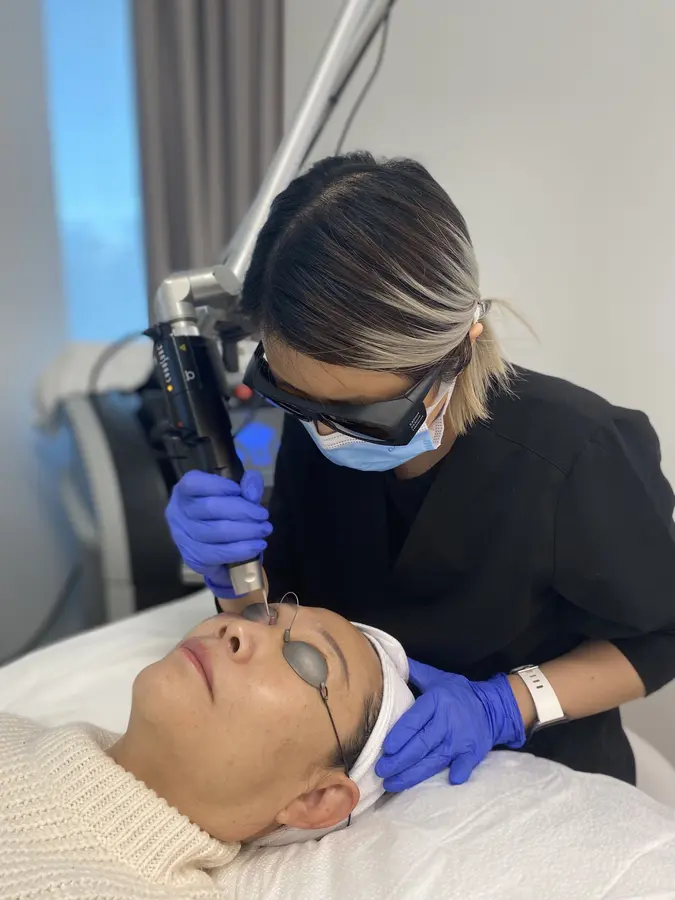
PicoSure Laser in Burnaby Texture, Pores and Pigment
A 755 nm alexandrite picosecond laser with the Focus lens array
PicoSure is a picosecond laser with a 755 nm alexandrite wavelength. Its Focus lens array concentrates energy into tiny spots to support skin renewal. Skin Art MD offers it in Burnaby at Metrotown after a physician assessment. Picosecond lasers are also used for tattoo removal, covered on our tattoo removal page.
- 15–20 min
- Typical laser time for a facial treatment
- 4–6 wks
- Typical gap between sessions
- Hours–1 day
- Redness and warmth usually settle
- 15–20 min
- Typical laser time for a facial treatment
- 4–6 wks
- Typical gap between sessions
- Hours–1 day
- Redness and warmth usually settle
What Does PicoSure With the Focus Lens Do?
PicoSure is a picosecond laser using a 755 nm alexandrite wavelength. With the Focus lens array, energy is divided into many tiny high-intensity spots, prompting the skin to renew itself. At Skin Art MD in Burnaby it is discussed for acne scars, pores, fine lines and pigment; a physician assessment decides suitability.
Chinese-speaking clients know this fractional approach as 蜂巢皮秒. PicoSure with Focus is the texture-and-pores option, while PicoWay is the pigment-focused platform. Body areas and tattoo removal have separate pages.
Focus Lens Array
The lens array splits the beam into many micro-spots, prompting collagen and elastin renewal without removing the surface.
755 nm Wavelength
Alexandrite light is strongly absorbed by melanin, which is why PicoSure is used for pigment.
Short Recovery
Most people resume normal activities the same day; redness and a warm feeling are common for a while.
How Does PicoSure Work?
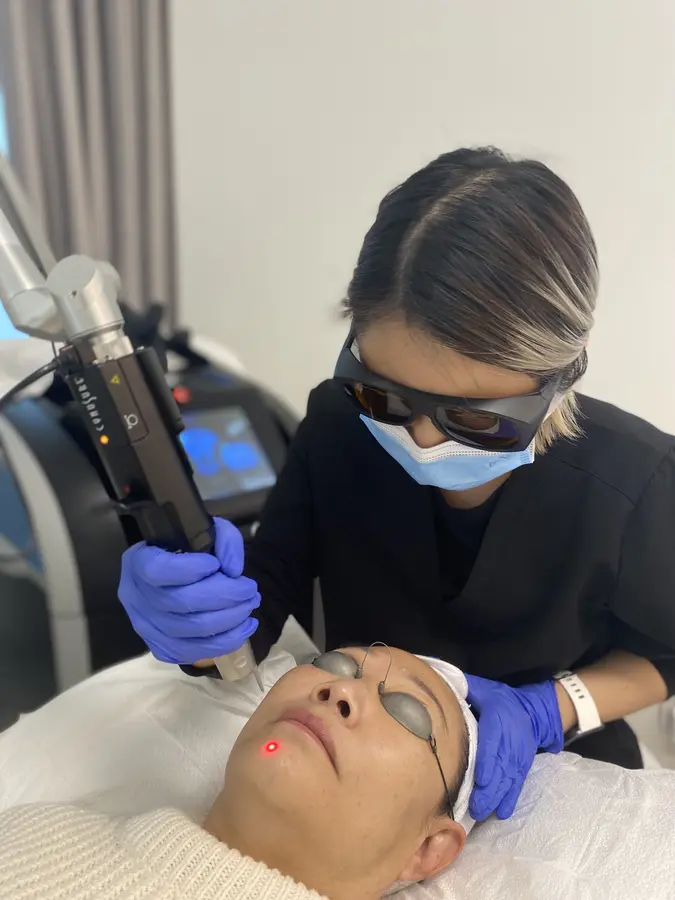
A picosecond is one trillionth of a second. Pulses that short act as a photoacoustic pressure effect on pigment and, with the Focus lens, create microscopic zones that prompt renewal.
755 nm Alexandrite
A wavelength strongly absorbed by melanin, used for pigment.
Pressure Effect
Ultra-short pulses act through a photoacoustic effect rather than prolonged heat.
Focus Lens Array
A diffractive optic that divides energy into high-intensity micro-spots to prompt collagen and elastin renewal.
Cold-Air Cooling
A cold-air device is used during treatment for comfort.
Who Do Clinicians Consider for PicoSure?
A physician assessment decides suitability and which picosecond platform fits, taking in skin type, history and the concern.
Concerns People Raise
- +Acne scars and uneven texture
- +Enlarged-looking pores
- +Fine lines
- +Sun spots and other superficial pigment
- +General uneven tone
- +Unwanted tattoos, or old cosmetic brow or lip colour
Reasons the Physician May Advise Waiting
- –Pregnancy or breastfeeding
- –Skin infection in the area
- –Recent oral acne medication; tell us at booking
- –A recent tan; treatment is usually delayed about four weeks
- –A history of keloid scarring, or medicines that make skin sensitive to light; the physician will ask
What Is Different About PicoSure at Skin Art MD?
The laser matters, but so does the plan. Here treatment sits inside a physician-led clinic at Metrotown.
Physician-Led Clinic
Plans sit within the care of the clinic's medical director, Dr. Charles Jiang.
Settings for Your Skin
Parameters are calibrated to skin type, pigment depth and concern.
Staged Plan
Concerns such as melasma-type pigment are managed over time, with a realistic roadmap.
Cold-Air Cooling
A cold-air device is used during treatment.
Which Areas Can PicoSure Treat?
This page focuses on the face and neck; body areas and tattoo removal have their own pages.
Face
Pigment, pores and texture.
Acne Scars
Rolling and shallow scars on the cheeks.
Neck and Jawline
Texture and tone.
Hands and Décolletage
Sun-exposed pigment.
Cosmetic Tattoos
Old brow or lip colour, with a test spot first.
Tattoo Removal
Picosecond lasers are also used for tattoos; see our tattoo removal page.
What Happens During a PicoSure Visit?
Most facial treatments take around 15 to 20 minutes of laser time. Many people describe small snaps, like a rubber band.
Before Your Visit
Avoid sun and tanning for about four weeks
Tell us about medications, pregnancy and recent procedures
Arrive with a clean face
Plan for several sessions; a common course is 2–6 sessions about 4–6 weeks apart
During Your Session
Eye Protection
Laser-specific eyewear goes on first.
Test Pulses
A few calibration pulses confirm how your skin responds.
Treatment
Pulses are delivered with cold air running continuously.
Soothing
Cooling gel or packs calm any warmth.
After Your Session
Redness and warmth usually settle within hours to a day
Treated pigment may darken and then flake over about 1–2 weeks; this is expected, so do not pick
Cleanse gently, use mild products and daily sunscreen; the team tells you when makeup is fine
Avoid strong sun and tanning; hold off on strong actives or exfoliants for a few days if advised
Change builds gradually over weeks to months, and results vary
**Individual results vary. A physician assessment decides suitability.
PicoSure Burnaby Questions Answered
What is PicoSure and what does the Focus lens do?+
PicoSure is a picosecond laser with a 755 nm alexandrite wavelength. The Focus lens array divides energy into many micro-spots to prompt skin renewal, which is why it is discussed for acne scars, pores and fine lines. Skin Art MD offers it after a physician assessment.
What is 蜂巢皮秒?+
蜂巢皮秒 is the Chinese name commonly used for PicoSure's Focus lens (fractional) approach. It is a picosecond treatment aimed at skin texture and pores, not a different device. Ask the team if you are unsure which name a page or recommendation refers to.
How is PicoSure different from PicoWay?+
Both are picosecond lasers. PicoSure with its Focus lens is used here for texture and pores, with a 755 nm wavelength. PicoWay is used mainly for pigment, with Zoom and Resolve handpieces. A physician assessment helps choose the device that fits your concern and skin.
Does PicoSure hurt?+
Most people describe small snaps like a rubber band against the skin, eased by cold air during treatment. Sensation varies by person and area, and topical numbing can be discussed for sensitive areas. Tell the team if anything feels too strong so the session can be adjusted.
How many sessions are needed, and is one session enough?+
Most people plan a series rather than a single session, commonly 2–6 sessions about 4–6 weeks apart, depending on the concern. Some change can be seen after one session, but texture and pigment usually build gradually. The physician sets the plan and results vary.
Can PicoSure treat melasma?+
PicoSure is sometimes used in plans for pigment, but melasma tends to return and is managed over time rather than cured. Treatment is usually paced gently and combined with daily sun protection and maintenance. The physician explains realistic expectations and whether PicoSure or another approach, such as PicoWay, fits your pigment pattern.
How is PicoSure different from IPL for pigment?+
IPL uses broad-spectrum light that is filtered to target pigment or redness, while PicoSure is a single-wavelength laser with ultra-short pulses that act mainly through pressure. They suit different concerns and skin types, so a physician assessment helps decide. See also our DPL Photo Facial page for light-based treatment.
What is recovery like, and when can I wear makeup?+
Redness and warmth usually settle within hours to a day. Treated pigment may look darker and flake for about 1–2 weeks, which is expected, so avoid picking. Gentle cleansing and daily sunscreen are the norm, and the team will tell you when makeup is fine to use after your session.
Can PicoSure remove tattoos?+
Yes, picosecond lasers are used for tattoo removal, and Skin Art MD uses PicoSure and PicoWay for this. Tattoos usually need several sessions spaced about 6–8 weeks apart, and ink colour, depth and your skin affect the result. See the tattoo removal page for details.
Is it used on Asian skin tones?+
Picosecond lasers are used on a range of skin tones, and settings are chosen with the risk of pigment rebound in mind. This does not remove the risk of temporary darkening or lightening. Suitability depends on your skin, your history and whether you have a recent tan, and a physician assesses this first.
Where is it offered near Vancouver?+
Skin Art MD is at #101 – 4378 Beresford St, Burnaby, near Metrotown Station on the Expo Line, open Tuesday to Sunday 10:00 to 18:00. You can book a consultation online or call +1 (604) 639-2581.
When will I see results from PicoSure?+
Some people notice smoother, brighter-looking skin within a few weeks, while texture, pores and pigment usually change gradually over weeks to months across a series of sessions. Treated spots may first darken and flake over about 1–2 weeks. Results vary, and the physician reviews realistic expectations at your assessment.
Book PicoSure in Burnaby
Skin Art MD is at #101 – 4378 Beresford St, Burnaby, near Metrotown Station. A physician assessment guides your plan.
Related treatments
Related articles
How it works, who it suits, and what recovery looks like:
- PicoSure Laser Burnaby: How Picosecond Technology Works
PicoSure laser treatment uses picosecond, pressure-based pulses to address pigment, tattoo ink and acne scars. This overview from Skin Art MD in Burnaby explains how the technology works and how a physician assessment determines suitability.
- PicoSure Body Burnaby BC: The Science of Laser Rejuvenation
Discover the advanced science behind PicoSure Body in Burnaby, BC. Learn how this picosecond laser shatters pigment and stimulates collagen.
- PicoSure vs PicoWay for Asian Skin Pigmentation: Freckles, Sun Spots & Melasma
PicoSure and PicoWay are picosecond lasers often compared for treating pigmentation on Asian skin, where ultra-short pulses deliver lower thermal transfer to surrounding tissue than Q-switched lasers or IPL. Learn how they differ for Fitzpatrick III-V skin, and how settings are chosen through physician assessment.
- Laser Tattoo Removal in Burnaby: PicoWay Healing Process & Sessions Guide
How laser tattoo removal in Burnaby at Skin Art MD breaks down unwanted ink. Learn about PicoWay technology, how many sessions are typical, eyebrow tattoo removal and its healing process, and what aftercare to expect.
