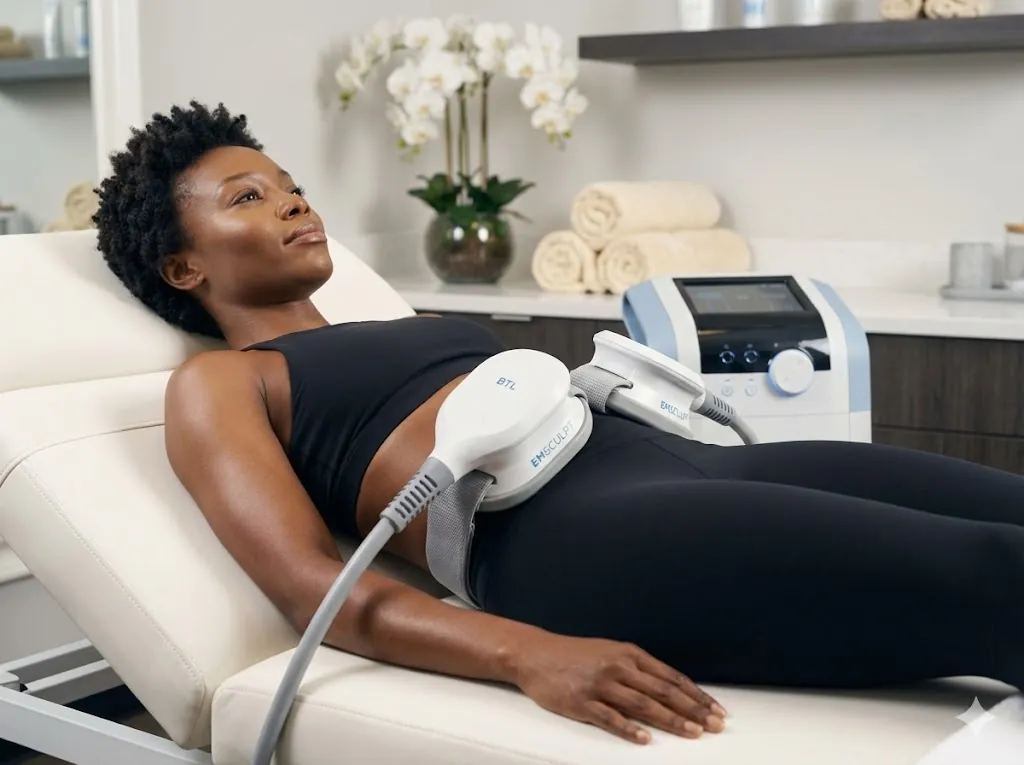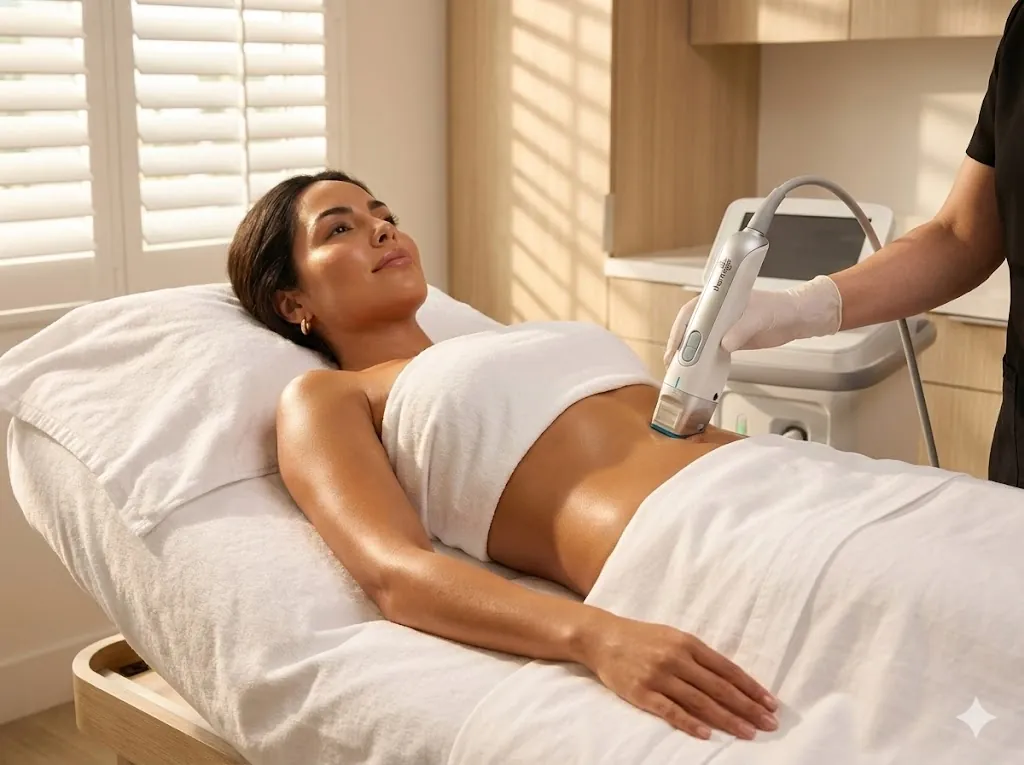
How does CoolSculpting work?
CoolSculpting is a non-invasive fat reduction treatment built on a precise biological principle: adipocytes (fat cells) are significantly more vulnerable to cold temperatures than the surrounding tissue. Learn more about CoolSculpting
The mechanism is called cryolipolysis — the selective destruction of fat cells through controlled, sustained cooling. When subcutaneous adipose tissue is exposed to temperatures just above freezing (approximately 4°C), fat cells initiate a programmed cell-death pathway known as apoptosis. Crucially, adjacent structures — skin, nerves, muscle, connective tissue — tolerate this temperature range without lasting injury. The selectivity of cryolipolysis is what makes it clinically meaningful as a non-surgical tool. During a treatment session, a specialized applicator is placed over the target area. Vacuum suction draws the subcutaneous fat layer between two cooling panels, and the device precisely lowers the tissue temperature to its therapeutic range. Depending on the applicator, each cycle runs approximately 35 to 75 minutes — long enough to trigger the apoptotic cascade in adipocytes without inducing frostbite or lasting dermal damage. Following treatment, the body's lymphatic and immune systems assume responsibility for clearance. Macrophages infiltrate the treated zone, engulf the fragmented adipocyte material, and route it for metabolic processing — primarily through the liver. This clearance unfolds over weeks to months, producing a gradual and measurable reduction in fat layer thickness at the treated site. CoolSculpting is medical-grade for non-invasive fat reduction at multiple body areas, including the abdomen, flanks, thighs, back fat, bra fat, underneath the buttocks, upper arms, and the submental (under-chin) region.
What does clinical research show about CoolSculpting?
Published studies, including a systematic review in Plastic and Reconstructive Surgery, report measurable fat layer reduction per treatment cycle, with side effects that are mostly transient.
The safety and efficacy of cryolipolysis are supported by a meaningful body of peer-reviewed literature. Three studies deserve particular attention.
Manstein et al., Lasers in Surgery and Medicine published foundational preclinical and early clinical data demonstrating that selective cryolysis of subcutaneous fat was achievable without damage to the overlying dermis. This work established the biological rationale and experimental proof-of-concept that underpins the entire CoolSculpting platform. Dierickx et al., Dermatologic Surgery conducted a multi-site clinical evaluation of cryolipolysis at the abdomen and flanks. Serial ultrasound imaging confirmed measurable reductions in fat layer thickness across the study population. Patient satisfaction was high, and adverse events were limited to expected transient effects — erythema, numbness, and temporary bruising at the treatment site. Ingargiola et al., Plastic and Reconstructive Surgery performed a systematic review and meta-analysis aggregating data across multiple controlled trials. The review found a consistent mean fat layer reduction of approximately 14–25% per treatment cycle, with a low incidence of serious adverse events. The authors concluded that cryolipolysis represents a safe and effective option for non-invasive body contouring when appropriate candidate selection is applied. Collectively, this evidence supports cryolipolysis as a reproducible modality for localized fat reduction — provided realistic expectations are established upfront and clinical screening is rigorous.
How does CoolSculpting compare with other fat reduction treatments?
CoolSculpting reduces fat with cold rather than heat, needles or surgery; other options differ in mechanism, number of sessions and recovery, as the table below shows.
CoolSculpting is one of several non-invasive fat reduction technologies, each operating through a distinct mechanism. Understanding the differences is essential for matching the right tool to the right patient.
| Modality | Mechanism | Sessions Needed | Typical recovery | Commonly used for |
|---|---|---|---|---|
| CoolSculpting (Cryolipolysis) | Cold-induced adipocyte apoptosis | 1–3 per area | Minimal (hours) | Discrete pinchable bulges |
| HIFU (e.g., Liposonix) | Focused ultrasound thermal disruption | 1–2 per area | Minimal–moderate | Moderate fat + skin tightening |
| Radiofrequency (e.g., Vanquish, Exilis) | RF thermal energy, diffuse heating | 4–6 per area | Minimal | Larger surface diffuse fat |
| Fat-dissolving injections (under-chin) | Injected agent that breaks down fat cells | 2–4 sessions | Moderate swelling | Focal submental fat only |
| Surgical liposuction | Mechanical fat removal under anesthesia | Single procedure | Significant | High-volume removal |
CoolSculpting occupies a specific niche: reproducible fat reduction without surgery, needles, or thermal energy. It is generally used for discrete, pinchable fat bulges in people near their ideal body weight — it is not a replacement for meaningful weight loss strategies.
Who is CoolSculpting commonly considered for?
CoolSculpting is generally considered for people near a stable, healthy weight with pinchable fat bulges and realistic expectations; a physician assessment decides suitability.
Not every patient requesting fat reduction is an appropriate candidate for cryolipolysis. Rigorous clinical assessment is what separates good outcomes from disappointing ones.
Characteristics typically reviewed at assessment:
- BMI in the normal to mildly overweight range
- Discrete, identifiable fat bulges that can be drawn into the applicator (the "pinch test")
- Realistic expectations — CoolSculpting is a contouring tool, not a weight loss intervention
- Adequate skin elasticity in the target area; significant pre-existing laxity may be accentuated by volume loss
- Commitment to maintaining stable weight post-treatment through nutrition and physical activity
At Skin Art MD in Burnaby, everyone considering CoolSculpting has a detailed consultation with our medical team. Dr. Sharon Fong, a physician, evaluates each patient's anatomy, skin quality, health history, and treatment goals before any protocol is designed. Book a Consultation
This physician-led evaluation is not a formality — it's the mechanism by which we match the right treatment to the right patient. A protocol that produces excellent results in one body may produce suboptimal results or complications in another.
What are the contraindications and risks of CoolSculpting?
Cold-related blood disorders and cold urticaria rule CoolSculpting out, several conditions need careful evaluation, and a rare complication called paradoxical adipose hyperplasia is discussed before any treatment.
Transparent communication about contraindications is an ethical obligation in physician-led aesthetic practice.
Absolute contraindications:
- Cryoglobulinemia (proteins that precipitate at cold temperatures — cold exposure can trigger systemic complications)
- Cold agglutinin disease
- Paroxysmal cold hemoglobinuria
- Confirmed cold urticaria (hypersensitivity to cold)
Relative contraindications requiring careful evaluation:
- Raynaud's phenomenon
- Pregnancy or active breastfeeding
- Active inflammatory skin conditions or open wounds at the treatment site
- Peripheral vascular disease
- Peripheral neuropathy in the target zone
Paradoxical adipose hyperplasia (PAH) deserves explicit discussion. PAH is a rare but recognized complication in which the treated fat volume increases rather than decreases — typically manifesting several months after treatment as a firm, well-demarcated mass corresponding to the applicator footprint. The mechanism is not fully characterized, but incidence is higher in male patients and in abdominal treatment areas. When PAH occurs, surgical correction is generally required. The incidence is rare, but counseling patients about this possibility before treatment is non-negotiable. Understanding real risks — even rare ones — is what informed consent looks like in practice.
What happens during a CoolSculpting session?
A session moves from physician assessment and applicator selection to gel pad placement, one or more cooling cycles, a short massage, and a follow-up visit to review results.
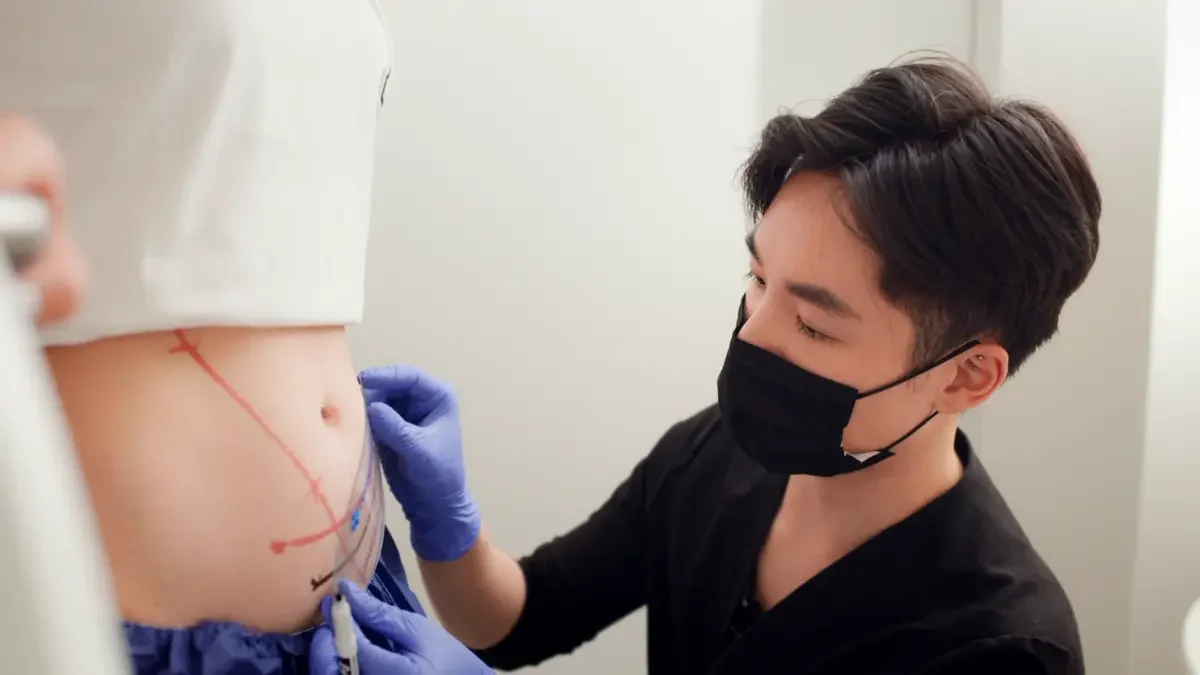
Step 1 — Medical Consultation and Anatomical Mapping A physician or trained medical professional assesses your anatomy, reviews your health history, documents baseline measurements and photographs, and develops a personalized treatment plan.
Step 2 — Applicator Selection The CoolSculpting platform offers multiple applicator geometries (CoolAdvantage, CoolMini, CoolSmooth Pro, among others) designed for different anatomical regions and tissue volumes.
Selecting the correct applicator is critical to achieving adequate tissue contact and uniform cooling.
Step 3 — Gel Pad Placement A protective gel pad is applied to the skin surface before applicator placement to protect the dermis during the cooling cycle.
Step 4 — Treatment Cycle The applicator engages, vacuum suction draws the tissue between the cooling panels, and the cycle begins. Patients typically experience intense cold, pressure, and a pulling sensation during the first several minutes. As the area becomes numb, discomfort resolves significantly. Most patients read, use their phone, or rest comfortably for the duration.
Step 5 — Post-Cycle Massage Immediately following each cycle, the treated area is manually massaged for approximately two minutes. This massage step is intended to support fat reduction by disrupting the crystallized adipocyte mass.
Step 6 — Recovery and Follow-Up Erythema, numbness, bruising, tingling, and temporary firmness at the treatment site are expected and self-resolving in the days to weeks following treatment. A follow-up assessment at 8–12 weeks allows the medical team to evaluate results and determine whether additional cycles are indicated.
Timeline: When Will Results Appear?
Cryolipolysis works on the body's own clearance timeline — results emerge gradually.
- 1–3 weeks post-treatment: Early changes may be noticeable as the initial post-treatment inflammatory response resolves
- 4–8 weeks: Progressive fat reduction becomes visible as macrophage-mediated clearance continues
- 12–16 weeks: Maximal result is typically observed at this timeframe
- Beyond 16 weeks: Results are stable as long as body weight remains consistent — destroyed adipocytes do not regenerate
This durability distinguishes cryolipolysis from treatments that need ongoing maintenance: fat cells that have been cleared do not return, although remaining fat cells can still grow with weight gain.
Why Choose Skin Art MD?
At Skin Art MD in Burnaby, CoolSculpting is delivered within a framework that weighs clinical rigor alongside patient experience.
Physician-led care. Every treatment plan at Skin Art MD is developed under the oversight of Dr. Sharon Fong, a licensed physician. Your assessment is a clinical evaluation — not a sales consultation.
Authentic, validated technology. We use genuine CoolSculpting equipment. The clinical evidence for cryolipolysis is specific to the validated platform; off-brand devices introduce variables that the published literature does not address.
Personalized protocols. No template plans. Your anatomy, skin quality, treatment history, and goals shape every protocol we design.
Bilingual care in English and Mandarin. Our team communicates fluently in both English and Mandarin Chinese (普通话), so you can discuss your treatment and ask questions in the language you're most comfortable with.
Accessible Burnaby location. Our Metrotown-area clinic serves patients from across Greater Vancouver.
Book a Consultation to see what a physician-directed assessment looks like — no commitment required.
What do people ask about CoolSculpting?
Common questions cover how the treatment feels, how many sessions are involved, whether fat returns, recovery, paradoxical adipose hyperplasia, weight loss, and what affects cost.
Is CoolSculpting painful? The first few minutes of each cycle involve intense cold, pressure, and a pulling sensation as the tissue is drawn into the applicator.
As the area becomes numb, most patients find the experience tolerable. Post-treatment tenderness, aching, and sensitivity may persist for days to a week but typically do not require prescription pain management.
How many sessions will I need? This depends on your anatomy, the target area, and your goals. Some patients achieve their desired outcome in a single cycle per area; others benefit from two to three. Your physician will give you a realistic estimate during your consultation — not a one-size-fits-all recommendation.
Will the fat come back? The adipocytes destroyed by cryolipolysis are cleared by the body and do not regenerate. However, remaining fat cells in the treated area — and fat cells throughout the body — can expand with weight gain. Sustaining results requires maintaining stable weight over time.
Is there downtime? Most people resume normal activities the same day. Temporary redness, numbness, firmness, and occasional bruising are expected but rarely disruptive.
What is paradoxical adipose hyperplasia? PAH is a rare complication in which the treated area paradoxically increases in volume rather than decreasing. It appears more frequently in male patients and in abdominal treatment areas. Surgical correction is typically required when it occurs. Your Skin Art MD physician will discuss this risk transparently before treatment.
Is CoolSculpting a weight loss treatment? No. It is a body contouring tool for reducing discrete, localized fat bulges. It does not address diffuse obesity and is not a substitute for a weight management program. It is generally considered for people already near their goal weight; a physician assessment decides suitability.
What affects the cost of CoolSculpting? Fees are not listed online. They depend on the number of areas, the applicator type and the number of cycles planned, and the team explains them during a consultation.
Next Steps
If you've worked through this article, you have a clearer picture of what cryolipolysis actually does — and whether it might be a reasonable fit for your goals.
The most useful next step is a direct conversation with a physician who can assess your anatomy and give you an honest answer. Book a Consultation at Skin Art MD in Burnaby — available in both English and Mandarin, with no obligation to proceed.
Ready to See What CoolSculpting Can Do for You?
Our medical team at Skin Art MD in Burnaby is ready to create your personalized treatment plan. Book a consultation — available in English and Chinese.
This article is for educational purposes only and does not constitute medical advice. Please consult with a qualified healthcare professional before undergoing any treatment.