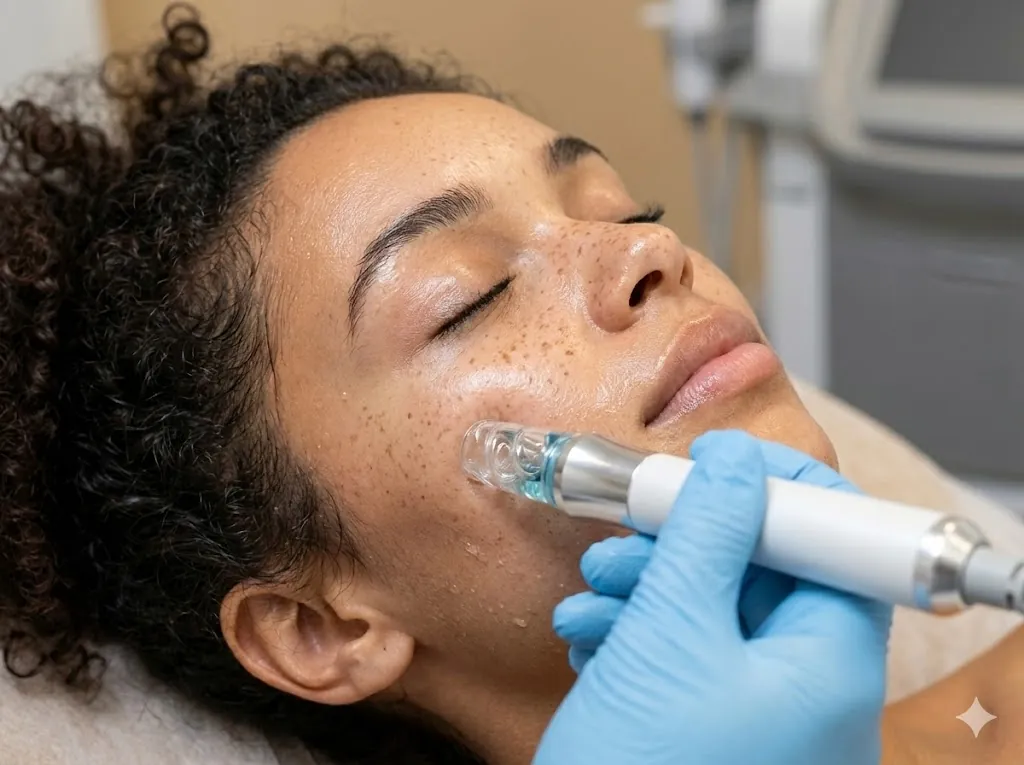
What Is HydraPeel and How Does It Work?
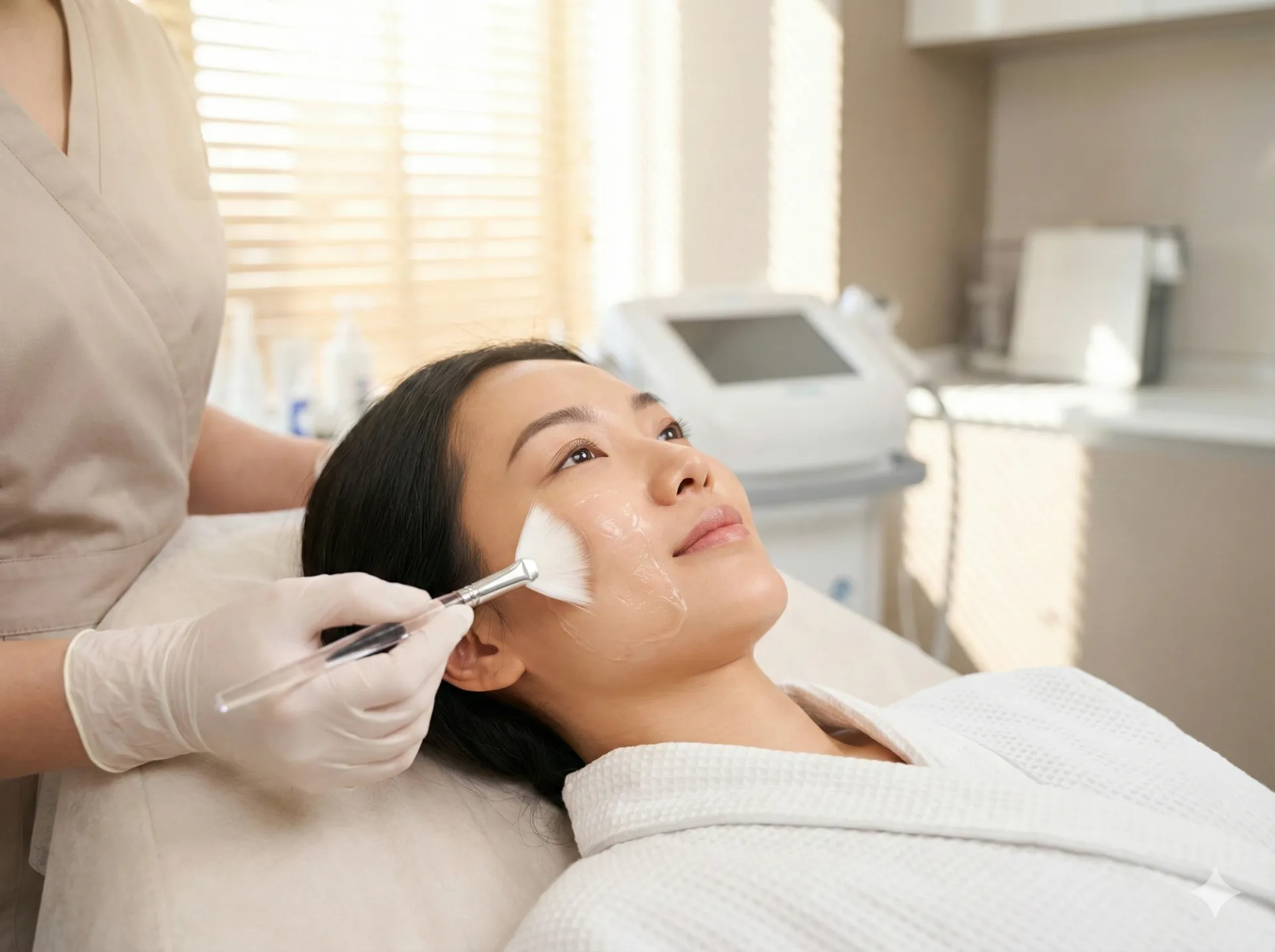
HydraPeel is a non-invasive, multi-step facial treatment that combines mechanical exfoliation, chemical exfoliation via low-concentration acids, vacuum-assisted extraction, and simultaneous serum infusion — all in a single session.
Unlike conventional dermabrasion or ablative peels that remove tissue and require recovery, HydraPeel operates on a hydration-first principle: every step delivers moisture and active ingredients while clearing the follicular canal.
Learn more about HydraPeel to understand how Skin Art MD has integrated this technology into our physician-led treatment protocols in Burnaby.
What Happens in Each of HydraPeel's Four Phases?
The treatment works through four synergistic phases that address different layers of the skin's structure simultaneously.
Phase 1: Vortex Exfoliation
A spiral-tipped wand creates a centrifugal vortex flow against the skin surface. The motion loosens dead keratinocytes from the stratum corneum without abrasive crystals or dry mechanical friction. This approach preserves the skin barrier — an advantage that distinguishes HydraPeel from traditional crystal microdermabrasion, which can leave skin transiently compromised and sensitized.
Phase 2: Acid Peel (Chemical Exfoliation)
Low-concentration glycolic and salicylic acids are delivered via the same tip. Glycolic acid, an alpha-hydroxy acid (AHA), dissolves intercellular cement between corneocytes and accelerates their shedding.
Salicylic acid, a beta-hydroxy acid (BHA), is lipophilic — it penetrates sebaceous follicles to dissolve sebum plugs and comedone contents from within.
The concentrations used remain below the threshold for a true medium-depth peel, making the procedure well-tolerated without producing epidermal wounding or visible peeling.
Phase 3: Vacuum Extraction
Pneumatic suction removes loosened debris, excess sebum, and comedone contents from the follicular ostia. The vacuum simultaneously produces transient capillary dilation, promoting lymphatic drainage and creating an absorption gradient that prepares the skin for optimal serum uptake in the following phase.
Phase 4: Serum Infusion
The final phase delivers a customized cocktail of antioxidants (vitamins A, C, and E), hyaluronic acid, and signaling peptides into the freshly cleared epidermis and superficial dermis.
Hyaluronic acid, a naturally occurring glycosaminoglycan, attracts and holds a large amount of water, producing immediate plumping and luminosity.
Peptides serve as fibroblast-activating messengers, signaling upregulation of collagen and elastin synthesis — a mechanism that contributes to longer-term structural improvement with repeated sessions.
This four-phase approach simultaneously targets surface texture, pigmentation, hydration deficit, and follicular congestion, explaining the treatment's broad applicability across skin types.
What Does the Clinical Evidence Say About HydraPeel?
HydraPeel and related hydradermabrasion platforms have been evaluated in peer-reviewed literature across several outcome domains.
Acne and sebaceous hyperactivity: Karimipour et al., published in Dermatologic Surgery, demonstrated that hydradermabrasion combined with BHA infusion produced statistically significant reductions in both non-inflammatory and inflammatory acne lesion counts compared to baseline, with erythema resolving within 24 hours in most participants. The authors attributed efficacy to the dual mechanism of sebum clearance — mechanical extraction combined with chemical follicular dissolution.
Photoaging and pigmentation: Freedman et al., in the Journal of Cosmetic Dermatology, evaluated multi-pass hydradermabrasion on participants with Fitzpatrick type II–IV skin presenting with mild-to-moderate photoaging. Measurable improvements were documented in fine line depth, tactile roughness, and validated dyschromia scores at six-week follow-up. Post-procedure erythema resolved within hours — a meaningful contrast to the multi-day recovery associated with equivalent-depth chemical peels.
Barrier function and hydration: Savovic et al., in Skin Research and Technology, employed corneometric and transepidermal water loss (TEWL) measurements before and after hydradermabrasion sessions. Treated sites showed significantly elevated stratum corneum hydration scores alongside reduced TEWL at 48 hours, indicating that the procedure supports rather than compromises the epidermal barrier. This finding is particularly relevant for patients with sensitive, rosacea-prone, or environmentally stressed skin.
These studies collectively support the use of hydradermabrasion across a range of concerns. As with all aesthetic treatments, individual results vary and outcomes cannot be promised.
How Does HydraPeel Compare with Other Facials and Peels?
Patients researching deep cleansing and facial rejuvenation frequently encounter several overlapping options. The table below summarizes key mechanistic and practical differences:
| Feature | HydraPeel | Crystal Microdermabrasion | Superficial Chemical Peel | Oxygen Facial |
|---|---|---|---|---|
| Exfoliation mechanism | Mechanical + chemical | Abrasive crystals | Chemical only | Pressurized oxygen + serum |
| Follicular extraction | Vacuum-assisted | None | None | None |
| Serum infusion | Simultaneous | No | Post-peel add-on | Surface application only |
| Recovery | Same-day return to normal activities | 24–48h dryness | Flaking 3–7 days | Same-day return to normal activities |
| Fitzpatrick III–VI suitability | High (physician-guided) | Moderate | Moderate | High |
| Collagen stimulation | Indirect via peptide infusion | Minimal | Mild (wound healing) | Minimal |
| Suitable for congested pores | Yes | No | Partially | No |
The oxygen facial shares HydraPeel's quick-recovery profile but lacks extraction and chemical exfoliation, making it better suited to maintenance and brightening than to correction of congestion or textural irregularity. Crystal microdermabrasion remains effective for surface smoothing but cannot address follicular obstruction and may exacerbate dryness in barrier-impaired skin. Superficial chemical peels offer deeper penetration but require visible peeling days — an impediment for patients with social or professional commitments.
Which Skin Concerns Is HydraPeel Used For?
HydraPeel is used for congestion, uneven tone, dehydration, early fine lines and pre-event skin preparation; at Skin Art MD a physician consultation decides whether it suits your skin before treatment begins.
At Skin Art MD in Burnaby, every HydraPeel patient undergoes a formal consultation before treatment begins. A Skin Art MD physician reviews skin history, current medications, prior treatments, and individual aesthetic goals before designing an individualized protocol.
HydraPeel is commonly used for:
- Mild-to-moderate acne and enlarged pores: BHA infusion and vacuum extraction address follicular obstruction at its source without ablating surrounding tissue.
- Uneven skin tone and mild hyperpigmentation: AHA-mediated corneocyte turnover acceleration gradually normalizes surface melanin distribution.
- Dehydrated or dull skin: Hyaluronic acid infusion produces immediate luminosity and measurable 48-hour hydration gains.
- Fine lines and early textural irregularity: Repeated sessions with peptide infusion support progressive collagen remodeling.
- Pre-event skin optimization: Because most people resume normal activities the same day, HydraPeel is practical as a same-week preparation for weddings, photoshoots, or professional events.
- People new to in-clinic aesthetics: Its low-risk profile and same-day return to normal activities make it an accessible starting point for those who do not want ablative procedures.
HydraPeel is often considered when topical skincare routines have plateaued. It addresses the physical barriers — dead cell accumulation and comedone obstruction — that prevent topical actives from penetrating effectively. Book a consultation to determine whether your specific concerns are addressed by HydraPeel alone or as part of a combined treatment plan.
When Should HydraPeel Be Postponed or Avoided?
HydraPeel is postponed during rosacea flares, active pustular acne, oral retinoid treatment, sunburn and pregnancy, and adjusted for acid sensitivity — a decision made at the physician consultation.
Despite its broad safety profile, HydraPeel is not universally appropriate. Clinical judgment, not patient self-selection, is the correct evaluation gate.
Active rosacea flares: During active flare periods, vacuum suction can worsen vascular reactivity and transient redness. Patients with rosacea in remission may tolerate treatment at reduced suction settings — a determination made at physician consultation, not at the treatment chair.
Active pustular or cystic acne: Vacuum extraction over active pustules risks rupturing the follicle wall and disseminating Cutibacterium acnes into adjacent tissue. Treatment is deferred until the acute phase resolves.
Oral retinoid acne medication: Oral retinoids thin the epidermis and impair barrier repair mechanisms. A documented washout period is required before any exfoliating procedure; the appropriate duration is determined at physician consultation.
AHA/BHA sensitivity: Patients with confirmed sensitivity to glycolic or salicylic acid should discuss alternative infusion formulations with their physician before proceeding.
Compromised or sunburned skin: Applying exfoliation to an already-damaged barrier amplifies irritation and is contraindicated until full recovery.
Pregnancy: Some infusion serums contain retinol; implications of enhanced transdermal absorption during pregnancy remain incompletely characterized. Skin Art MD defaults to postponing elective aesthetic procedures during pregnancy.
These limitations illustrate why the physician-led model at Skin Art MD exists — nuanced contraindication screening protects patient safety and improves long-term outcomes.
What Happens During a HydraPeel Session?
A HydraPeel session takes about 45–60 minutes and moves from skin assessment and cleansing through exfoliation, acid infusion, extraction and serum infusion to SPF and written aftercare.
A typical HydraPeel session at Skin Art MD in Burnaby proceeds as follows:
- Skin assessment (5 min): Clinical photography and skin analysis establish baseline texture, hydration level, and congestion pattern.
- Cleanse (5 min): A pH-appropriate cleanser removes makeup, sunscreen, and surface oils.
- Vortex exfoliation (10 min): The spiral tip passes systematically across the face. The sensation is generally a mild vacuum with light brushing and is well tolerated.
- Acid peel infusion (5 min): The glycolic-salicylic blend is delivered simultaneously with continued surface clearing. A brief tingling resolves within seconds.
- Targeted extractions (5–10 min): Concentrated passes over congested zones (nose, chin, forehead) remove stubborn comedones.
- Serum infusion (10 min): Serums are selected based on the patient's presenting concerns — hydration, brightening, or anti-aging focus.
- SPF and aftercare (5 min): Broad-spectrum SPF 50 is applied before the patient leaves. Written aftercare instructions are provided in English and Chinese.
Total treatment time: approximately 45–60 minutes. No topical anesthetic required.
What Aftercare and Treatment Frequency Are Recommended?
Most people resume normal activities, including makeup, the same day; aftercare centres on sun protection and pausing strong actives for 48 hours, with sessions usually monthly or every 2–3 weeks for congestion.
Post-treatment skin is clean, hydrated, and luminous, typically without raw surfaces; mild temporary redness is possible. Most patients resume normal activities, including makeup application, the same day.
First 24 hours:
- Avoid direct sun exposure; apply SPF 50 or higher
- Do not apply retinoids, exfoliating acids, or strong actives
- Avoid steam rooms, hot showers, or sweat-inducing exercise
Reintroduce actives (retinoids, vitamin C) after 48 hours.
Recommended treatment frequency:
- General maintenance: once monthly
- Acne and congestion correction: every 2–3 weeks initially, then monthly maintenance
- Pre-event: one session 3–5 days before the event
Results from a single session typically persist two to four weeks. A series of four to six sessions is commonly recommended before reassessing the treatment plan. With a series, skin generally holds hydration better between visits.
How Does Skin Art MD Deliver HydraPeel?
At Skin Art MD, HydraPeel is delivered under physician oversight, on adjustable professional equipment, as part of an integrated and bilingual treatment plan.
HydraPeel is widely available in Greater Vancouver. What matters is how the treatment is delivered and by whom.
Physician-led oversight: Every treatment plan at Skin Art MD is developed and supervised by a physician. This means formal contraindication screening, customized protocols, and clinical accountability rather than an esthetician-only model.
Calibrated professional technology: We use professional-grade equipment with adjustable suction pressures and infusion volumes, allowing each session to be tailored to your skin's current condition rather than applied as a standardized protocol.
Integrated treatment planning: HydraPeel does not need to work in isolation. It can be combined with LED photobiomodulation, antioxidant booster infusions, or injectables as part of a comprehensive skin health program.
Bilingual care: Skin Art MD proudly serves Burnaby's diverse community with staff fluent in English and Mandarin Chinese. Consultations, aftercare materials, and follow-up communications are available in both languages, ensuring nothing is lost in translation.
Education-first consultation: We tell you what is likely to work, what is unlikely to work, and when waiting is the right answer — because a well-informed patient achieves better long-term outcomes than one subject to upsell pressure.
Frequently Asked Questions
Q: Is HydraPeel the same as HydraFacial? HydraFacial is a trademarked brand name for a specific hydradermabrasion device. HydraPeel describes the same category of multi-step hydradermabrasion treatment combining extraction and infusion. The underlying mechanism is identical; equipment specifications and serum formulations vary by manufacturer and clinic.
Q: Does HydraPeel hurt? The sensation is generally described as mild vacuum pressure — comparable to a firm facial massage. The acid peel phase produces a brief tingling that resolves within seconds. No topical anesthetic is required.
Q: How many sessions do I need to see results? Improved skin brightness and texture are often visible right after a single session. Deeper concerns — persistent acne congestion, fine lines, dyschromia — typically require a series of four to six sessions spaced two to four weeks apart for sustained improvement. Maintenance frequency depends on individual skin goals.
Q: Can HydraPeel be combined with other treatments? Yes. It is commonly paired with LED photobiomodulation, growth factor serums, or antioxidant booster infusions in the same visit. Combining with ablative procedures or injectables requires physician guidance on appropriate sequencing and recovery intervals.
Q: Is HydraPeel safe for Asian or darker skin tones? HydraPeel has a favorable safety profile across Fitzpatrick types III–VI because it generates no thermal injury — the principal driver of post-inflammatory hyperpigmentation (PIH) risk with laser resurfacing. The AHA/BHA concentrations used are low, further reducing PIH risk. The physician customizes suction levels and acid selection for patients with PIH tendency or melanin-rich skin, so the protocol is adjusted rather than applied uniformly.
Q: How long do results last? Results from a single session typically persist two to four weeks. Regular monthly maintenance preserves cumulative gains in hydration, pore size, and surface texture over time.
What Is the Next Step?
The next step is a one-on-one consultation where a physician and the Skin Art MD team assess your individual skin condition, discuss realistic outcomes, and design a treatment plan tailored to your specific concerns — with no commitment required at the consultation stage.
You now have a science-based foundation for evaluating whether HydraPeel fits your skin goals. Book a consultation — available in English and Chinese — and take the first step toward clearer, more hydrated skin.
This article is for educational purposes only and does not constitute medical advice. Please consult with a qualified healthcare professional before undergoing any treatment.