InstaLift — formally known as Silhouette InstaLift — is a minimally invasive suture-suspension procedure that uses poly-L-lactic acid (PLLA) absorbable sutures fitted with bidirectional cones to produce immediate mechanical tissue lift while simultaneously triggering progressive collagen synthesis.
For patients in Burnaby and the Greater Vancouver area researching non-surgical facial rejuvenation, understanding the underlying science helps set realistic expectations and supports sound treatment decisions. This article is the information layer beneath our treatment overview page.
This deep-dive covers mechanism, clinical evidence, candidacy criteria and limitations. Whether InstaLift suits a particular face is decided in a physician assessment at Skin Art MD.
How Does InstaLift Lift the Face?
InstaLift works through two events in one procedure: bidirectional cones mechanically suspend descended tissue right away, and the PLLA material then stimulates new collagen around the suture track over the following months.
Immediate Mechanical Lift via Bidirectional Cone Architecture
The distinguishing engineering feature of Silhouette InstaLift is the geometry of its absorbable cones.
Unlike earlier smooth or barbed monofilament threads that rely solely on tissue friction, InstaLift cones are moulded directly onto the suture and face in opposing directions along the thread length.
When the suture is placed subcutaneously and the entry point is anchored, gentle manual compression along the thread gathers ptotic (descended) soft tissue between the cones.
The cones grip the deep dermis and superficial musculoaponeurotic system (SMAS)-adjacent fat, mechanically suspending the tissue in a lifted position.
This architecture produces a quantifiable, immediate geometric change in facial contour — visible on the table within minutes of placement. The lift is not dependent on any delayed biological process, which is why patients leave the clinic with a demonstrably repositioned cheek or jawline on the same day.
Progressive Collagen Stimulation via PLLA Degradation
The second mechanism unfolds over months.
PLLA is a synthetic biopolymer with a long and well-characterized history in biomedical applications, including absorbable sutures and injectable volumizers.
As the body's macrophages and foreign-body giant cells gradually phagocytose PLLA fragments, they release growth factors — particularly transforming growth factor-beta (TGF-β) and connective-tissue growth factor (CTGF) — that upregulate fibroblast activity in the surrounding dermis.
The result is de novo type-I collagen deposition around the suture track.
As the PLLA matrix fully resorbs over roughly 18 to 24 months, a fibrous scaffold of newly synthesized collagen remains in its place.
This explains why patient outcomes frequently continue improving for six to nine months after treatment before the mechanical lift component begins to relax: the biological component is still maturing even as the suture dissolves.
The dual-action model — immediate geometry plus delayed biology — is the central scientific rationale for InstaLift's durability relative to non-absorbable thread systems that provide lift without collagen stimulation, or standalone PLLA injectables that stimulate collagen without providing immediate repositioning.
What Does Peer-Reviewed Research Show About InstaLift?
Published studies describe PLLA's collagen-stimulating effect, measurable improvement in facial ptosis scores at three and six months, and an adverse-event profile that is mostly mild and temporary.
Collagen Induction and Histological Confirmation
The fibroblast-stimulating properties of PLLA are among the better-documented phenomena in aesthetic medicine.
Research published in the Journal of Drugs in Dermatology has demonstrated via biopsy analysis that PLLA-based materials may generate a fibroblastic response and increased collagen density in the surrounding dermis. This histological confirmation is foundational for understanding why the InstaLift effect outlasts the suture itself.
Cone-Based Suture Lifting Outcomes
Research published in the Aesthetic Surgery Journal evaluated outcomes in patients treated with Silhouette InstaLift and reported improvements in physician-assessed facial ptosis scores at three and six months post-procedure. Patient satisfaction scores remained elevated beyond the six-month mark, with the investigators attributing extended durability to ongoing collagen remodeling rather than residual mechanical tension alone.
Safety Profile and Adverse Events
A systematic analysis published in the Journal of Cosmetic Dermatology of minimally invasive thread-lifting procedures characterized the adverse-event profile as predominantly mild and transient — including temporary dimpling, bruising, and mild edema — with serious complications such as infection, extrusion, or prolonged asymmetry occurring in a small minority of cases and correlating strongly with technique and practitioner experience. This underscores why treatment at a physician-led clinic is clinically meaningful, not merely a marketing distinction.
How Does InstaLift Compare With Other Lifting Technologies?
Different non-surgical lifting technologies work through distinct mechanisms. Understanding these differences helps patients and physicians select the right tool for a given anatomic scenario.
| Technology | Primary Mechanism | Onset | Duration | Invasiveness |
|---|---|---|---|---|
| Silhouette InstaLift | Mechanical lift + PLLA collagen induction | Immediate | 18–24 months | Minimally invasive (suture) |
| Ultherapy / Focused Ultrasound | Thermal coagulation of SMAS/deep dermis | Gradual (3–6 mo) | 12–18 months | Non-invasive |
| Thermage FLX | Monopolar RF — collagen contraction | Gradual (3–6 mo) | 12–24 months | Non-invasive |
| Surgical Facelift (Rhytidectomy) | SMAS repositioning, tissue excision | Immediate | 5–10 years | Surgical |
| Filler-Based Lift (e.g., Sculptra) | Volume replacement + collagen stimulation | Gradual | 2–3 years | Injectable |
InstaLift occupies a specific niche: patients with moderate facial laxity who want an immediate visible improvement without surgical downtime or general anesthesia, and who also want a biologically active long-term benefit. It is not a replacement for a surgical facelift in advanced laxity, nor is it redundant with energy-based devices, as its mechanism and target patient population differ meaningfully.
Candidate Evaluation: Who Is Appropriate for InstaLift?
General Candidate Profile
At Skin Art MD in Burnaby, candidate evaluation is performed by Dr. Sharon Fong, a physician. The assessment is always individualized, but the general profile of people typically assessed for InstaLift includes:
- Age range: Typically 35–65 years; younger patients with early midface descent and older patients with mild to moderate (not severe) laxity
- Degree of laxity: Mild to moderate — the Silhouette system is designed for tissue that can be mechanically repositioned, not tissue that has lost structural capacity
- Skin quality: Adequate dermal thickness to anchor cones; very thin or severely sun-damaged skin may not provide sufficient purchase
- Realistic expectations: Understanding this is a maintenance-requiring treatment with durability in the 18–24 month range, unlike the longer horizon of a surgical facelift
- No active skin infection or inflammation overlying the treatment zone
- No current or recent use of oral prescription acne medication, which impairs wound healing
Patients who are pregnant or breastfeeding, or who have autoimmune conditions affecting wound healing, are generally not candidates. A detailed intake history and physical examination precede every InstaLift procedure at our clinic. A consultation is where your facial anatomy is assessed by our physician team.
What Can't InstaLift Address, and Who Should Avoid It?
InstaLift does not correct severe laxity, volume loss, texture or periorbital concerns, and it is avoided with active infection, PLLA hypersensitivity, unmanaged bleeding risk, certain medications, pregnancy or breastfeeding.
Being specific about limitations is part of ethical, physician-led practice.
What InstaLift Cannot Address
- Severe facial laxity: In patients with significant skin excess or deep structural atrophy, the mechanical forces available from a suture suspension system are insufficient. A surgical consultation is more appropriate.
- Volume deficit as the primary concern: A descended cheek that is also hollowed may benefit from volumization — filler or a collagen stimulator like Sculptra — before or alongside thread lifting.
- Skin texture and tone concerns: Fine lines, skin tone irregularities, and texture issues are not addressed by InstaLift and require complementary modalities such as lasers, peels, or radiofrequency.
- Periorbital laxity: The lower eyelid and immediate periorbital zone are outside the intended treatment zone for standard InstaLift.
Absolute Contraindications
Active skin infection at or near the insertion site, known hypersensitivity to PLLA, bleeding disorders or anticoagulant therapy that cannot be safely paused, current or recent oral prescription acne medication, and pregnancy or breastfeeding.
Relative Contraindications
Prior deep plane facelift, prior high-viscosity filler in the planned suture zone, and a documented history of keloid formation all require case-by-case physician judgment.
What Happens During an InstaLift Treatment?
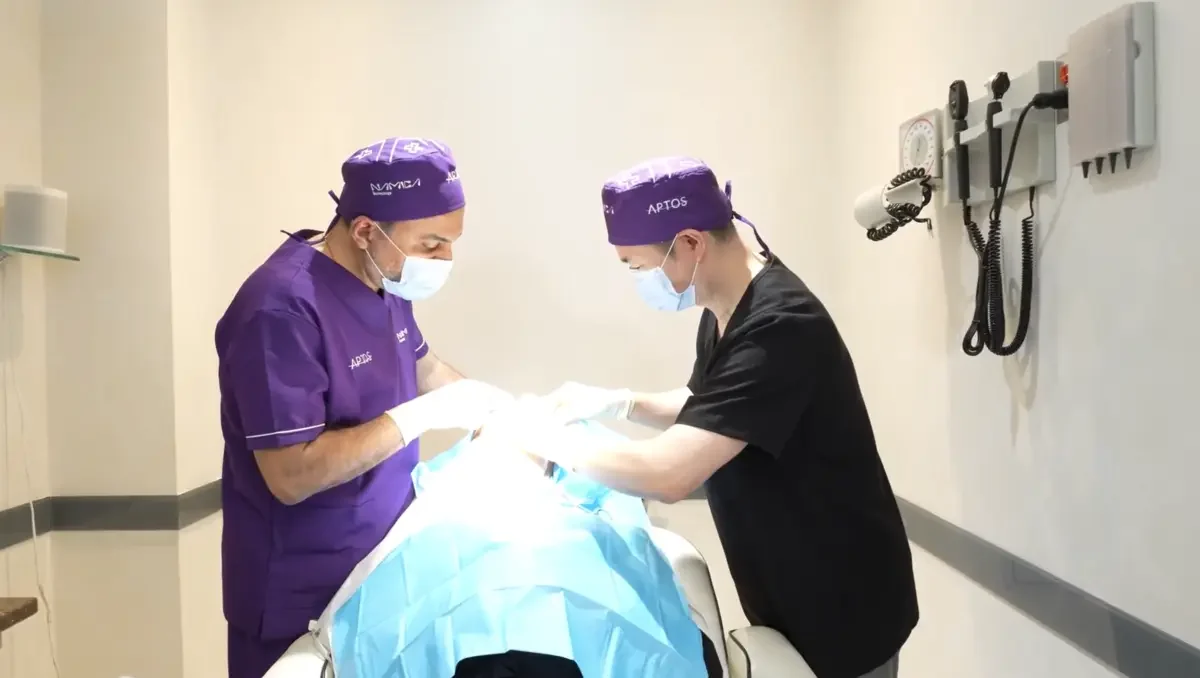
An InstaLift visit runs from mapping and numbing through suture insertion, compression, trimming and a mirror check, with total chair time typically 45–75 minutes depending on the number of sutures.
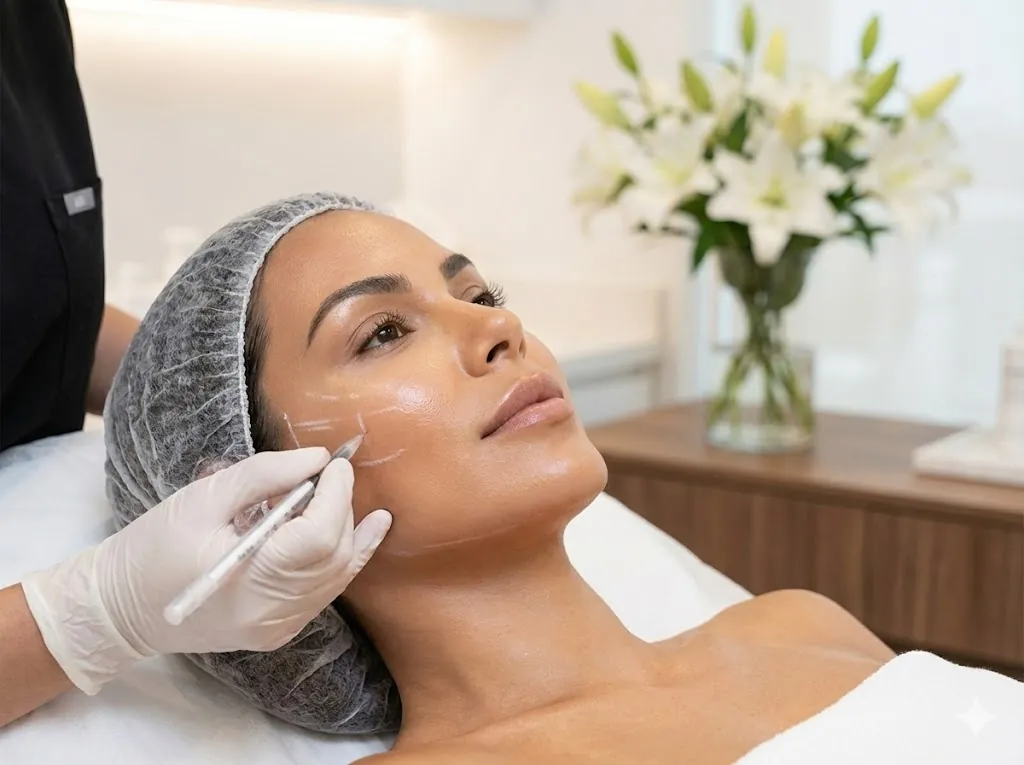
- Consultation and mapping: The physician evaluates facial anatomy, discusses goals, and marks planned suture vectors on the skin surface.
- Topical anesthesia: A numbing cream is applied for 30–45 minutes. Local anesthetic is also injected along the suture path.
- Insertion: A fine introducer needle creates a small entry point. The suture-and-cone assembly is threaded subcutaneously along the planned vector.
- Compression and positioning: Skin is gently compressed along the suture track, gathering tissue against the bidirectional cones. The physician confirms symmetry and contour in real time.
- Trimming and closure: Suture ends are trimmed flush with the skin. No external sutures or visible incisions remain.
- Immediate assessment: The patient is given a mirror to evaluate lift. Minor adjustments can be made at this stage. Total chair time is typically 45–75 minutes depending on the number of sutures placed.
What Is Recovery Like After InstaLift?
Swelling and bruising are common for the first few days, suture-line dimpling usually settles within two to four weeks, and a two-week follow-up checks healing and symmetry.
- Swelling and bruising are common in the first 48–72 hours and typically resolve within one to two weeks.
- Dimpling or skin irregularity along the suture tract is expected and usually self-resolves within two to four weeks as tissue softens and accommodates the cones.
- Activity restrictions: Avoid vigorous facial massage, dental procedures requiring wide jaw opening, and high-impact exercise for two weeks.
- Sleeping position: Side-sleeping is discouraged for two weeks to avoid displacing sutures.
- Follow-up: A two-week follow-up is standard to assess healing and symmetry. Some people time treatment two to three weeks before an important event, allowing settling before they appear in public.
How Does Skin Art MD Approach InstaLift?
At Skin Art MD, we believe the quality of your outcome is inseparable from the quality of your physician.
Physician-Led Care: Every InstaLift procedure is performed or directly supervised by a physician. Thread placement is not delegated to non-physician practitioners.
Individualized Treatment Planning: Suture vectors, cone count, and combination therapies are planned around your specific anatomy — not a standardized template.
Range of Modalities: Our Burnaby clinic offers InstaLift within a complete suite of modalities — energy devices, injectables, and laser — so your physician can recommend the correct tool or combination rather than defaulting to what is available that day.
Bilingual Consultations: Our team serves patients in English and Mandarin Chinese (普通话). If you prefer to discuss your aesthetic goals in Mandarin, you are warmly welcomed at Skin Art MD.
Transparent Expectations: We will tell you when InstaLift is not the right answer for your anatomy. That honesty is the foundation of lasting patient trust, and every plan comes with an explanation of why a particular approach was chosen and what to expect at each stage.
Frequently Asked Questions
What does InstaLift feel like? Topical and local anesthesia are used routinely, and the procedure is generally tolerated without sedation.
How long does the result last? Clinical studies and real-world data suggest lift durability in the range of 18–24 months.
Results vary by individual — skin quality, age, degree of laxity, and lifestyle factors all influence longevity.
Can InstaLift be combined with other treatments? Yes. InstaLift is frequently combined with neuromodulators to relax dynamic lines, fillers to restore adjacent volume, or energy-based skin tightening. Your physician will design a combination plan if appropriate.
What happens when the sutures dissolve? As PLLA resorbs, the collagen scaffold it stimulated remains in place. The mechanical lift component gradually relaxes over months. Repeat treatment can be performed to maintain results.
What are InstaLift sutures made of? Silhouette InstaLift uses absorbable PLGA sutures, a material with a long record of use in medical sutures.
Who is not a good candidate? Patients with severe laxity, active skin infection, PLLA hypersensitivity, current use of oral prescription acne medication, or pregnancy are not candidates. A physician consultation is required to determine eligibility.
What affects the cost of InstaLift? Treatment cost depends on the number of sutures required, which is determined at your consultation based on your anatomy and goals.
Next Steps
If this article has helped clarify how InstaLift works and whether it may suit your goals, the natural next step is a one-on-one consultation with our physician team.
At Skin Art MD in Burnaby, your consultation is focused on education and honest assessment — we examine your facial anatomy, discuss your timeline and expectations, and advise candidly whether InstaLift, a complementary treatment, or a combination approach is most likely to deliver the outcome you are seeking.
Considering InstaLift? Our medical team at Skin Art MD in Burnaby can assess your anatomy and discuss options. Book a consultation — available in English and Chinese.
This article is for educational purposes only and does not constitute medical advice. Please consult with a qualified healthcare professional before undergoing any treatment.