The O-Shot is a platelet-rich plasma (PRP) procedure that uses growth factors from a patient's own blood to support regeneration of vaginal and periclitoral tissue, while Ultra Femme 360 is a non-invasive radiofrequency device that heats vaginal tissue to remodel collagen. They work by different mechanisms, can be combined, and a physician assessment decides whether either is suitable.
The conversation around women's intimate health has evolved considerably in recent years. Physician-led clinics like Skin Art MD in Burnaby now offer evidence-informed regenerative treatments — notably the O-Shot (Orgasm Shot) and Ultra Femme 360 — that address a spectrum of concerns from vaginal laxity to sexual dysfunction through distinct yet complementary biological mechanisms. This article examines the cellular science behind each treatment, the clinical evidence supporting them, and how a qualified physician evaluates candidacy.
What is the O-Shot and how does it work?
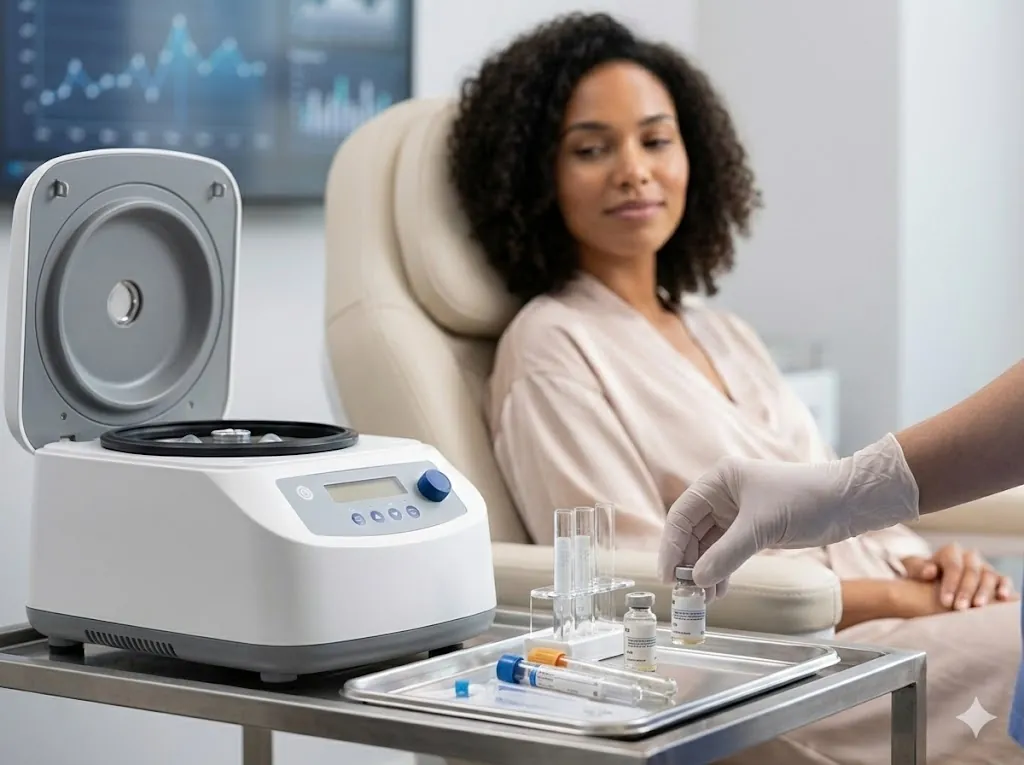
The O-Shot is a regenerative procedure rooted in Platelet-Rich Plasma (PRP) or Platelet-Rich Fibrin (PRF) technology. Blood is drawn from the patient, centrifuged to concentrate platelets and growth factors, and the resulting plasma is injected into specific anatomical structures of the vaginal wall and clitoral complex.
The Growth Factor Cascade
Platelets contain a dense library of bioactive proteins central to the O-Shot's mechanism:
- Platelet-Derived Growth Factor (PDGF): Stimulates fibroblast proliferation and collagen synthesis
- Vascular Endothelial Growth Factor (VEGF): Promotes neovascularization — the formation of new blood vessels
- Transforming Growth Factor-β (TGF-β): Modulates extracellular matrix remodeling and suppresses aberrant scar formation
- Epidermal Growth Factor (EGF): Accelerates epithelial cell turnover and surface regeneration
When injected into the anterior vaginal wall and periclitoral tissue, this concentrated growth factor environment may help restore tissue trophicity lost to estrogen decline, improve local vascularization to potentially enhance sensitivity, and strengthen connective tissue support — with emerging evidence suggesting benefit for mild stress urinary incontinence. Because the procedure is autologous — using the patient's own blood — immunogenicity risk is negligible, making the O-Shot one of the more physiologically low-risk regenerative applications available in intimate wellness medicine.
How does Ultra Femme 360 remodel collagen?
Ultra Femme 360 operates through a fundamentally different mechanism: radiofrequency (RF) thermal energy delivery. The device emits controlled RF waves that penetrate the vaginal mucosa and submucosal layers, raising tissue temperature to the therapeutic threshold (approximately 40–45°C) required to trigger collagen denaturation and subsequent neocollagenesis. Learn more about Ultra Femme 360.
The Thermal Remodeling Sequence
- Thermal effect phase: RF energy creates a controlled, precise thermal effect in the dermis and subdermal stroma
- Acute inflammatory response: Mast cell degranulation and cytokine release (IL-1, IL-6, TNF-α) initiate the classical wound-healing cascade
- Fibroblast activation: Heat shock proteins activate local fibroblasts to synthesize new Type I and Type III collagen
- Collagen maturation: Over weeks to months, new collagen fibers reorganize and replace degraded matrix, restoring structural integrity and tissue tone
Ultra Femme 360's 360-degree applicator design delivers uniform circumferential heating, addressing the full vaginal canal rather than focal points — a design consideration that may improve consistency of the thermal dose across the treatment area.
What does the clinical research show?
Published studies report improvements in sexual function scores after PRP and in laxity and lubrication scores after radiofrequency treatment, but large randomized trials for intimate applications are still limited.
PRP and the O-Shot in Female Sexual Dysfunction
Runels et al., published in the Journal of Women's Health Care, conducted early feasibility work demonstrating patient-reported improvements in sexual function following periclitoral PRP injection. While large-scale randomized controlled trials for this specific anatomical application continue to emerge, the underlying platelet biology is supported by decades of robust evidence in wound healing, orthopedics, and skin research.
Sharif et al., Gynecological Endocrinology, examined autologous PRP for female sexual dysfunction in a prospective cohort, reporting improvements on the Female Sexual Function Index (FSFI) — particularly in the arousal, lubrication, and satisfaction domains. The investigators hypothesized that VEGF-driven neovascularization in periclitoral tissue underlies the observed functional improvements.
Nikolopoulos et al., European Urology Focus, evaluated PRP in the context of genitourinary syndrome of menopause (GSM), finding histological evidence of epithelial regeneration and submucosal vascular proliferation on biopsy specimens at six weeks post-injection — providing direct mechanistic corroboration for patient-reported symptom improvement.
Radiofrequency for Vaginal Rejuvenation
Lalji & Lozanova, Journal of Cosmetic Dermatology, published a clinical assessment of RF-based vaginal treatments demonstrating statistically significant improvements in vaginal laxity scores, lubrication, and dyspareunia using validated patient-reported outcome measures.
Karcher & Sadick, International Journal of Women's Dermatology, reviewed energy-based devices for vulvovaginal rejuvenation and concluded that RF modalities showed the most consistent histological evidence of neocollagenesis compared to other energy platforms reviewed — providing objective tissue-level confirmation of the remodeling effect.
Note: The intimate wellness evidence base is actively evolving. At Skin Art MD in Burnaby, treatment protocols are reviewed regularly against emerging peer-reviewed data. Patients are encouraged to discuss the current state of evidence with Dr. Fong during consultation.
How do the O-Shot and Ultra Femme 360 compare?
The O-Shot uses injectable growth factors for tissue regeneration, while Ultra Femme 360 uses non-invasive radiofrequency energy for thermal collagen remodeling.
| Feature | O-Shot (PRP/PRF) | Ultra Femme 360 (RF) |
|---|---|---|
| Mechanism | Growth factor-driven tissue regeneration | Thermal collagen remodeling |
| Primary target | Sensitivity, sexual function, mucosal health | Vaginal laxity, structural tone |
| Procedure type | Injectable | Non-invasive energy device |
| Typical sessions | 1–3 | 3–4 |
| Onset of effect | Weeks (cellular regeneration) | Weeks to months (collagen maturation) |
| Recovery | Temporary sensitivity, usually settling within hours | Most people resume normal activities the same day; temporary redness or sensitivity possible |
| Autologous | Yes — patient's own blood | N/A |
| Category | Autologous biologic (off-label intimate application) | Medical-grade device |
These two treatments are frequently used in combination — RF remodeling restores structural architecture and tone while O-Shot PRP growth factors target functional sensitivity and mucosal regeneration. Dr. Sharon Fong, a physician at Skin Art MD, evaluates each patient individually to determine whether a single treatment or a combination is clinically appropriate. Book a consultation to discuss the options.
Who may benefit, and who should not be treated?
Presentations studied include reduced sensitivity, menopause-related dryness, mild stress incontinence and laxity after childbirth, while active infection, pregnancy, cancer and severe prolapse rule treatment out; a physician assessment decides suitability.
Candidate assessment for intimate rejuvenation requires a thorough clinical evaluation — not a checkbox exercise. At Skin Art MD in Burnaby, Dr. Fong's intake process includes a detailed sexual health history, gynecologic history, medication review, and targeted physical assessment.
Presentations That May Benefit
For O-Shot:
- Decreased sexual arousal or sensitivity not adequately explained by psychological factors alone
- Genitourinary syndrome of menopause (GSM): dryness, epithelial thinning, recurrent discomfort
- Mild to moderate stress urinary incontinence
- Lichen sclerosus as adjunct to standard medical management (emerging evidence)
- Female sexual arousal disorder in patients who have not responded adequately to conservative management
For Ultra Femme 360:
- Vaginal laxity following childbirth or aging
- Mild pelvic floor insufficiency without prolapse
- Dryness and atrophy-related dyspareunia in patients seeking non-hormonal options
- General vaginal rejuvenation in the perimenopausal or postmenopausal patient
Contraindications and Exclusion Criteria
Patients who may not be candidates include those with:
- Active genital infection (bacterial vaginosis, candidiasis, STIs) — must be treated and resolved first
- Active malignancy or history of gynecologic cancer — requires oncology sign-off before proceeding
- Pregnancy or breastfeeding
- Severe pelvic organ prolapse (POP Grade III/IV) — surgical consultation is more appropriate
- Significant uterine or ovarian pathology not yet fully evaluated
- Platelet dysfunction disorders or anticoagulant therapy — directly relevant to O-Shot candidacy
- Active implanted electronic devices such as pacemakers or ICDs — relevant for RF-based treatments
- Significant unaddressed psychosexual comorbidity — best managed in conjunction with appropriate counseling
This evaluation is a clinical prerequisite, not administrative gatekeeping. Book a consultation with Dr. Fong to begin a personalized assessment.
What are the limitations of these treatments?
Responses vary between individuals, maintenance sessions may be needed, neither treatment replaces medical care for hormone deficiency, and large randomized trials for intimate applications remain limited.
Variable individual response: Results depend on baseline tissue health, degree of hormonal change, procedural technique, and individual regenerative capacity, so individual outcomes cannot be predicted in advance.
Maintenance may be required: RF collagen remodeling in particular may benefit from periodic maintenance sessions as natural aging continues. The O-Shot may also be repeated to sustain regenerative effects over time.
Not a replacement for systemic therapy: Significant menopausal hormone deficiency needs its own medical care under qualified supervision; intimate rejuvenation can be coordinated with that care rather than replacing it.
Evolving evidence base: The mechanistic rationale for both treatments is well-grounded in established tissue biology. Clinical evidence is promising and growing. However, large-scale RCT data specific to intimate applications remains more limited than in some other fields. Skin Art MD presents these treatments within that honest evidence context, because transparency is part of what physician-led care means.
Category note: O-Shot PRP procedures are autologous biologic applications. Ultra Femme 360 uses a medical-grade device. Neither category predicts an individual outcome.
What does physician-led intimate wellness care involve at Skin Art MD?
At Skin Art MD in Burnaby, intimate wellness consultations and treatments are physician-supervised, plans are individualized, care is available in English and Mandarin, and privacy is built into the intake process.
Physician-led care at every step. Dr. Sharon Fong is a physician at Skin Art MD. Every intimate wellness consultation and treatment is physician-supervised — not delegated to support staff or aestheticians operating outside their scope.
Evidence-informed protocols. Skin Art MD uses current-generation RF technology and follows established PRP preparation standards designed to support growth factor concentration and procedural consistency.
Personalized treatment plans. Intimate concerns often overlap — laxity, reduced sensitivity, persistent dryness — and each may respond to a different modality, so every plan is tailored to the individual rather than defaulting to a single protocol.
Bilingual care. Skin Art MD serves Burnaby's diverse Greater Vancouver community with consultations and patient education in both English and Mandarin Chinese (普通话). Discussing intimate health in a preferred language can remove a real barrier to seeking care.
Discreet, respectful clinical environment. The intake process and clinic space are designed with privacy and comfort in mind. Intimate health deserves the same clinical seriousness as any other medical concern. Book a consultation to arrange a physician assessment.
What do patients commonly ask about the O-Shot and Ultra Femme 360?
Common questions cover comfort during treatment, the number of sessions, combining treatments, when changes appear, safety, insurance coverage and medications.
Is the O-Shot painful? Topical numbing cream is applied prior to injection, and the periclitoral region is specifically numbed with local anesthetic to minimize discomfort. Most patients describe the sensation as mild pressure rather than sharp pain. Any post-procedure sensitivity typically resolves within a few hours, and most patients return to normal activities the same day.
How many Ultra Femme 360 sessions are typical? A standard protocol involves 3–4 sessions spaced approximately 1–2 weeks apart, with ongoing collagen maturation continuing for several months after the final session. Some patients with more significant laxity may benefit from additional treatments. Dr. Fong establishes an individualized plan during the consultation.
Can O-Shot and Ultra Femme 360 be combined? Yes — for many patients, combination therapy may offer complementary benefits. RF remodeling addresses structural laxity and tone while PRP growth factors target mucosal regeneration and sensitivity. Dr. Fong assesses whether a combination or staged approach is appropriate for each clinical presentation.
How soon do changes appear? With Ultra Femme 360, initial changes in tone and lubrication may be noticed within 2–4 weeks of beginning the session series, with ongoing improvement through 3–6 months as new collagen matures. O-Shot responses vary individually; some changes may appear within weeks, while the full regenerative effect may take 2–3 months to manifest.
Are these treatments safe? Both treatments carry favorable safety profiles when performed by qualified physicians. Serious adverse events are rare. Common transient effects after the O-Shot may include mild swelling or spotting. After RF treatment, most people resume normal activities the same day; temporary redness or sensitivity is possible. Individual risk is assessed thoroughly during the physician consultation before any treatment proceeds.
Are these treatments covered by insurance? Intimate rejuvenation procedures are typically considered elective and are not covered by BC MSP or standard private extended health plans. Costs are discussed during the consultation.
Do I need to stop any medications before treatment? For the O-Shot specifically, patients on anticoagulants or antiplatelet agents should discuss timing with Dr. Fong, as these medications may affect platelet function and treatment efficacy. A complete medication review is conducted as part of the consultation.
What happens at a first intimate wellness consultation?
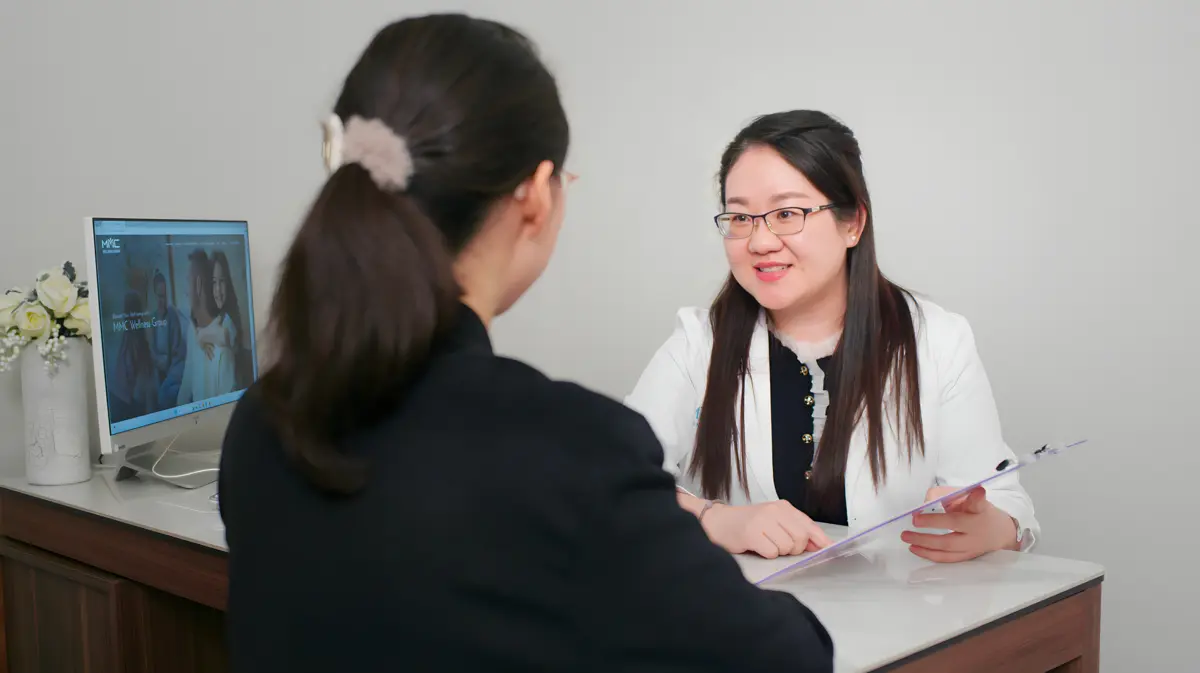
If you have been researching the O-Shot, Ultra Femme 360, or vaginal rejuvenation options in Burnaby and the Greater Vancouver area, a private consultation with Dr. Fong is where suitability is decided. She reviews your history, conducts an appropriate clinical assessment and, where treatment is suitable, creates a personalized plan built around your physiology, your goals, and your timeline.
A direct, knowledgeable conversation with a physician can resolve much of the uncertainty around these treatments. This is not an easy topic to raise, and the consultation is designed to make that conversation straightforward.
How do I arrange a consultation in Burnaby?
The medical team at Skin Art MD in Burnaby creates a personalized plan only after a physician assessment. Book a consultation — available in English and Chinese.
This article is for educational purposes only and does not constitute medical advice. Please consult with a qualified healthcare professional before undergoing any treatment.