Laser hair removal works by delivering light that melanin in the hair absorbs; the heat injures the follicle's growth cells so fewer, finer hairs return. It produces long-term reduction rather than removal of every hair, needs several sessions because only actively growing follicles respond, and the right laser depends on skin type and hair colour.
Laser hair removal works by delivering light that melanin in the hair absorbs; the heat injures the follicle's growth cells so fewer, finer hairs return. It produces long-term reduction rather than removal of every hair, needs several sessions because only actively growing follicles respond, and the right laser depends on skin type and hair colour.
How Does Laser Hair Removal Reduce Hair Long-Term?
For anyone exhausted by the endless cycle of shaving, waxing, or threading, laser hair removal offers a clinically studied path to long-term hair reduction. But how does it actually work at a cellular level, and who is it suitable for? Learn more about Laser Hair Removal at Skin Art MD
As a physician-led clinic in Burnaby, we believe informed patients make better decisions. This article goes deep into the mechanism, the evidence, and the clinical nuances that a physician weighs when assessing whether laser hair removal is suitable.
What Happens at the Follicle During Laser Hair Removal?
Laser hair removal operates on the principle of selective photothermolysis — a concept first articulated by Anderson and Parrish and published in Science. The principle is elegantly precise: deliver a specific wavelength of light at a specific pulse duration that is preferentially absorbed by a target chromophore — in this case, melanin — without meaningfully damaging surrounding tissue.
When the laser pulse fires, photons travel into the dermis and are absorbed by melanin in the hair shaft and surrounding follicular matrix cells. This light energy converts to heat via the photothermal effect, raising the temperature of the follicle to levels that induce irreversible thermal injury to the germinative cells of the bulge and bulb regions — the structures responsible for producing new hair.
Why Melanin Is the Target
Melanin exists in two forms in hair: eumelanin (dark brown or black pigment) and pheomelanin (red or blonde pigment). Eumelanin is a far more efficient absorber of near-infrared and visible light wavelengths. This is why darker hair responds most predictably to laser treatment — the follicle contains high concentrations of the absorbing chromophore. Lower-melanin hair colors such as blonde, red, or grey absorb laser energy less efficiently, making outcomes in these cases less predictable.
The Diode Laser Advantage
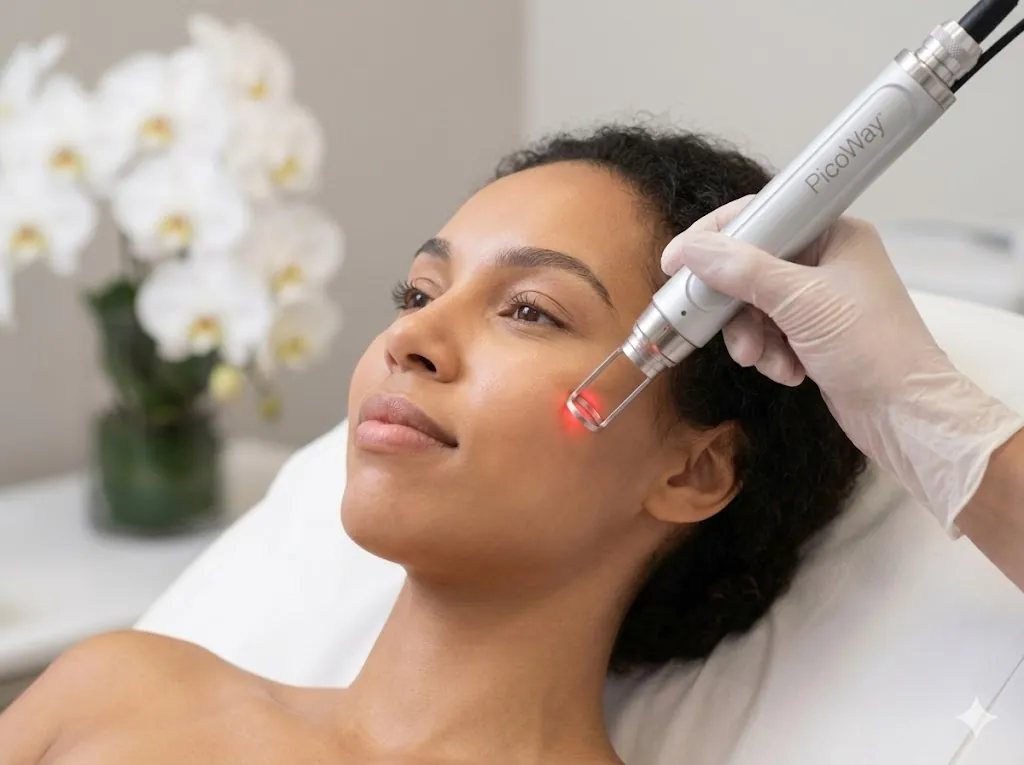
The diode laser (typically operating at 808–810 nm) is one of the most widely studied platforms for laser hair removal. At this wavelength, melanin absorption remains strong while oxyhemoglobin absorption drops, reducing vascular side-effect risk. The 808 nm wavelength also penetrates deeper into the dermis compared to shorter wavelengths such as alexandrite (755 nm), allowing it to reach the deeper follicular bulb structures where lasting damage must occur for long-term reduction. Modern diode platforms incorporate contact cooling of the epidermis — through a chilled sapphire tip or forced cold air — protecting the skin surface while thermal energy accumulates at depth. This engineering advance has meaningfully expanded the range of Fitzpatrick skin types that can be safely treated.
What Does the Research Show About Laser Hair Removal?
The evidence base for laser hair removal is robust, spanning multiple device platforms and skin types.
Foundational Physics: The landmark Anderson & Parrish paper in Science defined the physics of selective tissue targeting. Every modern laser hair removal device is built on this theoretical framework — the science is not new, and it is not contested.
Diode Laser Efficacy: Handrick & Alster published clinical outcome data in Dermatologic Surgery demonstrating sustained hair reduction following a standard multi-session diode laser protocol. Their work confirmed that follicular injury accumulates across sessions as hairs in different growth phases are targeted sequentially — a direct consequence of the anagen-dependent mechanism described below.
Fitzpatrick Skin Type Outcomes: Alster and colleagues, writing in the Journal of the American Academy of Dermatology (JAAD), examined outcomes across a range of skin phototypes, highlighting the importance of parameter selection — particularly fluence, pulse duration, and spot size — in optimizing both efficacy and safety across the Fitzpatrick scale.
Long-Term Reduction vs. Removal: Clinical literature consistently distinguishes between hair reduction and complete removal. Multi-session laser treatment achieves long-term hair reduction — defined as a statistically significant reduction in terminal hair count at 12 months post-treatment — rather than elimination of every follicle. The goal is reduction, not removal of every hair, and this distinction matters when setting patient expectations.
Session Dependency and Hair Cycle: Hair growth follows three phases — anagen (active growth), catagen (transition), and telogen (resting). Laser energy only effectively damages follicles actively in the anagen phase. Since only a fraction of follicles are in anagen at any given time — and this fraction varies by body site — multiple sessions spaced 4–8 weeks apart are required to address the full follicular population over time.
How Does Laser Compare With Other Hair Removal Methods?
Understanding how laser compares to its alternatives helps patients and clinicians select the right tool for each case.
| Technology | Mechanism | Best Suited For | Key Limitations |
|---|---|---|---|
| Diode Laser (808 nm) | Selective photothermolysis via melanin | Wide range of skin types, body areas | Multiple sessions required; poor on blonde/grey hair |
| Alexandrite Laser (755 nm) | Selective photothermolysis, shorter wavelength | Lighter skin tones, fine hair | Higher epidermal melanin risk in darker phototypes |
| Nd:YAG Laser (1064 nm) | Deeper penetration, lower chromophore affinity | Darker skin types (Fitzpatrick V–VI) | May require higher fluences for equivalent effect |
| IPL (Intense Pulsed Light) | Broadband filtered light, not a true laser | Lighter skin, coarser hair | Less precise; efficacy varies widely by device and operator |
| Electrolysis | Direct current destroys follicle chemically/thermally | All hair colors, including light hair | Extremely time-intensive; impractical for large areas |
| Waxing / Shaving | Mechanical removal only | Immediate result, no equipment needed | No follicular damage; regrowth inevitable |
The clinical distinction between laser and IPL is frequently blurred in consumer marketing. True diode lasers deliver monochromatic coherent light at a precise wavelength, yielding consistent, predictable follicular targeting. IPL devices emit a broad spectrum filtered to a range — efficacy depends heavily on device calibration and operator experience. At Skin Art MD in Burnaby, physician oversight ensures the correct technology and parameters are selected based on your individual skin and hair profile.
Who Is a Suitable Candidate for Laser Hair Removal?
Not everyone is an equally suitable candidate for laser hair removal. A thorough evaluation — the kind conducted under physician supervision at Skin Art MD — weighs multiple clinical factors before any treatment is recommended.
Hair and Skin Characteristics
The most predictable responses are seen with a meaningful contrast between hair pigment and skin tone: dark terminal hair on lighter skin provides the optimal chromophore differential. Advances in longer-wavelength diode and Nd:YAG platforms have extended safe, effective treatment to Fitzpatrick skin types IV–VI with appropriate parameter adjustment.
Challenging presentations:
- Blonde, red, or grey hair: Low eumelanin content reduces chromophore absorption. Outcomes are less predictable and may require a different approach or realistic expectation adjustment.
- Very dark skin (Fitzpatrick V–VI) with shorter-wavelength platforms: Epidermal melanin competes with follicular melanin for energy absorption, elevating epidermal injury risk. Nd:YAG (1064 nm) is generally preferred in these cases.
- Vellus (fine, unpigmented) hair: Responds poorly to photothermolysis due to minimal melanin content.
Hormonal and Medical History
Active hormonal conditions — such as polycystic ovarian syndrome (PCOS) — can drive continued recruitment of new follicles from non-cycling vellus precursors, reducing the durability of results over time.
Laser hair removal can still be effective, but patients should expect the need for maintenance sessions and understand the underlying hormonal dynamic.
Medications that cause photosensitivity — including certain antibiotics, oral retinoids, and some antidepressants — require a wash-out or hold period before treatment. A complete medication review is a standard part of our intake process.
Dr. Sharon Fong, our physician, personally reviews candidate suitability for laser procedures at Skin Art MD, ensuring treatment plans are medically appropriate and that contraindications have been formally screened. This physician-led model is what separates a medical aesthetics clinic from a franchise laser center or day spa.
Skin Condition at the Treatment Site
Active skin infections, open wounds, or inflammatory skin conditions in the target zone are temporary contraindications — treatment can proceed once resolved. Tattoos overlying the intended treatment area cannot be treated, as the laser would target tattoo ink rather than follicular melanin, risking ink fragmentation or thermal burns.
A physician-led consultation screens for contraindications and sets protocols before a single pulse is fired, and our medical team assesses individual candidacy in detail.
What Are the Limitations and Contraindications?
Laser hair removal does not remove every hair, works poorly on low-melanin hair, and needs multiple sessions; pregnancy, photosensitizing medications, active infection, recent sun exposure and some other conditions require deferral or physician review.
Transparency about limitations is a hallmark of evidence-based practice. Laser hair removal has genuine limitations that every patient deserves to understand before committing to treatment.
What Laser Hair Removal Cannot Achieve
- Complete removal for all patients: Clinical study outcomes consistently describe results as long-term hair reduction. Sparse regrowth over years is common and is typically thinner and lighter than the original hair.
- Predictable results on low-melanin hair: Blonde, red, white, and grey hair lack sufficient eumelanin for reliable chromophore absorption.
- Single-session results: The anagen-dependent biology requires multiple sessions — typically 6–8 at minimum, and more for hormonally active areas.
Medical Contraindications
- Pregnancy: Treatment is avoided as a precautionary measure due to insufficient safety data.
- Active photosensitizing medications: Require physician review and potential hold before treatment.
- Active herpes simplex at the treatment site: Pre-treatment antiviral prophylaxis may be indicated for patients with a relevant history.
- Oral prescription acne medication: Typically requires a wash-out period before elective laser procedures — your physician will advise on appropriate timing.
- History of keloid formation: Relevant in scar-prone anatomical areas; risk is generally low with appropriate parameters.
- Recent sun exposure or active self-tanner use: Elevates epidermal melanin, increasing the risk that surface skin absorbs excess laser energy. A period of sun avoidance and self-tanner discontinuation is required pre-treatment.
Expected Side Effect Profile
With appropriate parameters and a qualified operator, serious adverse events are uncommon. Expected transient effects include:
- Erythema and mild perifollicular edema (typically resolving within 24 hours)
- Temporary pigment changes (hyperpigmentation or hypopigmentation), more common in higher Fitzpatrick types with suboptimal parameters
- Follicular crusting with aggressive fluences
Lasting scarring or pigmentary change is rare when treatment is performed by trained medical professionals using evidence-based protocols.
What Happens During a Laser Hair Removal Course?
A course runs from physician consultation and preparation through an optional patch test, the session itself, aftercare, sessions spaced 4–8 weeks apart, and shedding of treated hairs over one to three weeks.
- Physician consultation: Medical history review, skin and hair type assessment, realistic outcome discussion, and contraindication screening.
- Pre-treatment preparation: Shave the treatment area 24 hours before. Do not wax or pluck — the follicle must contain the hair shaft to conduct laser energy. Avoid sun exposure and self-tanner for at least 4 weeks prior.
- Patch test: For new patients or higher Fitzpatrick types, a small test area may be treated first to confirm parameters before proceeding with the full zone.
- Treatment session: Cooling protects the epidermis. The handpiece moves systematically across the treatment zone. Duration ranges from a few minutes (upper lip) to 30–60 minutes (legs, back).
- Immediate aftercare: Cool compresses, broad-spectrum SPF application, and avoidance of heat exposure (saunas, hot showers) for 24–48 hours.
- Session intervals: Typically 4–8 weeks between sessions depending on body area. Facial areas may cycle faster than body areas.
- Post-treatment shedding: Treated hairs shed over 1–3 weeks as the follicle extrudes the damaged shaft. This is not regrowth — it is the treatment working.
Why Choose Skin Art MD in Burnaby?
Many clinics offer laser hair removal. Fewer offer it under direct physician supervision with individualized care that meaningfully affects outcomes and safety.
Physician-led care: Dr. Sharon Fong and our medical team are involved from consultation through parameter decisions — not just a sign-off at intake.
Current technology: We use current-generation platforms with established clinical track records.
Individualized treatment plans: Your skin phototype, hair characteristics, hormonal history, and treatment goals all inform a protocol built specifically for you.
Bilingual team (English and Mandarin): Patients across Greater Vancouver — including a large Mandarin-speaking community in Burnaby — can discuss their care fully in their preferred language. Informed consent should never be a language barrier. Our consultations are available in both English and Chinese.
Frequently Asked Questions
How many sessions will I need? Most patients require 6–8 sessions for significant, lasting reduction. Hormonally active areas — chin, upper lip, bikini line — often need additional sessions or periodic maintenance due to continued androgen-driven follicular recruitment.
How long do laser hair removal results last? Clinically, the result is described as long-term hair reduction — a meaningful, long-lasting reduction in hair count and density measured at 12 months post-treatment. Most patients see substantially reduced hair that, if any returns, is finer and lighter; clinical evidence does not show elimination of every follicle for every patient.
Does it hurt? Sensation is commonly described as a brief rubber-band snap with a warming sensation. Modern diode systems with integrated cooling substantially reduce discomfort. Most patients tolerate full sessions without topical anesthesia, though numbing cream can be applied for sensitive areas upon request.
Can I be treated if I have darker skin? Yes — with appropriate platform and parameter selection. Longer wavelengths (Nd:YAG 1064 nm) are clinically preferred for Fitzpatrick V–VI phototypes. Our physician team will select the correct technology and settings at consultation.
What affects the cost of laser hair removal? Treatment costs vary by area and number of sessions required, which are discussed at consultation.
Can I wax between sessions? No. Waxing and plucking remove the hair shaft from the follicle, eliminating the chromophore target required for laser energy to damage the germinative cells. Shaving between sessions is acceptable and encouraged.
What should I avoid before a session? Sun exposure, self-tanner, waxing, and plucking should be avoided for the recommended period prior to each session. Your care team will provide a complete pre-treatment checklist at your first consultation.
Next Steps
Laser hair removal is a well-studied procedure in aesthetic medicine when performed correctly, on appropriate candidates, with suitable technology and proper physician oversight. The science behind long-term hair reduction is well-established; whether it suits an individual is a question for a physician assessment.
The physician team at Skin Art MD in Burnaby is here to answer that question with clinical precision and genuine care. Book a consultation and we will map out a plan based on your skin, your hair, and your goals.
Considering Laser Hair Removal? Our medical team at Skin Art MD in Burnaby can assess your skin and hair and discuss options. Book a consultation — available in English and Chinese.
This article is for educational purposes only and does not constitute medical advice. Please consult with a qualified healthcare professional before undergoing any treatment.