Laser hair removal for men in Burnaby, BC is available at Skin Art MD, a physician-led skin clinic in Metrotown. The treatment uses a diode laser (around 808–810 nm) that targets melanin in the hair follicle, disrupting the structures responsible for regrowth. Because only actively growing hairs respond at any given time, a course of multiple sessions is typically required for noticeable long-term reduction.
Laser hair removal for men uses a diode laser (about 808–810 nm) whose light is absorbed by melanin in the hair follicle, heating and disrupting the follicle's growth structures. Because only actively growing hairs respond, a course of about 6–8 sessions is typical, and the result is long-term reduction rather than complete removal.
Why are more men choosing laser hair removal?
The landscape of men's aesthetics has shifted significantly in recent years. Male patients now represent a growing proportion of aesthetic consultations across Greater Vancouver and Burnaby — and laser hair removal is one of the most frequently requested procedures.
Whether driven by athletic performance, professional presentation, reduction of ingrown hairs, or personal comfort, men are increasingly pursuing long-term hair reduction that goes beyond temporary fixes.
This article is the clinical information layer — not a sales pitch. If you want to understand how laser hair removal works at the biological level, what the evidence says, and how candidacy is assessed, read on.
For a full procedure overview, Learn more about Laser Hair Removal.
How does laser hair removal work?
Selective Photothermolysis — The Foundational Principle
Laser hair removal is built on the principle of selective photothermolysis, first described by Anderson and Parrish. The concept is precise: a laser emits a specific wavelength of light that is absorbed preferentially by a target chromophore — in this case, melanin concentrated in the hair shaft and follicular bulb — generating sufficient thermal energy to destroy that target without damaging the surrounding tissue. This is possible provided the pulse duration does not exceed the thermal relaxation time of the target structure. For hair follicles, the relevant chromophore is eumelanin, the dark pigment found most densely in the hair shaft and bulb. When a laser pulse is absorbed, thermal energy conducts outward from the hair shaft into the follicular bulge and bulb — the anatomical zones housing stem cells responsible for hair regeneration. Irreversible thermal injury to these stem cell populations results in long-term follicle disruption.
The Diode Laser: Why 808–810 nm?
The diode laser (wavelength approximately 808–810 nm) is widely used for laser hair removal in men's aesthetics for several well-documented reasons:
- Penetration depth: At 808 nm, the wavelength reaches the bulb and bulge of most body hair follicles (typically 3–5 mm depth) while remaining preferentially absorbed by melanin over water and oxyhemoglobin.
- Epidermal sparing: The diode wavelength has comparatively lower absorption by epidermal melanin relative to shorter wavelengths such as the 755 nm alexandrite, making it safer across a broader range of Fitzpatrick skin phototypes — directly relevant for the diverse patient population seen at Skin Art MD in Burnaby and across Greater Vancouver.
- Integrated cooling systems: Modern diode platforms pair dynamic contact cooling with each pulse, further protecting the epidermis while permitting higher follicular fluences.
Hair Cycle Dependence: Why Multiple Sessions?
A critical and frequently misunderstood aspect of the mechanism: laser energy only effectively disrupts follicles in the anagen (active growth) phase, when the hair shaft is fully keratinized and the bulb is melanin-dense and anatomically attached. Follicles in telogen (resting) or catagen (transitional) phases contain less melanin and are physically separated from the bulb, making them largely resistant to photothermolysis. At any given time, only a fraction of follicles in a given region are in anagen. This is why a complete treatment course requires multiple sessions — typically 6–8 — spaced to capture successive anagen cycles across the target area.
What does the research show about laser hair removal for men?
Published studies report significant long-term hair reduction with diode and alexandrite lasers after a full course, good safety in darker skin with diode settings, and similar results in men once fluence and spot size are adjusted for coarser hair.
Systematic Review of Laser Epilation
Haedersdal and Götzsche, publishing a systematic review in the Journal of Evidence-Based Medicine, evaluated randomized controlled trials on laser and light source epilation. Their analysis confirmed that laser treatment produces significantly greater long-term hair reduction compared to untreated control sites. Diode and alexandrite lasers demonstrated the most consistent efficacy across included trials, with mean reductions typically in the 70–90% range after a complete treatment course. The review reinforced that multiple sessions are required, and that no single-session protocol achieves durable reduction.
Diode Laser Safety Across Fitzpatrick Skin Types
Aldraibi et al., publishing in Dermatologic Surgery, compared diode and alexandrite laser parameters in patients with Fitzpatrick skin types IV–VI — a population directly relevant to Skin Art MD's diverse Burnaby patient base. Their findings supported the diode laser's superior safety profile in darker skin tones, with comparable efficacy to shorter wavelengths and meaningfully lower rates of post-inflammatory hyperpigmentation (PIH) when appropriate fluences and cooling protocols were applied.
Male-Specific Body Hair Considerations
Rao and Sankar, publishing in the Journal of Cutaneous and Aesthetic Surgery, examined beard and body hair treatment specifically in male patients. Their data highlighted that terminal hair in men — particularly on the chest, back, beard line, and shoulders — typically features higher follicular density and larger bulb diameter compared to female body hair. These anatomical differences require calibration of fluence and spot size accordingly. The study reported comparable long-term reduction rates in male cohorts to those previously described in female populations, provided treatment protocols were adjusted for the specific hair characteristics of male terminal hair.
Collectively, this evidence indicates that laser hair removal can deliver durable results, but outcomes depend critically on correct device selection, protocol calibration, and thorough candidate assessment.
How does diode laser compare with other hair removal methods?
Diode laser gives long-term reduction across a wide range of skin types in 6–8 sessions, while IPL is less selective, electrolysis treats one follicle at a time, and waxing or shaving are temporary.
| Method | Mechanism | Duration of effect | Discomfort | Skin Type Range | Sessions Needed |
|---|---|---|---|---|---|
| Diode Laser | Selective photothermolysis (melanin target) | Long-term reduction | Moderate (cooling mitigates) | Fitzpatrick I–VI (protocol-dependent) | 6–8 |
| IPL (Intense Pulsed Light) | Broadband light, less selective | Moderate reduction | Moderate | Mainly Fitzpatrick I–III | 8–12+ |
| Electrolysis | Direct electrical current per follicle | Follicle-by-follicle removal | High | All types | Very high (per follicle) |
| Waxing / Sugaring | Mechanical root removal | Temporary (weeks) | High | All types | Ongoing indefinitely |
| Shaving | Surface cut only | Days | Low | All types | Daily / ongoing |
Key takeaway: The diode laser balances efficacy, treatment speed, and safety across skin tones for men's aesthetics. IPL is a broadband light source with less wavelength selectivity and is less appropriate for darker skin. Electrolysis removes hair follicle by follicle, which makes it impractical for the large body areas most commonly treated in men (back, chest, shoulders). Diode laser hair removal aims for long-term hair reduction — an important distinction from complete elimination.
How is candidacy for laser hair removal assessed?
Candidacy depends on hair colour and coarseness, Fitzpatrick skin type, hormonal factors and expectations; at Skin Art MD in Burnaby, a physician-overseen assessment decides suitability and builds the protocol.
Dr. Sharon Fong, licensed physician, leads clinical assessments so that each patient's protocol is built on their individual hair characteristics, skin phototype, and medical history — not a generic template.
Characteristics that tend to respond
- Dark, coarse terminal hair: Eumelanin contrast between hair and skin drives the differential absorption that makes photothermolysis possible. Coarse terminal hair on the chest, back, shoulders, and beard line — common in men seeking aesthetics treatment — tends to respond well.
- Fitzpatrick types I–IV: These phototypes have the widest range of safe protocol options. Types V–VI can be treated with diode laser at conservative fluences and longer session intervals; this requires careful clinical calibration.
- Realistic expectations: Long-term hair reduction means a lasting, clinically significant reduction in hair count and caliber — not complete elimination. Fine vellus hairs and lighter-pigmented hairs may not respond.
- Stable hormonal profile: Men with active androgenic conditions or ongoing hormonal therapy may experience partial regrowth over time, as new follicles can be activated by androgen signaling even after treated follicles are destroyed.
What Happens During Consultation
During your initial consultation at Skin Art MD, our clinical team assesses:
- Fitzpatrick phototype classification
- Hair density, color, and caliber mapping across target areas
- Relevant medical history (photosensitizing medications, isotretinoin history, active skin conditions)
- Treatment goals and prioritization of areas
- Realistic session number and interval planning
Book a Consultation to begin your personalized candidate assessment — available in both English and Mandarin.
What are the limitations and contraindications?
Laser hair removal is not suitable for white, grey, blonde or red hair, active photosensitive conditions, a current tan, recent isotretinoin use or pregnancy, and temporary redness and swelling are expected afterwards.
Physician-led men's aesthetics care requires transparent candidacy communication. Laser hair removal is not universally appropriate.
Relative Contraindications
- Active tan or recent sun exposure: UV-induced increase in epidermal melanin competes with follicular melanin for laser energy, significantly elevating burn risk. Patients must avoid sun exposure for 4–6 weeks prior to each session.
- Recent isotretinoin use: Current use or use within the prior six months is a relative contraindication due to altered skin healing response.
- Photosensitizing medications: Tetracyclines, certain NSAIDs, and other photosensitizers increase epidermal sensitivity to laser energy and should be disclosed before treatment.
- Active infection or open lesions within the planned treatment zone.
- Pregnancy: Elective laser procedures are typically deferred.
Absolute Contraindications
- White, grey, blonde, or red hair: No eumelanin means no chromophore target. Laser hair removal cannot effectively treat these hair colors regardless of skin type.
- Active photosensitive conditions such as lupus erythematosus or porphyria.
Expected Side Effects
Transient erythema (redness) and perifollicular edema (swelling resembling "goosebumps") lasting 24–48 hours post-treatment are expected physiological responses — they reflect the intended thermal reaction.
Post-inflammatory hyperpigmentation is possible, particularly in higher Fitzpatrick phototypes, and is managed with pre- and post-treatment protocols including broad-spectrum SPF and, in select cases, topical melanin-suppressing agents.
What does men's laser hair removal at Skin Art MD involve?
Skin Art MD in Burnaby is a physician-led medical aesthetics clinic, so assessments are physician-overseen, laser parameters are set per session and plans are explained in English or Mandarin.
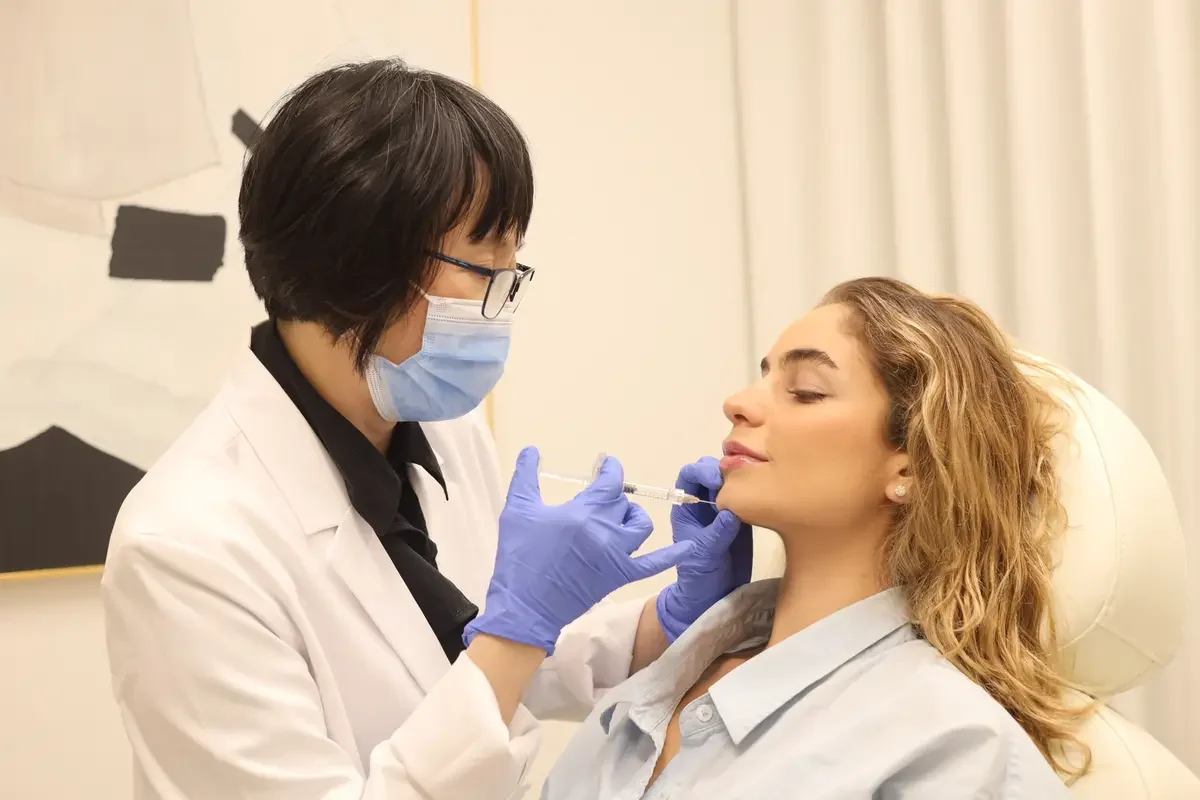
Physician-led care: Dr. Sharon Fong and our clinical team conduct candidate assessments. Your protocol is built on your physiology and goals, not a one-size template.
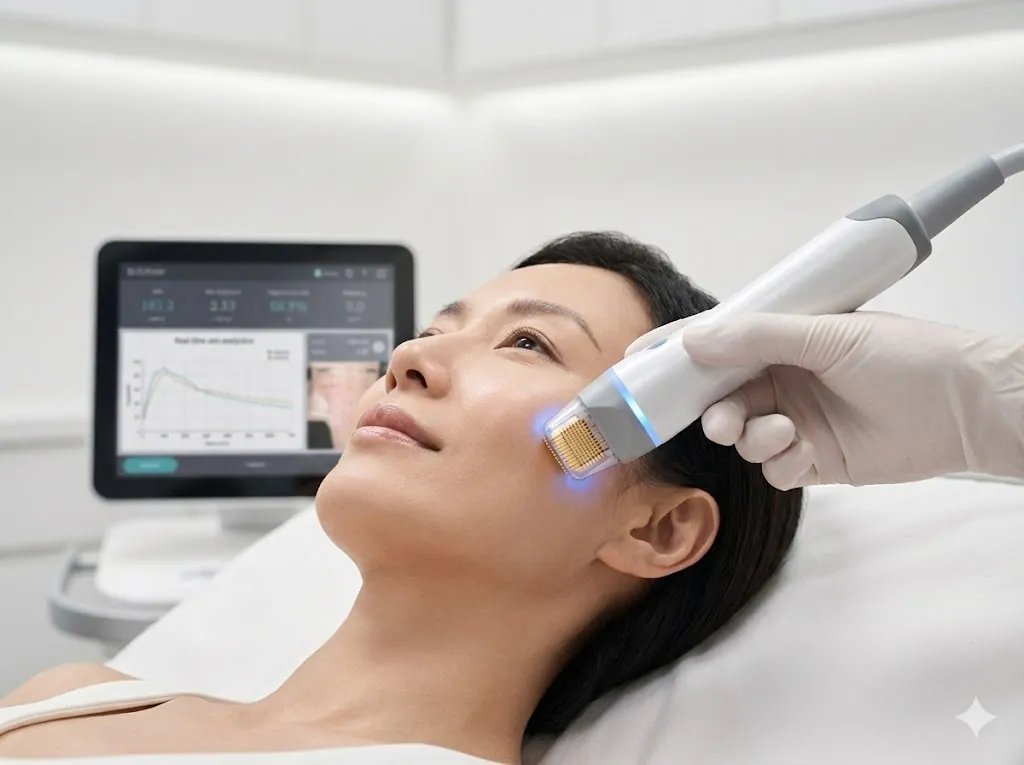
Technology: We use medical-grade diode laser systems with precise parameter control — fluence, pulse duration, spot size, and integrated cooling — calibrated per session based on your skin and hair response.
Personalized treatment plans: We review any prior treatment history and adjust accordingly, particularly for darker skin tones or areas with variable hair density.
Bilingual clinical team: Our team serves Greater Vancouver's diverse community in both English and Mandarin (普通话), so you understand your treatment plan before any session begins. Book a Consultation to learn more.
Frequently Asked Questions
How many sessions will I need for laser hair removal? Most men require 6–8 sessions for body areas and slightly fewer for facial zones, spaced 4–8 weeks apart depending on the region. Areas with dense terminal hair such as the back and chest may require additional sessions. Individual hair cycle variation means results differ between patients.
Does laser hair removal hurt more for men? Male terminal hair — particularly on the back, chest, and beard line — is generally coarser and more densely folliculated. This can mean slightly more sensation during treatment. Our diode laser systems include integrated contact cooling to reduce discomfort. The sensation is usually described as a brief, warm snap.
Can laser hair removal shape or refine the beard line? Yes. Beard line refinement and reduction of chronic ingrown hairs along the neck are common men's aesthetics applications of laser hair removal. Complete beard removal is rarely the goal; most men seek long-lasting definition of the lower neck boundary or reduction of hair on the upper cheeks.
What is the difference between hair reduction and hair removal? Electrolysis removes follicles individually via electrical current. Laser hair removal produces long-term hair reduction — a lasting, significant decrease in hair count and caliber. For men's aesthetics goals, this level of reduction is clinically meaningful and durable.
Can laser hair removal be used on darker skin tones? Yes, when performed with an appropriate device and protocol. The diode laser at 808–810 nm has a deeper penetration profile and comparatively lower epidermal melanin absorption than shorter wavelengths, which is why it is commonly used for Fitzpatrick types IV–VI. Conservative fluences and longer session intervals reduce PIH risk. Skin Art MD's clinical team evaluates patients across the full Fitzpatrick spectrum.
How should I prepare for a session? Shave the treatment area 24 hours before your appointment — the hair must be present at the follicle level for the laser to engage it, but the surface shaft should be removed. Avoid sun exposure and self-tanners for 4–6 weeks prior. Do not wax, thread, or use depilatory creams in the weeks before your session, as these remove the follicular root that the laser targets. Inform your provider of any new medications, especially photosensitizers.
How do I book a laser hair removal consultation?
The next step is a one-on-one conversation with our clinical team about the science and your goals. The consultation is educational and low-pressure, so you understand what to expect before committing to a session. Book a consultation at Skin Art MD in Burnaby — available in English and Chinese.
This article is for educational purposes only and does not constitute medical advice. Please consult with a qualified healthcare professional before undergoing any treatment.