Anti-wrinkle injections and dermal fillers treat different causes of lines. Anti-wrinkle injections (neuromodulators) temporarily relax the small muscles that fold the skin, so they suit lines that appear with expression. Fillers are hyaluronic acid gels that restore volume and structure, so they suit lines and hollows that remain at rest. Many faces have both. A physician assessment at Skin Art MD in Burnaby decides what applies.
| Anti-wrinkle injections | Dermal fillers | |
|---|---|---|
| What it is | A neuromodulator injected into specific muscles | Hyaluronic acid gel, softer or firmer by area |
| What it changes | Muscle activity: the muscle relaxes and the skin above smooths | Volume and support: adds structure where it has been lost |
| Typical use | Lines that appear with expression | Hollows, folds and proportions visible at rest |
| Common areas | Forehead lines, frown lines, crow's feet, bunny lines; the masseter for jaw slimming; lip flip | Lips, chin, jawline, cheekbones, tear troughs, smile lines |
| When it shows | Builds over several days and settles over the following couple of weeks | Visible straight away; swelling settles over the following weeks |
| How it fades | Muscle activity gradually returns over a few months | Gel is metabolised gradually; duration varies by area |
| Adjusting it | Wears off on its own | HA filler can be dissolved with an enzyme |
| Visit length | Short, after an assessment of expressions | Planning first, then injection with a mirror check |
What is the difference between a moving line and a resting line?
A moving line is created by a muscle folding the skin, while a resting line is still there when the face is relaxed. Frowning, raising the brows or smiling folds the skin in the same place over and over, and over time those creases can begin to linger. Lines and shadows that are visible at rest often involve something else as well: loss of volume or support underneath, as in a deepening smile line or a hollow under the eye.
This distinction is the simplest way to understand why two very different injectables are often discussed in the same consultation.
How do anti-wrinkle injections work?
Anti-wrinkle injections temporarily block the nerve signal to a targeted muscle, so the muscle relaxes and the skin above it smooths. Reducing that repeated folding also eases the creasing that deepens lines over time. The dose is tailored to each area and each person's muscle strength rather than taken from a fixed number. Skin Art MD's page describes the aim as a rested look that keeps the person's own expressions.
The same principle is used beyond lines. Relaxing an enlarged masseter (chewing) muscle can slim the lower face over several weeks, which is why the treatment is also called a jaw-slimming injection. A small dose above the upper lip, known as a lip flip, lets the lip turn out slightly.
How do fillers work on the same face?
Fillers work by placing hyaluronic acid gel where volume or support has been lost, or where proportions can be balanced. Hyaluronic acid is a sugar molecule the body already makes, and it binds water. Softer gels suit mobile areas like the lips; firmer cross-linked gels give structure to the chin and jaw. Skin Art MD's filler page frames this in terms of proportion: a recessed chin can make a nose look larger, and flat cheeks can make eyes look tired.
A filler does not stop a muscle from moving, and an anti-wrinkle injection does not add volume. That is the core of the comparison.
Which areas usually belong to which?
The upper face is mostly a muscle conversation, while the mid and lower face is often a volume conversation. Forehead lines, the vertical frown lines between the brows and crow's feet are classic expression lines, usually discussed for anti-wrinkle injections. Lips, chin projection, jawline definition, cheekbones, tear troughs and smile lines are usually discussed for fillers. The jaw is the area where both can come up, for different reasons: an injection can relax a bulky masseter, while a filler can add definition along the jawline.
Why does a natural look depend on dose and placement?
A natural result depends on how much is used and where, more than on which product is chosen. A frozen look comes from overdosing or poor placement of anti-wrinkle injections, and an overfilled look comes from too much filler or placement that ignores anatomy. Conservative dosing that softens lines while keeping a natural range of expression, and filler placement that respects the face's architecture, are the approaches described on Skin Art MD's pages.
What does a visit look like at the Metrotown clinic?
Both visits begin with an assessment, but what the physician looks at differs. Injections at Skin Art MD are performed by a physician under the medical direction of Dr. Charles Jiang.
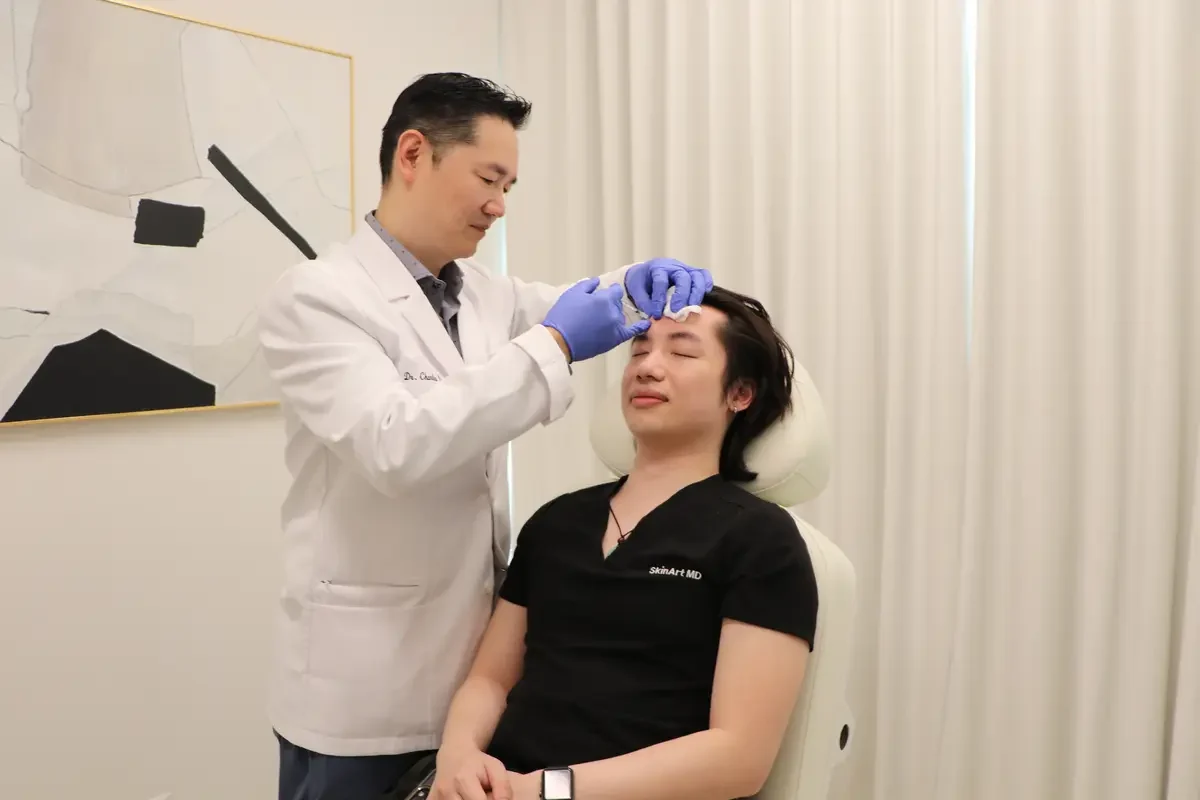
For anti-wrinkle injections, the visit starts with watching the face move: frowning, raising the brows, smiling. Injection points are chosen from that, the area is cleansed, and small, precisely placed doses follow. Afterwards, people stay upright for four hours, skip strenuous exercise and saunas for 24 hours, and do not massage the area.
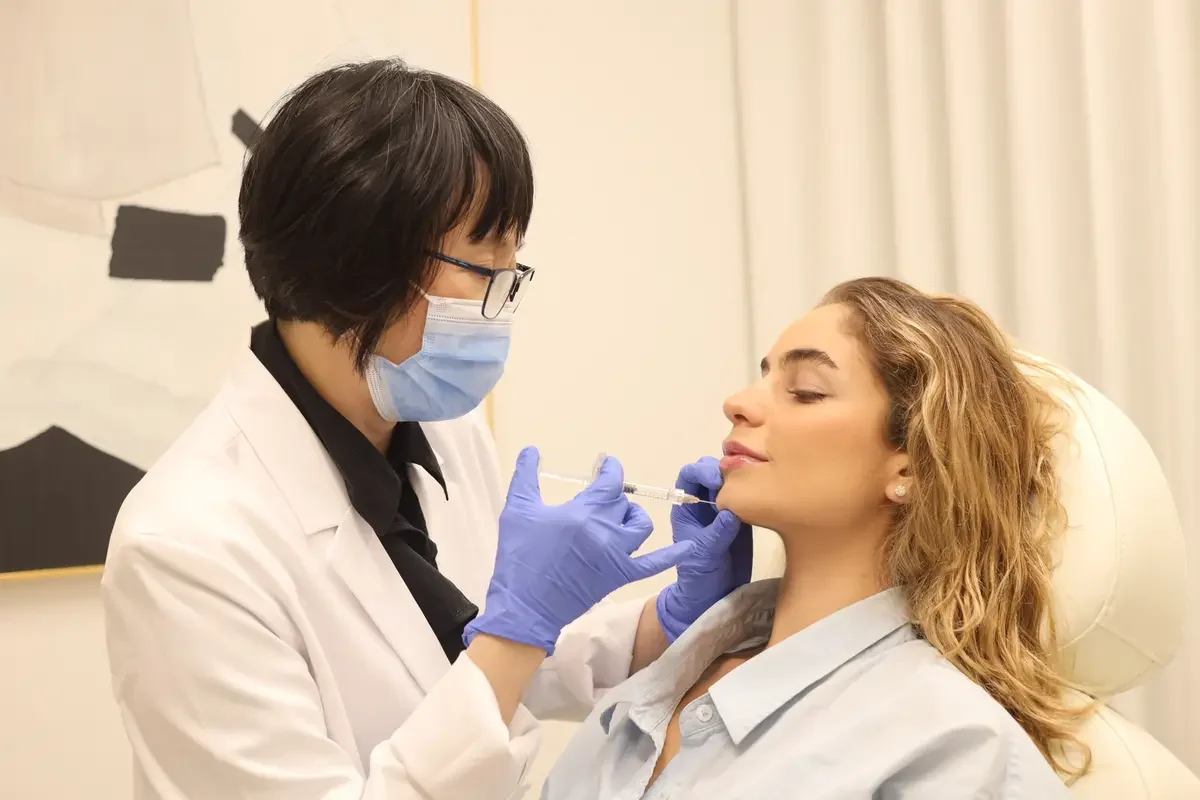
For fillers, the face is assessed at rest, marked, and numbed with a topical cream; many gels also include a numbing ingredient. Injection usually takes 15 to 30 minutes, with a mirror check, and the product is gently moulded. Aftercare includes avoiding heavy sweating for 24 hours and dental work for two weeks. Skin Art MD is at #101 – 4378 Beresford St, Burnaby, near Metrotown SkyTrain Station.
Can they be combined?
Yes, many people have both, because they work on different causes. A typical combined plan relaxes the frown or forehead muscles with anti-wrinkle injections and restores support in the cheeks or chin with filler. The physician maps any combination for safety and balance, and decides whether both happen in one visit or are staged. Some plans also add a collagen-stimulating injectable such as Sculptra.
How is the choice made?
The choice is made at a physician assessment at Skin Art MD in Burnaby, by looking at the face both moving and at rest. The physician assesses which lines come from expression, which come from volume loss or proportion, muscle strength, and medical history. Reasons to wait include pregnancy or breastfeeding, an active infection, irritation or cold sore in the area, allergy to an ingredient, certain neuromuscular conditions (for anti-wrinkle injections), planned dental work and autoimmune conditions (for fillers). Consultations are available in English, Mandarin and Cantonese.
What else do people ask about anti-wrinkle injections and fillers?
These are the shorter questions that come up most often.
Can filler fix forehead lines from frowning?
Expression lines come from muscle movement, which filler does not change, so they are usually discussed for anti-wrinkle injections. Deep resting lines may need a combined view.
Can an anti-wrinkle injection make lips fuller?
Not in volume. A lip flip lets the upper lip turn out slightly; adding volume is a filler conversation.
Will either look frozen or overfilled?
Not when dosing and placement are conservative. Those looks come from too much product or poor placement.
How long does each last?
Anti-wrinkle injections wear off over a few months as muscle activity returns, and many people return on a regular schedule. Filler fades as the gel is metabolised, varying by area and person.
Is alcohol fine afterwards?
The clinic suggests waiting 24 hours, for both, to reduce the chance of bruising.
When is the clinic open?
Tuesday to Sunday, 10:00 to 18:00; closed Mondays. Phone +1 (604) 639-2581.
Written by the Skin Art MD clinical team as general information about how these treatments work and what a visit involves. It is not medical advice; suitability is decided at a physician assessment.