An Aptos thread lift uses absorbable PDO or PLLA threads placed under the skin to lift sagging tissue immediately and stimulate collagen as the threads dissolve; results are typically described as lasting one to two years, with a few days of swelling or bruising. A physician assessment decides whether it suits you.
Here is everything you need to know.
What Is an Aptos Thread Lift?
The threads are inserted beneath the skin using fine cannulas or needles, creating an immediate lifting effect. The longer-term effect develops over the months that follow.
As the threads gradually dissolve, they trigger your body's natural wound-healing response, stimulating new collagen and elastin production around the thread tracks. This means that even after the threads themselves are gone, the structural support they built remains — in the form of your own revitalized tissue.
The Two Main Thread Types
PDO (Polydioxanone) Threads:
- The most widely used absorbable thread material globally
- Dissolves over approximately 6-8 months
- Stimulates Type I and Type III collagen production
- Available in smooth, twisted, and barbed configurations
- Excellent for skin tightening, fine line improvement, and moderate lifting
- Well-established safety profile with decades of use in surgical sutures
PLLA (Poly-L-Lactic Acid) Threads:
- The same biocompatible material used in Sculptra injectable
- Dissolves over approximately 12-18 months
- Triggers a more robust and longer-lasting collagen response
- Designed for a longer-lasting collagen response
- Results can last 18-24 months or longer
- Often considered where moderate volume loss accompanies laxity
Thread Configurations
Not all threads are created equal. The Aptos system uses several configurations depending on your specific needs:
- Barbed threads (cog threads): Feature tiny directional barbs that grip tissue and create mechanical lift. These are the primary lifting threads used for jawline, midface, and neck rejuvenation.
- Smooth threads: Inserted in a mesh-like pattern to stimulate collagen over a broader area. Excellent for skin quality improvement on the cheeks, under-eyes, and neck.
- Twisted or spiral threads: Provide volumizing effects in areas that need subtle fullness alongside tightening.
What Can Thread Lifts Treat?
Thread lifts are remarkably versatile.
- Sagging midface and cheeks: Restoring the youthful "apple cheek" contour
- Jowls and jawline laxity: Redefining the jawline without surgery
- Nasolabial folds: Reducing the depth of smile lines by lifting the overlying tissue
- Marionette lines: Lifting the corners of the mouth
- Neck laxity: Tightening early neck bands and loose skin
- Brow drooping: Creating a subtle, natural brow lift
- General skin laxity: Improving overall skin firmness and texture
Thread Lift vs. Dermal Fillers: What Is the Difference?
This is one of the most common questions we hear. Both treatments address facial aging, but they work in fundamentally different ways:
| Thread Lift | Dermal Fillers | |
|---|---|---|
| Mechanism | Physically lifts and repositions tissue | Adds volume to fill hollows and lines |
| Typical use | Sagging, laxity, loss of definition | Volume loss, deep folds, contouring |
| Collagen benefit | Significant — stimulates new collagen over months | Minimal to moderate (depends on filler type) |
| Duration | 1-2 years (PDO) to 2+ years (PLLA) | 6-18 months (depending on filler) |
| Downtime | 3-7 days mild swelling/bruising | 1-3 days swelling/bruising |
| Natural look | Lifting without added volume | Adds volume — can look overfilled if overdone |
Combining both? Threads provide the structural lift, while fillers restore lost volume in specific areas; a physician assessment determines whether a combination suits your anatomy.
Consultation and Assessment
Your physician will:
- Assess your facial anatomy, skin quality, and degree of laxity
- Discuss your aesthetic goals and expectations
- Determine the appropriate thread type, configuration, and placement strategy
- Review your medical history to assess whether threads are suitable for you
- Explain what results are realistic for your anatomy
The Procedure
Here is what to expect:
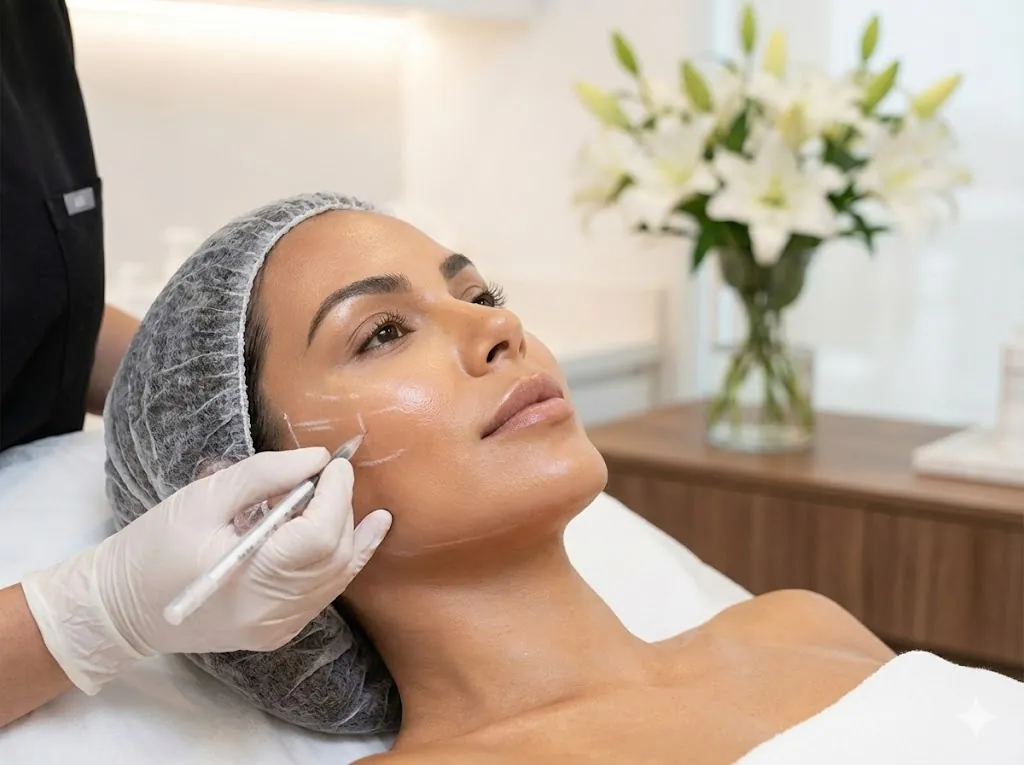
- Marking: Your physician carefully maps the insertion points and lifting vectors on your face
- Anesthesia: Local anesthetic is injected to reduce discomfort during the procedure
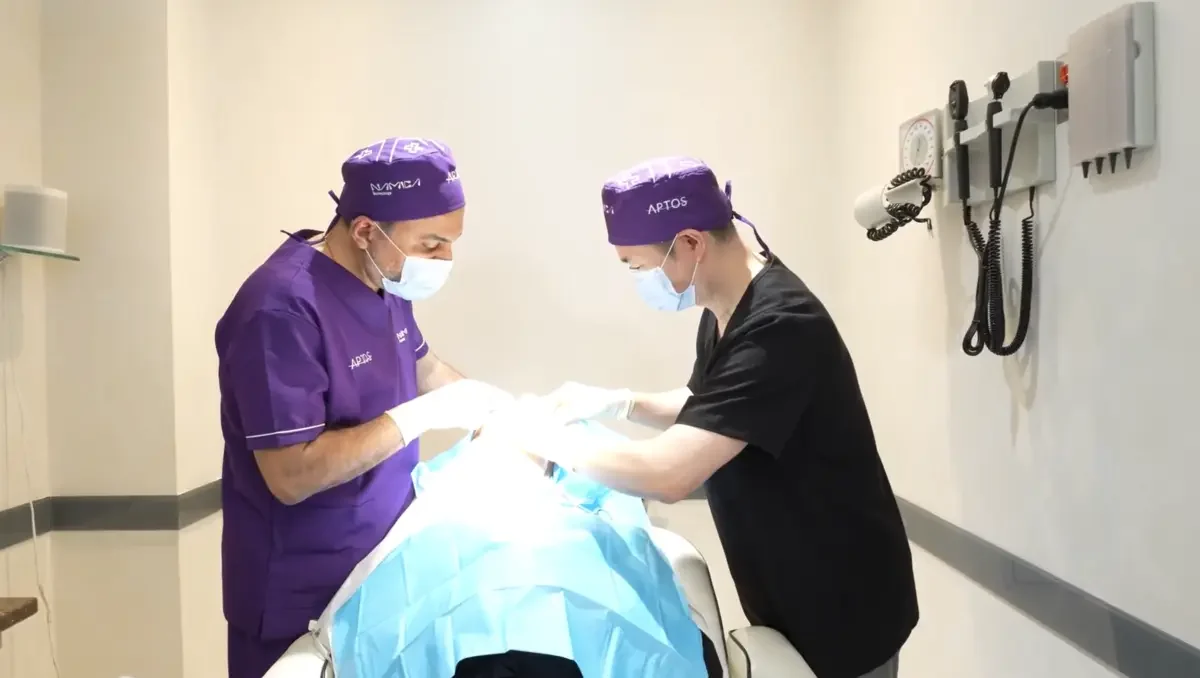
- Insertion: Threads are placed through tiny entry points using fine cannulas — no incisions are needed
- Adjustment: Your physician gently adjusts the thread tension to create the desired lift while maintaining a natural, balanced appearance
- Completion: Entry points are closed with small adhesive strips — no stitches required
The entire procedure typically takes 45-90 minutes depending on the number of threads and areas treated.
What Results to Expect
Immediately after: You will see a noticeable lift right away. The result can look slightly "over-lifted" at first — this is intentional, as there is a small degree of settling in the first week.
Week 1-2: Swelling and mild bruising subside. The initial lifting effect settles into a natural-looking position. You may feel slight pulling or tightness — this is normal.
Month 1-3: Collagen production begins ramping up around the thread tracks. Skin quality starts improving noticeably — firmer, smoother, more luminous.
Month 3-6: The collagen-building phase is in full swing. Results often look better at the 3-month mark than immediately after the procedure, as the new collagen adds natural volume and firmness.
Month 6-24: Threads gradually dissolve, but the collagen scaffold they stimulated remains. Results typically last 1-2 years for PDO threads and up to 2+ years for PLLA threads.
Who Is a Thread Lift Typically Considered For?
Thread lifts are generally considered in the situations below; a physician assessment decides whether they suit a particular person:
- Age 30-65 with mild to moderate facial sagging
- Patients with reasonable skin elasticity (extremely thin or sun-damaged skin may not hold threads well)
- Those who want improvement but are not ready for surgical intervention
- People seeking a more natural alternative to large volumes of filler
- Patients who want collagen stimulation in addition to lifting
- Those with realistic expectations — thread lifts produce meaningful improvement, but they do not replicate a full surgical facelift
Who Should Consider Other Options?
Thread lifts may not be suitable for:
- Severe sagging that truly requires surgical intervention
- Very thin skin with poor elasticity
- Active skin infections in the treatment area
- Patients on blood-thinning medications (may need to pause temporarily)
What Is Recovery Like After a Thread Lift?
Most people have mild to moderate swelling or bruising for the first few days and return to work within about 3–5 days, with strenuous exercise and facial massage paused for a few weeks.
Compared with surgery, the recovery period is short:
Days 1-3:
- Mild to moderate swelling and possible bruising
- Avoid excessive facial movements (wide smiling, chewing hard foods)
- Sleep on your back with head elevated
- Apply cold compresses gently if needed
Days 3-7:
- Swelling continues to decrease
- You may return to work and normal activities (most patients feel comfortable by day 3-5)
- Avoid strenuous exercise and heavy lifting
Weeks 2-4:
- Resume all normal activities including exercise
- Avoid facial massage or aggressive skincare for 4 weeks
- Attend your follow-up appointment for assessment
Long-term:
- Maintain your results with good skincare: SPF, retinoids, antioxidants
- Consider maintenance treatments (additional threads or complementary procedures) as recommended by your physician
- Results continue to improve as collagen builds over months
Can Threads Be Combined With Other Treatments?
Yes — thread lifts can be one part of a broader rejuvenation plan.
-
Dermal fillers for volume restoration in areas where threads alone cannot add fullness (temples, under-eyes, lips)
-
Sylfirm X RF microneedling for skin texture, pore size, and superficial tightening
-
Sculptra for global collagen building that complements the thread-stimulated collagen
-
Skin boosters for deep hydration and skin quality
-
Neuromodulators (neuromodulator injections) to address dynamic wrinkles in the upper face
-
Customized approach: We do not offer a one-size-fits-all thread lift. Every treatment plan is tailored to your unique facial structure, skin quality, and goals
-
Comprehensive care: From initial consultation through follow-up, we are with you at every step
Frequently Asked Questions
Q: Does the thread lift hurt? A: With local anesthesia, most people feel mild pressure and pulling during the procedure. Discomfort is generally manageable.
Q: How long is the recovery? A: Most patients return to work within 3-5 days. Social downtime (when you might not want to attend events) is typically 5-7 days due to possible bruising and mild swelling.
Q: Can threads break or migrate? Complications like thread migration are uncommon when the procedure is performed by an experienced practitioner. If a thread were to become displaced, it can usually be easily adjusted or removed.
Q: Will I look "pulled" or unnatural? A: When performed by a skilled physician, thread lifts aim for a natural, refreshed appearance — not a "windswept" or pulled look. The key is conservative lifting that respects your natural facial proportions.
Q: Can I get a thread lift if I have had fillers? A: Yes. In fact, threads and fillers are often complementary. Your physician will assess whether any existing filler should be considered in your thread lift planning.
Q: How many threads will I need? A: This varies significantly depending on the areas treated and degree of laxity. A midface lift generally uses fewer threads than a combined face and neck treatment. Your physician will recommend the appropriate number during your consultation.
How Can I Find Out Whether a Thread Lift Suits Me?
A physician consultation is the way to find out. Book a consultation at Skin Art MD at Metrotown. Our aesthetic physicians will assess your facial anatomy, discuss your goals, and help you understand which treatments may suit your needs.
No pressure, no upselling — just honest, expert guidance.
Skin Art MD at Metrotown — Modern aesthetic medicine in Burnaby, BC. Serving Burnaby, Vancouver, New Westminster, Coquitlam, and Metro Vancouver.