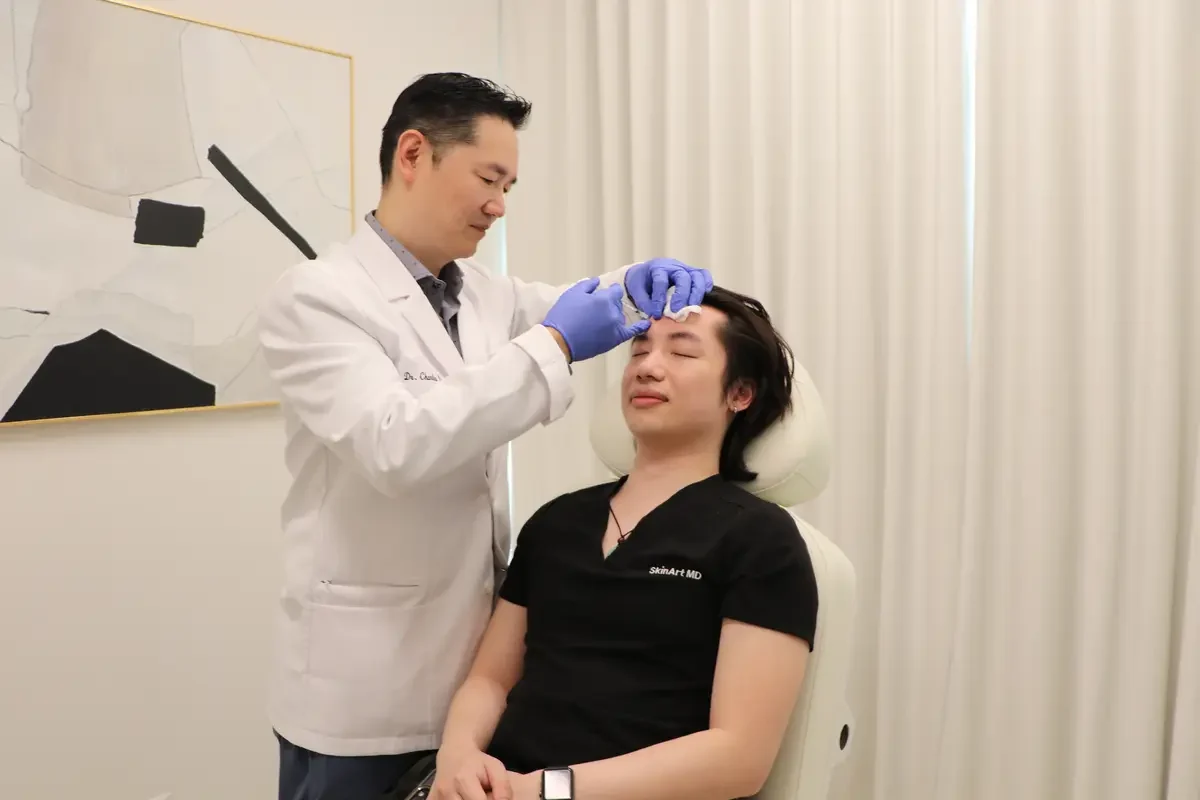
What Is Baby Botox — and Why Is Everyone Talking About It?
If you've been researching subtle, natural-looking ways to address fine lines and early signs of aging, you've likely come across the term baby botox. At SkinArtMD in Burnaby, we receive countless questions about this technique — what it means, how it differs from standard treatment, and whether it's right for you.
The term "baby botox" refers to the administration of lower doses of neuromodulators — most commonly Botox (onabotulinumtoxinA) or Dysport (abobotulinumtoxinA) — strategically distributed across more injection points to achieve a subtle, movement-preserving result. Rather than fully immobilizing a muscle group, the goal is softening without freezing. Learn more about Botox & Dysport and how we approach treatment at SkinArtMD.
Both Botox and Dysport are Health Canada– and FDA-approved neuromodulators — purified proteins derived from Clostridium botulinum — used to temporarily relax targeted facial muscles and reduce the appearance of dynamic wrinkles. The "baby" technique is a clinical refinement of how these same approved molecules are applied, not a separate product.
Mechanism of Action: What Happens at the Neuromuscular Junction
To understand why micro-dosing works, you need to understand what neuromodulators actually do at a cellular level.
The SNARE Complex and Acetylcholine Release
Voluntary muscle contractions depend on the neurotransmitter acetylcholine (ACh) being released at the neuromuscular junction. ACh is packaged in vesicles inside motor nerve terminals and released via a protein complex called SNARE (Soluble NSF Attachment Protein Receptor). SNARE proteins — specifically SNAP-25, syntaxin, and synaptobrevin — act like a molecular zipper, fusing vesicle membranes to the terminal membrane so ACh can be expelled into the synaptic cleft and bind to muscle receptors.
OnabotulinumtoxinA (Botox) and abobotulinumtoxinA (Dysport) are zinc-endopeptidases. Once internalized by the nerve terminal, they cleave specific SNARE proteins — Botox primarily cleaves SNAP-25, while Dysport targets SNAP-25 via a slightly different docking mechanism. When SNAP-25 is cleaved, the SNARE zipper cannot form, ACh vesicles cannot fuse with the membrane, and the muscle receives no signal to contract.
Why Dose Determines Expression
The degree of muscle relaxation scales with the amount of toxin that reaches each motor end-plate. In a standard protocol, enough toxin is delivered to achieve substantial or complete inhibition of a target muscle. In a baby botox protocol, smaller doses are distributed across more injection points. The result: partial inhibition across many motor units rather than complete inhibition of a focal group. Muscles retain some range of motion — expressions like raising an eyebrow or smiling remain natural — while the repeated micro-contractions that etch static lines over time are diminished.
This dose-response relationship is why technique, anatomy, and precise unit placement are critical. The margin between too little (no visible effect) and too much (frozen appearance) is narrower in micro-dosing, making physician expertise non-negotiable. At SkinArtMD, Dr. Sharon Fong — a CPSBC-registered physician specializing in aesthetic medicine and injectables — personally evaluates each patient's muscle anatomy before designing a micro-dosing plan. Book a consultation to discuss whether the baby botox approach suits your goals.
Clinical Evidence: What the Research Shows
Neuromodulator Safety and Efficacy
The clinical evidence base for botulinum toxin A in aesthetic medicine is among the most robust in the field. Carruthers et al., publishing in Dermatologic Surgery, demonstrated in pivotal trials that onabotulinumtoxinA produces statistically significant reductions in glabellar line severity with a well-characterized safety profile — findings that supported regulatory approvals by both Health Canada and the FDA.
Rzany and colleagues, writing in the Journal of the European Academy of Dermatology and Venereology, conducted a systematic review of botulinum toxin A formulations across multiple randomized controlled trials. Their analysis confirmed consistent efficacy for crow's feet, forehead lines, and glabellar complexes, with adverse event rates — primarily transient injection-site bruising and headache — comparable to placebo in blinded assessments.
Work by Hexsel et al., published in the Journal of Cosmetic Dermatology, examined dilution protocols and multi-point injection techniques with botulinum toxin A. The authors found that distributed low-dose injection patterns can reduce diffusion to non-target muscles, supporting the mechanistic rationale behind precision micro-dosing. This is consistent with why baby botox techniques, when executed with appropriate dilution and detailed anatomical mapping, tend to produce more nuanced results with lower rates of unintended brow ptosis or asymmetry.
Preventive Use: Emerging Evidence
A growing body of literature investigates neuromodulators as a preventive strategy — intervening before static lines fully form. The underlying theory: dynamic wrinkles (visible only with expression) precede static wrinkles (visible at rest). By reducing the amplitude and frequency of repetitive muscle contractions during decades when collagen is still resilient, the depth of eventual line formation may be attenuated. Prospective controlled data in this area continue to accumulate, but early observational work suggests earlier initiation of low-dose treatment may reduce cumulative line depth over time.
Baby Botox vs. Standard Botox: A Comparison
| Feature | Standard Botox/Dysport | Baby Botox (Micro-Dosing) |
|---|---|---|
| Units per area | Higher (full inhibition target) | Lower (partial inhibition) |
| Injection points | Fewer, concentrated | More, distributed |
| Muscle movement after treatment | Significantly reduced | Partially preserved |
| Expression preservation | Reduced in treated areas | High — natural-looking |
| Duration | Typically 3–4 months | Often 2–3 months |
| Best candidate | Established dynamic or static lines | Preventive, subtle correction, expressive faces |
| Technique complexity | Standard | Higher — requires detailed anatomy mapping |
Both Botox and Dysport can be used in micro-dosing protocols. Dysport has a slightly wider diffusion radius due to its smaller molecular complex, which influences dilution strategy. The choice between formulations depends on the injection zone, desired spread pattern, and the treating physician's clinical judgment — not a meaningful "better or worse" distinction for most patients.
Candidate Evaluation: Who Benefits Most from Baby Botox?
Ideal Candidates
At SkinArtMD in Burnaby, Dr. Fong's candidate evaluation considers several factors:
Stage of line formation. Baby botox is most impactful for patients with dynamic lines — wrinkles visible during expression but not fully etched at rest. For deep static furrows already present at rest, higher doses or combination approaches (e.g., with dermal filler) typically produce better outcomes.
Facial animation patterns. Patients whose livelihood or identity depends on expressive face use — performers, public speakers, educators — often prefer micro-dosing because subtle movement is preserved. Many of our clients in Burnaby have found that micro-dosing gives them the refreshed look they want without the tell-tale signs of treatment.
Age and skin quality. Younger patients in their mid-to-late twenties beginning preventive treatment are particularly well-suited. That said, patients of any age with strong facial muscle activity and early dynamic lines can benefit.
Treatment history. Patients who previously found standard doses produced an overly "frozen" look are frequently happier with micro-dosing protocols that restore a more natural result.
Systemic health. Candidates should be free of neuromuscular disorders, not pregnant or breastfeeding, and not on aminoglycoside antibiotics, which can potentiate toxin effects. A thorough medical history review is part of every consultation. Book a consultation with our team for a personalized assessment.
Limitations and Contraindications
What Baby Botox Cannot Do
Baby botox is not appropriate for — and will not meaningfully address — static wrinkles fully formed at rest, significant volume loss, skin laxity, or textural irregularities. Attempting to treat these concerns with neuromodulator micro-dosing alone leads to patient dissatisfaction. Honest candidate screening is a fundamental clinical responsibility.
Duration Is Shorter
Partial inhibition means the nerve terminal recovers and re-establishes SNARE function more quickly than under full inhibition. Many patients find baby botox results last 2–3 months versus the 3–4 months typical of standard dosing. This is a trade-off many patients accept for the more natural appearance, but it should be discussed transparently in advance.
Technique Sensitivity
Because the margin between effect and no effect is narrow, micro-dosing results are highly sensitive to injector skill, mapping accuracy, and consistent technique. Variability between visits — even with the same patient — can occur if injection points or dilution differ. This is not a treatment to seek from an inexperienced injector or non-physician provider.
Known Contraindications
- Pregnancy or breastfeeding
- Known hypersensitivity to botulinum toxin or formulation components (human albumin)
- Active infection at proposed injection sites
- Neuromuscular junction disorders (myasthenia gravis, Lambert-Eaton syndrome, ALS)
- Concurrent aminoglycoside or anticholinergic medication use (relative contraindication)
Health Canada– and FDA-approved labeling for both Botox and Dysport includes comprehensive contraindication guidance, and SkinArtMD follows these requirements as part of our standard of care.
Why Choose SkinArtMD for Baby Botox in Burnaby?
Patients often tell us the consultation alone was worth the visit — understanding the "why" behind recommended units, injection points, and intervals gives them genuine confidence in the outcome. What differentiates our approach:
Physician-led care. Every anti-wrinkle injection at SkinArtMD is performed or directly supervised by Dr. Sharon Fong, whose CPSBC registration and specialization in aesthetic medicine means she operates under the full scope of physician accountability. Detailed anatomical assessment — including muscle bulk, symmetry, and movement patterns — precedes every treatment plan.
Advanced mapping technique. Rather than applying a fixed template, we map each patient's unique facial musculature. Micro-dosing especially benefits from this individualized approach, because the target is preserving specific movements while damping others.
Personalized treatment plans. We take time to explain what we are doing, why, and what to realistically expect — at every stage.
Bilingual staff — English and Mandarin (普通话). Our team in Burnaby communicates fluently in both languages. Patients who prefer discussing concerns, expectations, and aftercare instructions in Mandarin are fully supported throughout their care journey.
Continuity. Micro-dosing benefits from consistent mapping across visits. When the same physician evaluates and treats you each time, results improve progressively as we refine your personal protocol.
Limited consultation spots are available — book your complimentary consultation today.
Treatment Process: What to Expect Step by Step
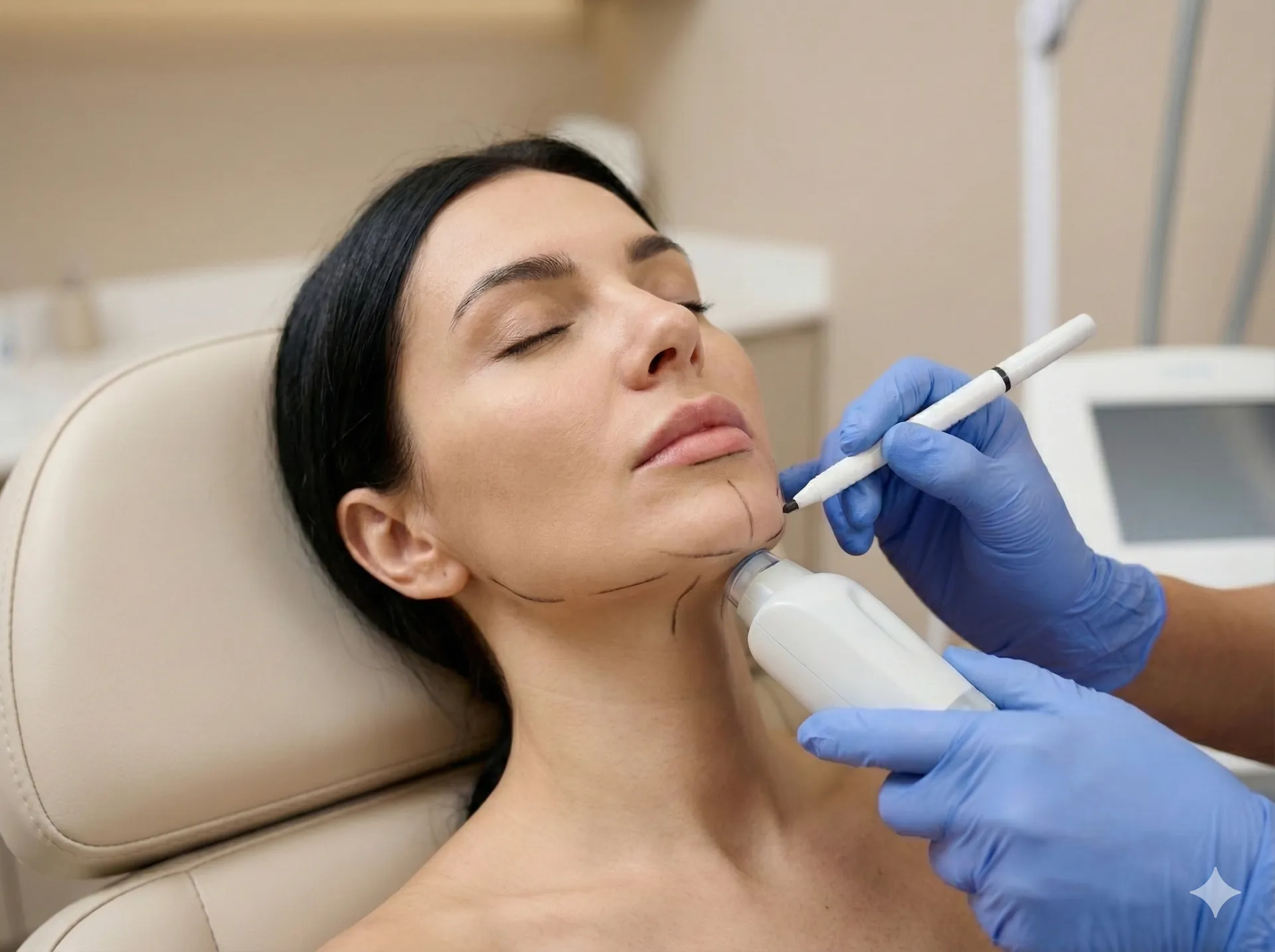
- Consultation and mapping. Dr. Fong reviews your medical history, assesses your facial anatomy in motion, and photographs resting and animated expressions. Target zones and unit estimates are documented.
- Pre-treatment preparation. Avoid blood thinners and alcohol for 24–48 hours prior to reduce bruising risk. Topical numbing cream is optional — most patients find the micro-needle insertions minimally uncomfortable.
- Injection session. Typically 15–30 minutes. Multiple small-gauge needle insertions across mapped points. You may feel mild pressure or a brief sting at each point.
- Immediate aftercare. Avoid lying flat, vigorous exercise, or applying pressure to treated areas for 4 hours post-treatment. No massage of injection sites.
- Onset. Initial relaxation visible within 3–5 days; full effect at 10–14 days.
- Two-week check-in. A follow-up assessment allows evaluation of symmetry and effect, with any minor touch-up if needed.
- Maintenance. Most patients schedule repeat treatment every 2–3 months to sustain results. Over time, some find muscle conditioning allows treatment intervals to extend slightly.
Frequently Asked Questions
What is the difference between baby botox and regular Botox? Baby botox uses lower doses distributed across more injection points, achieving partial rather than full muscle relaxation. The result preserves more natural facial movement. It uses the same Health Canada–approved products (Botox or Dysport) — the dosing technique and injection mapping are different, not the molecule itself.
How long does baby botox last? Due to partial inhibition, duration is typically 2–3 months — somewhat shorter than standard dosing. Individual variation depends on muscle mass, metabolism, and activity level.
Is baby botox painful? Most patients describe minimal discomfort — a brief sting at each injection point. The needles used are very fine-gauge, and topical numbing is available on request.
Can baby botox help prevent wrinkles from forming? Emerging evidence supports a preventive role for low-dose neuromodulator treatment in patients whose dynamic lines have not yet become static. By reducing the amplitude of repetitive muscle contractions, the mechanical stress that deepens lines over time may be reduced. A physician consultation can help determine whether this approach is appropriate for your stage of skin aging.
Who is NOT a good candidate? Patients with neuromuscular disorders, those who are pregnant or breastfeeding, those with active skin infection at proposed injection sites, or those with known hypersensitivity to formulation components are not appropriate candidates. A physician consultation is required to assess individual suitability.
How much does baby botox cost? Unit counts and treatment areas vary based on individual anatomy and goals. Contact us for current pricing — our goal is always right-sizing the treatment to your specific needs.
Next Steps
If you've been considering whether baby botox is right for you, the most valuable next step is a thorough in-person assessment. No article, however detailed, substitutes for examining your facial anatomy in motion and understanding your specific goals. Our team at SkinArtMD in Burnaby is ready to walk you through your options, answer your questions in English or Mandarin, and design a protocol matched to your face — not a template.
Ready to See What Baby Botox Can Do for You?
Our medical team at SkinArtMD in Burnaby is ready to create your personalized treatment plan. Book your complimentary consultation today — available in English and Chinese.
This article is for educational purposes only and does not constitute medical advice. Please consult with a qualified healthcare professional before undergoing any treatment.