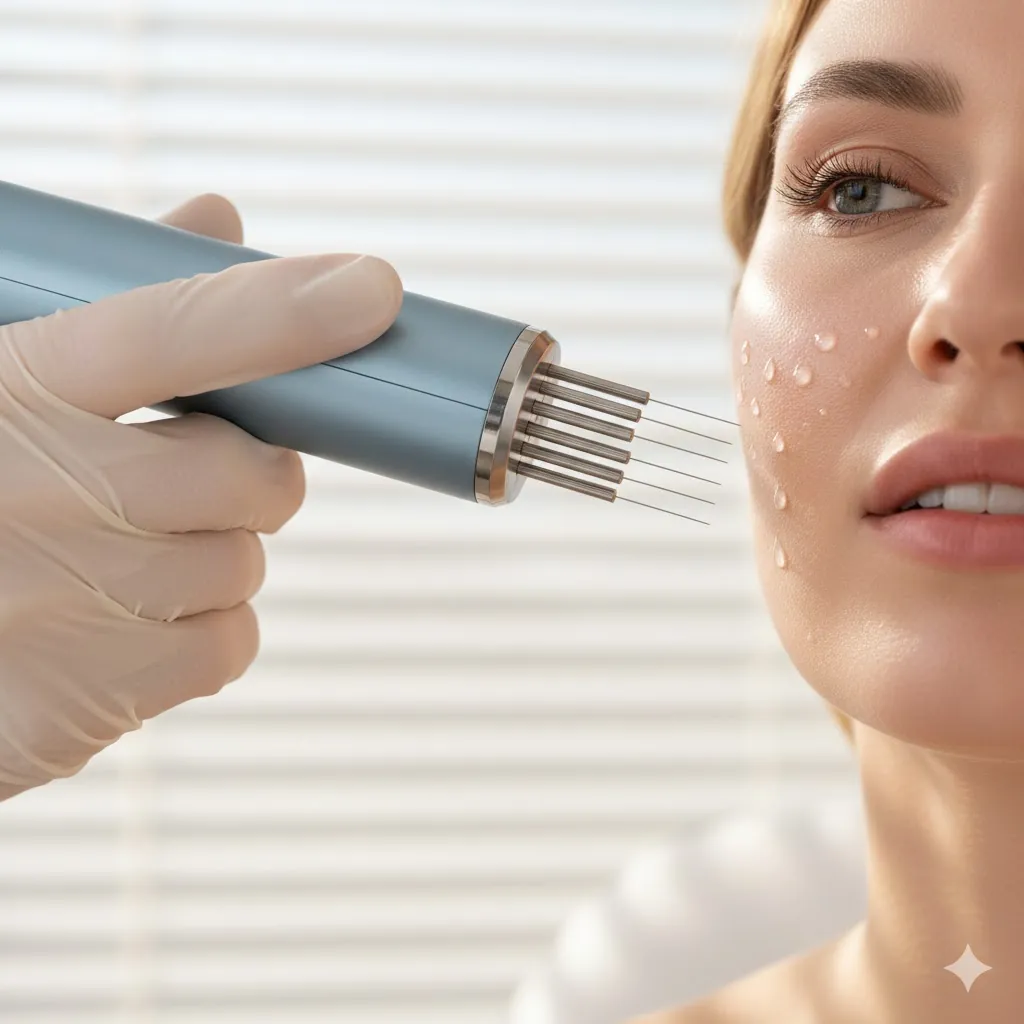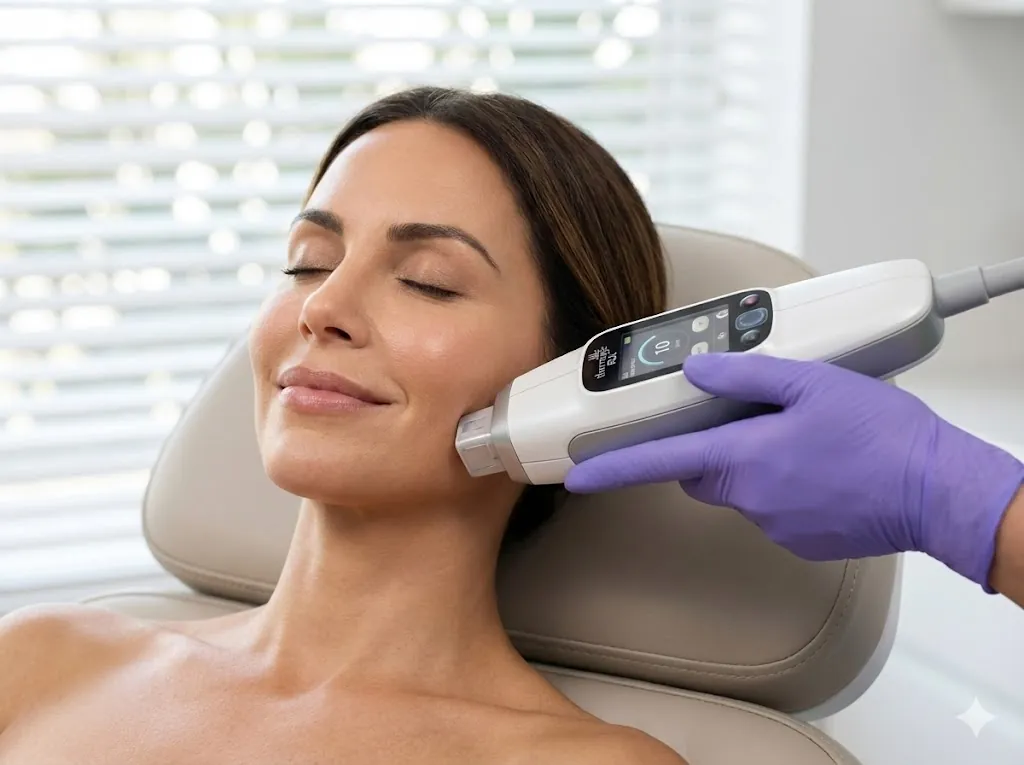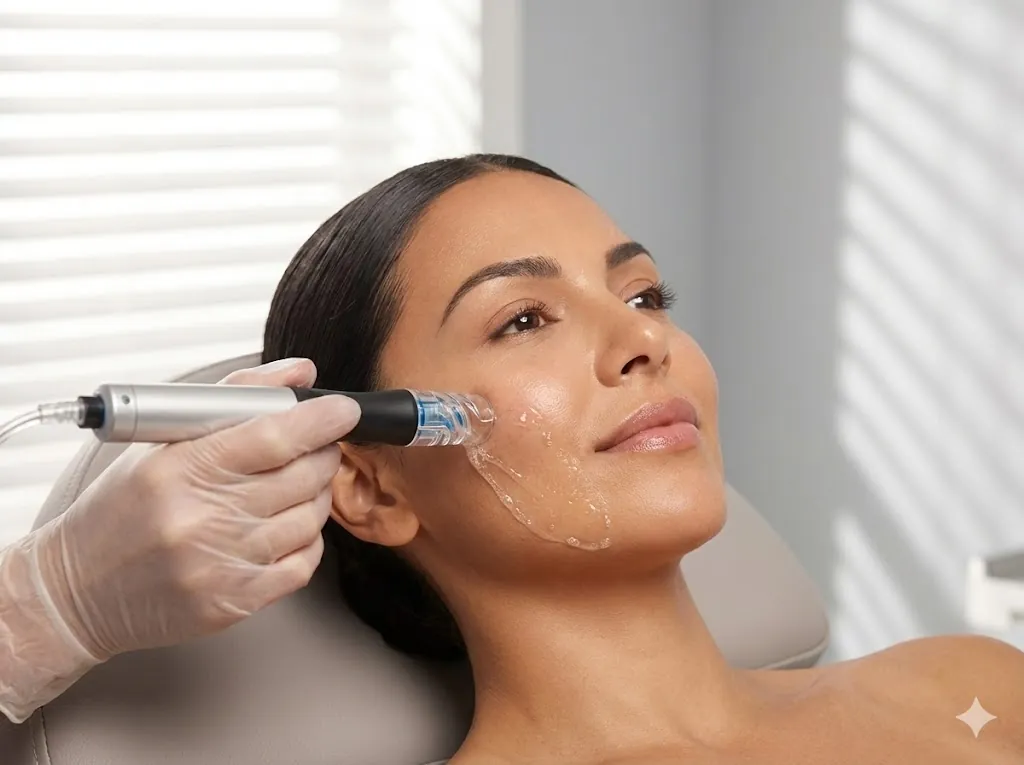
HydraFacial supports a glass skin routine by cleansing, exfoliating, extracting and infusing serums in one 30–60 minute session, with optional LED therapy. For maintenance it is typically scheduled about every four weeks alongside daily home care, and results build gradually over several months.
Scroll through any K-beauty influencer's feed and you will see it — that impossibly smooth, almost translucent, luminous complexion known as glass skin (yuri pibu in Korean). It looks like they were born with it. They were not. Behind every glass skin selfie is a disciplined routine of cleansing, hydration, exfoliation, and professional treatments.
HydraFacial is a common professional treatment in a glass skin routine. At Skin Art MD in Burnaby, it is often scheduled as a monthly maintenance treatment. Here is the guide.
What Is Glass Skin, Really?
Glass skin is not a single product or one-time treatment. It is a skin condition characterized by:
- Deep hydration — the skin is plump with water, not oily or greasy
- Even tone — minimal redness, dark spots, or discoloration
- Smooth texture — refined pores, no bumps, no rough patches
- Natural luminosity — a healthy glow that comes from within, not from highlighter
- Clarity — no active breakouts, no congestion, clean and clear
Achieving this requires both daily home care AND regular professional treatments. HydraFacial is the professional piece of the puzzle.
What Is HydraFacial?
HydraFacial is a medical-grade, patent-protected facial treatment that combines six steps into a single 30-60 minute session:
The 6-Step Process
-
Vortex Cleansing + Lymphatic Drainage: A specialized tip removes surface debris and makeup residue while gentle suction stimulates lymphatic flow to reduce puffiness
-
Gentle Acid Peel: A blend of glycolic and salicylic acid is applied — not the aggressive peels that leave you flaking. This is calibrated to dissolve dead skin cells, and most people tolerate the treatment well
-
Vortex Extraction: This is where HydraFacial shines. The patented vortex suction technology gently extracts blackheads, sebaceous filaments, and pore congestion — less traumatic than manual extraction
-
Vortex Fusion of Serums: Customized boosters are infused directly into clean, freshly exfoliated skin. The vortex helps serums reach freshly cleansed skin more effectively than simple topical application
-
LED Light Therapy: Red (633nm) or blue (415nm) LED light is applied to reduce inflammation, kill acne-causing bacteria, or stimulate collagen — depending on your skin goals
-
Hydration Lock: A final hyaluronic acid-based layer seals everything in, leaving skin immediately plump and glowing
How Is HydraFacial Different From a Traditional Facial?
| Feature | Traditional Facial | HydraFacial |
|---|---|---|
| Extraction method | Manual (can be uncomfortable, can cause broken capillaries) | Vortex suction (gentle, low trauma) |
| Consistency | Varies by esthetician | Standardized, device-controlled |
| Serum delivery | Surface application | Deep infusion via vortex technology |
| Downtime | Possible redness for 24-48h | Most people resume normal activities right away |
| Customization | Limited | Fully customizable boosters |
How Is HydraFacial Used in a Glass Skin Routine?
In a glass skin routine, a HydraFacial is typically scheduled about every four weeks, with targeted boosters, optional LED therapy and a daily home-care routine between sessions.
At Skin Art MD, a glass skin routine can layer HydraFacial with complementary treatments.
Monthly HydraFacial Session (The Foundation)
Every 4 weeks, you come in for your HydraFacial. Think of it as a "reset" for your skin — clearing out a month's worth of buildup, dead cells, and congestion while flooding fresh serums into clean pores.
Commonly Used Boosters:
- Brightalive Booster: For pigmentation-prone skin. Contains alpha-arbutin and vitamin C derivatives to gradually even tone
- CTGF (Connective Tissue Growth Factor): Often chosen for anti-aging goals. Aims to support collagen and elastin production
- Dermabuilder Booster: For fine lines and loss of firmness; aims to support the skin's structural matrix
- Britenol Booster: Targets specific dark spots and sun damage
LED Therapy Add-On (The Amplifier)
15-20 minutes of LED therapy can be added after HydraFacial:
- Red LED (633nm): Stimulates fibroblast activity, boosts collagen production, reduces fine lines. The anti-aging workhorse.
- Blue LED (415nm): Targets P. acnes bacteria and reduces inflammation, often used for acne-prone skin
- NIR (Near-Infrared, 830nm): Penetrates deeper for accelerated healing and cellular renewal
HydraFacial and LED are often paired because LED is applied to freshly cleansed, serum-infused skin.
Between Sessions: Home Care Essentials
The glass skin routine does not stop when you leave the clinic. Between monthly HydraFacials, the Skin Art MD team recommends:
Morning:
- Gentle hydrating cleanser (cream or gel texture)
- Hydrating toner or essence (the K-beauty "7 skin method" — layering light hydration)
- Vitamin C serum (L-ascorbic acid 10-20% or a gentler derivative)
- Lightweight moisturizer
- SPF 50 (non-negotiable for glass skin)
Evening:
- Oil cleanser (first cleanse to remove sunscreen and makeup)
- Water-based cleanser (second cleanse)
- Exfoliating toner 2-3x per week (AHA or PHA)
- Niacinamide serum (5-10% for pore refinement and brightening)
- Retinol 2-3x per week (start low, build tolerance)
- Rich moisturizer or sleeping mask
Who Is a HydraFacial Glass Skin Routine Usually Discussed For?
It is commonly discussed for dull, dehydrated, congested or mildly acne-prone skin and for event preparation, while pigmentation, laxity, scarring or volume loss usually call for additional treatments decided at an assessment.
Commonly Discussed For
- Anyone wanting consistently radiant, well-maintained skin
- Oily or combination skin with congested pores and blackheads
- Dull, dehydrated skin that lacks glow
- Mild acne or post-acne marks
- Preparing for a special event (wedding, photoshoot, holiday)
- People who want a low-maintenance professional treatment after which most people resume normal activities right away
Add Additional Treatments For
- Significant pigmentation: Combine with PicoWay quarterly
- Anti-aging / tightening: Combine with Thermage FLX annually
- Acne scarring: Combine with Sylfirm X series
- Volume loss: Consult about dermal fillers or Sculptra
How Much Does HydraFacial Cost in Burnaby?
HydraFacial pricing depends on the version — a 30-minute signature treatment or a 60-minute deluxe treatment with boosters and LED — and the schedule set at your visit; contact us for current pricing.
- Signature HydraFacial (30 min)
- Deluxe HydraFacial with booster + LED (60 min)
How Often Should You Get a HydraFacial?
For glass skin maintenance, a HydraFacial is typically scheduled monthly, while acne-prone skin may be scheduled every two to three weeks initially.
- For glass skin maintenance: Monthly (every 4 weeks)
- For acne-prone skin: Every 2-3 weeks initially, then monthly once stabilized
- For special event prep: Weekly for 3-4 weeks leading up to the event
- For general skin health: Every 4-6 weeks
The key to glass skin is consistency. The glow after a single HydraFacial is temporary. Monthly HydraFacials aim for cumulative improvement — each session builds on the last, gradually transforming skin quality over 3-6 months.
What Results Can You Expect Over Time?
Results from HydraFacial treatments are cumulative, with improvements in glow and texture appearing after one session and more significant clarity developing over multiple sessions.
| Timeline | Cumulative Effect |
|---|---|
| After 1 session | Immediate glow, smoother texture, decongested pores |
| After 3 sessions (3 months) | Noticeably more even tone, reduced blackheads, healthier baseline |
| After 6 sessions (6 months) | Significant improvement in radiance, pore size, and skin clarity |
| After 12 sessions (1 year) | Maintained radiance, clarity and resilience with ongoing care; individual results vary |
What Do People Ask About HydraFacial?
Common questions cover comfort, wearing makeup afterward, sensitive skin, same-day combinations with other treatments, and how HydraFacial compares with DiamondGlow.
Q: Is HydraFacial painful? A: It is usually described as a cool, soothing sensation. The extraction step involves gentle suction — nothing like manual squeezing.
Q: Can I wear makeup after? A: You can. If needed, mineral makeup can be applied right after; some people prefer to skip makeup for the rest of the day.
Q: Is HydraFacial safe for sensitive skin? A: Yes. The treatment is highly customizable. For sensitive or rosacea-prone skin, we adjust the acid peel strength, suction intensity, and serum selection. It is generally considered a gentle professional facial option.
Q: Can I combine HydraFacial with other treatments on the same day? A: Yes. HydraFacial pairs well with LED therapy (included in the Deluxe version) and can be done before or after neuromodulator injections or filler appointments; it is usually scheduled before injectables to prep the skin.
Q: How does HydraFacial compare to DiamondGlow (SilkPeel)? A: Both are hydradermabrasion devices. HydraFacial uses a patented vortex tip design and has a wider selection of targeted boosters. We use HydraFacial for extraction and serum infusion toward glass skin goals.
How Do I Book a HydraFacial in Burnaby?
You can book a HydraFacial at Skin Art MD in Burnaby Metrotown; the first visit reviews your skin goals and sets a schedule and booster plan that suit your skin.
Skin Art MD — Metrotown, Burnaby BC. Serving Burnaby, Vancouver, New Westminster, Coquitlam, and Metro Vancouver.