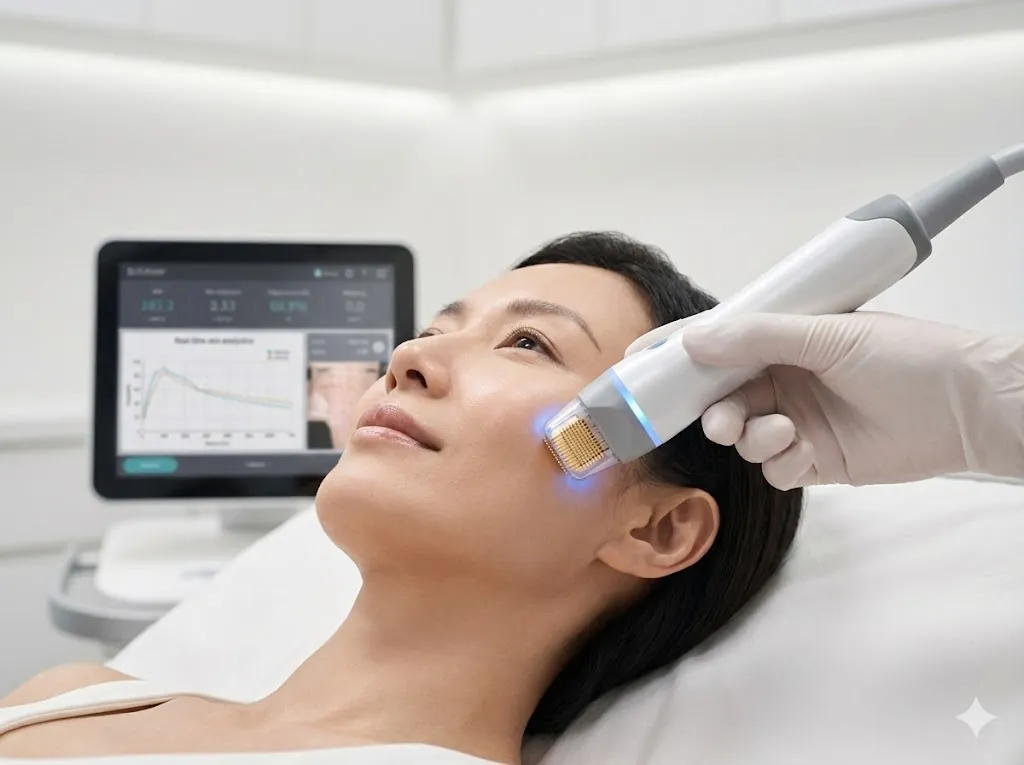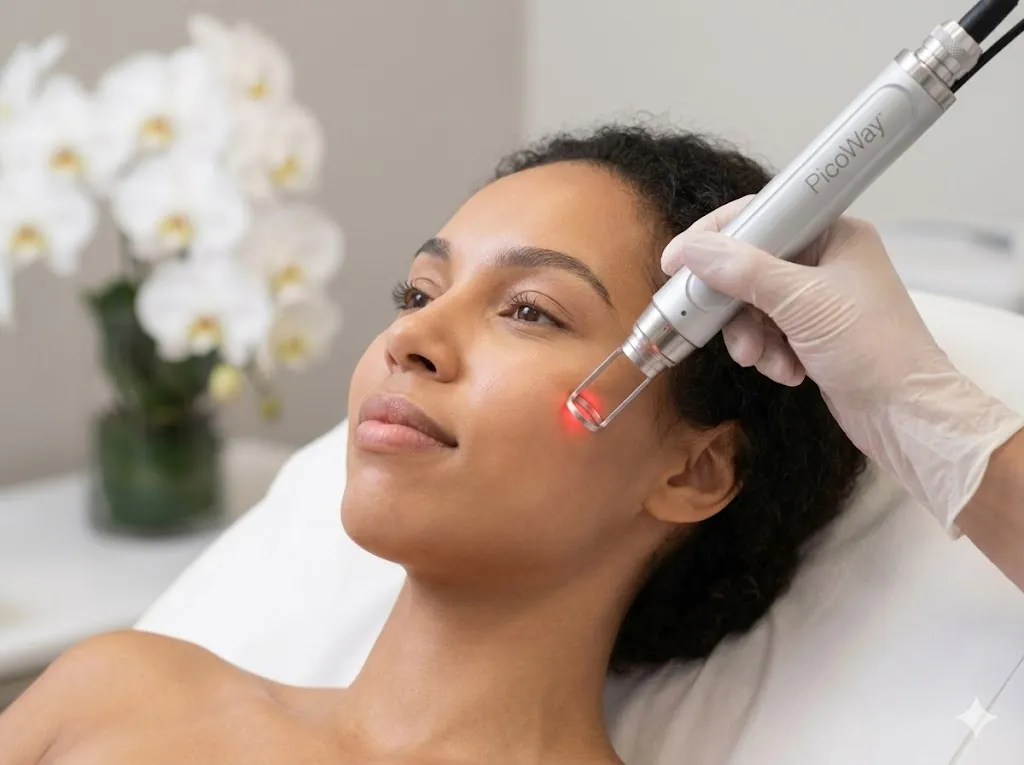
There is no single price for pico laser treatment in Burnaby, because cost depends on what is being treated, how large the area is, how many sessions are planned, and how your skin type shapes the settings. At Skin Art MD, PicoSure and PicoWay are both offered, and a quote is given after an assessment, once the concern, the platform and a session plan have been agreed.
Why is there no fixed price for pico laser treatment?
Pico laser cost is built from several variables rather than one menu item, so a quote is only meaningful once those variables are known. Two people asking about "pico laser" may be asking about very different treatments.
"Pico" describes picosecond pulse length, not a single procedure. The same device family is used for scattered sun spots, melasma-type patches, acne scars, enlarged pores and tattoo ink, and each of these is planned differently. A small cluster of freckles and a full-sleeve tattoo share a technology but little else in terms of time, settings and number of visits.
At Skin Art MD in Burnaby (Metrotown), the first step is an assessment with our medical team. That visit looks at the concern, your skin type, your history and your timing, and it is where the platform, the area and a likely session range are discussed. The quote follows from that plan.
PicoSure or PicoWay: which one will I be quoted for?
Both are picosecond lasers, and the choice depends on the concern. At Skin Art MD, PicoSure with its Focus lens is used mainly for texture and pores, while PicoWay is used mainly for pigment.
PicoSure uses a 755 nm alexandrite wavelength. With the Focus lens array, energy is divided into many tiny spots that prompt the skin to renew itself, which is why it comes up for acne scars, pores and fine lines. Chinese-speaking clients often know this approach as 蜂巢皮秒.
PicoWay offers several wavelengths, including 1064 nm for deeper targets and 532 nm for superficial ones, with Zoom and Resolve handpieces. That range is why it is used here mainly for sun spots, freckles and melasma-type pigment, and for tattoo ink.
Some plans use one platform; others combine them across a course. Which device is used affects session length and settings, so it is part of what a quote reflects. If you want a closer look at how the two compare for pigment on Asian skin, see our article on PicoSure vs PicoWay for Asian skin pigmentation. Details for each device are on the PicoSure and PicoWay pages.
What factors affect the cost of pico laser?
The main cost drivers are the concern, the size of the area, the number of sessions, your skin type and settings, the spacing between visits, and whether maintenance is planned.
- The concern. Pigment, texture and tattoo ink are planned differently. Tattoos depend on ink colour, depth and density; melasma-type patches call for gentle, repeated sessions; texture and pores are approached with the Focus lens over a series.
- Area size. A few spots on the cheeks take less time than a full face, neck or the backs of the hands. Tattoo size and the number of colours also change treatment time.
- Number of sessions. A course, rather than a single visit, is the usual plan. The total depends on how many visits are agreed and how the skin responds along the way.
- Skin type and settings. Skin type, often described on the Fitzpatrick scale, influences wavelength, energy and how conservative each pass is. Deeper skin tones and melasma-prone skin are often treated more gently, which can mean more sessions at lower settings.
- Spacing. Longer gaps between visits stretch a plan over more months, which matters for budgeting and for seasonal timing.
- Maintenance. Some concerns, especially melasma-type pigment, tend to return and may need occasional maintenance after the main course.
- Aftercare products. Gentle cleansing and daily broad-spectrum sunscreen are part of every plan, and some people are advised on additional home care. These are ongoing costs to keep in mind.
How many pico laser sessions should I plan for?
Most people plan a series rather than one session. For facial pigment and texture, a common course is about 2–6 sessions spaced roughly 4–6 weeks apart, while tattoos usually need several sessions spaced about 6–8 weeks apart.
Session numbers are a planning range, not a promise. Some change can be noticed after one visit, but pigment and texture usually shift gradually over weeks to months. Tattoo removal is slower still: dark, single-colour ink tends to respond differently from multi-coloured or layered ink, and the body clears fragmented ink over time between visits. Individual results vary.
Because the course length is the single biggest variable in total cost, it is worth asking at your assessment what range is being planned, what would prompt the team to adjust it, and how progress is reviewed between sessions.
Why do quotes come after an assessment rather than before?
A quote given before anyone has looked at your skin would have to guess at the area, the platform, the settings and the session count. An assessment replaces those guesses with a plan.
During the assessment, the team reviews your concern, skin type, medical history and medications, any recent sun exposure, and your timing. A test spot may be suggested before a full session, particularly for darker skin types or melasma-type patches. From there, the plan sets out which platform will be used, which areas are included, a likely number of sessions and their spacing, and what aftercare is expected.
When comparing quotes from different clinics, it helps to check that they cover the same things: the same area, the same number of sessions, the same device, and whether follow-up and maintenance are included.
What downtime and aftercare should I plan around?
Most people return to normal activities the same day, but treated areas need some care for a week or two, so it helps to plan sessions around work, events and travel.
Redness and warmth usually settle within hours to a few days. Treated pigment often darkens and then flakes over about 1–2 weeks; this is expected, and picking should be avoided. After tattoo sessions, the area may whiten briefly, swell or form light crusts, and written aftercare instructions are given before you leave. Gentle cleansing and daily sunscreen are the norm, and the team will advise when makeup is fine to use again.
These recovery windows matter for scheduling. If you have a wedding, photos or a trip coming up, mention it at your assessment so sessions can be spaced around it.
Does the time of year matter in Vancouver?
Yes. Sun and tanning increase active pigment, which raises the risk of uneven results, so timing around the seasons is part of planning a pico laser course.
We ask for about four weeks of sun avoidance before treatment, and a recent tan usually delays a session by about four weeks. In Greater Vancouver, many people start a course in the autumn or winter, when days are shorter and outdoor exposure is lower, and aim to finish before summer. Spring and summer sessions are still possible with careful planning, but sun protection becomes more demanding, and UV can bring pigment back after treatment, especially melasma-type patches.
Snow sports, beach holidays and long outdoor days can all affect timing. Daily broad-spectrum sunscreen, hats and shade remain part of aftercare year-round, including on cloudy Vancouver days.
Who may need to wait before starting?
Some people are asked to postpone treatment until a better time. Common reasons include a recent tan, pregnancy or breastfeeding, recent oral acne medication, and active skin infection or irritation in the treatment area.
Tell the team about all medications, supplements and recent procedures when you book, including anything that increases sun sensitivity. A history of cold sores, keloid scarring or pigment changes after previous treatments is also useful to share, because it can change the settings or the plan. If you are unsure whether something applies to you, the assessment is the place to ask, and involving your family physician is a good idea where you have ongoing medical conditions.
Frequently asked questions
How much does pico laser cost in Burnaby?
Pricing depends on the concern, the area, the platform and the number of sessions, so Skin Art MD confirms it after an assessment rather than listing a flat price.
Is PicoSure or PicoWay more expensive?
Neither is simply "more expensive". The total depends on what each plan involves: the area, the number of sessions and the settings used. The device is chosen for the concern, not the price.
Will one session be enough?
Usually not. Most plans are a series of sessions, and the number is set at assessment and adjusted to how your skin responds. Results vary.
Do I need maintenance sessions?
Some concerns, particularly melasma-type pigment, tend to return and may need occasional maintenance along with daily sun protection. Others may not. Your plan will say what is expected.
Can I combine pico laser with other treatments?
Sometimes. Combining treatments can change the order, spacing and total number of visits, so it is planned at assessment rather than added later.
Which time of year suits starting a course?
Many people in Vancouver start in autumn or winter, when sun exposure is lower, but timing depends on your concern and schedule. The team will advise on what suits your plan.
Booking an assessment
If you are weighing up pico laser for pigment, texture or a tattoo, an assessment is the first step: the team looks at your skin, explains whether PicoSure, PicoWay or a combination fits, and sets out a session plan before giving a quote. You can book a consultation at Skin Art MD in Burnaby, at Metrotown, serving Greater Vancouver.