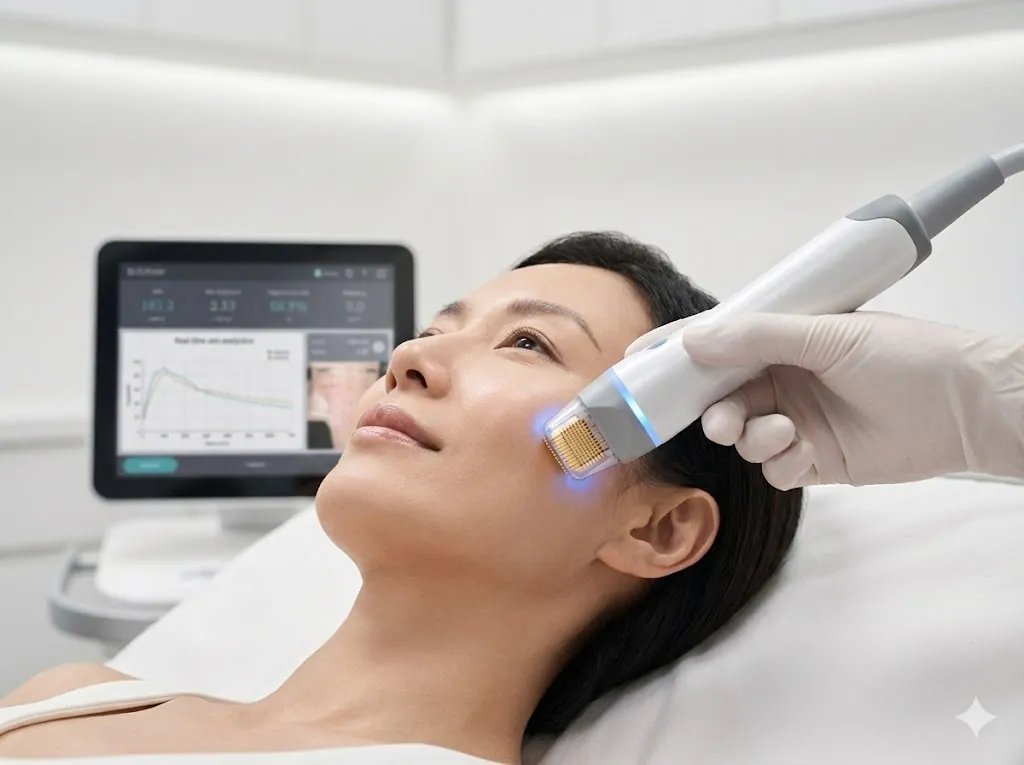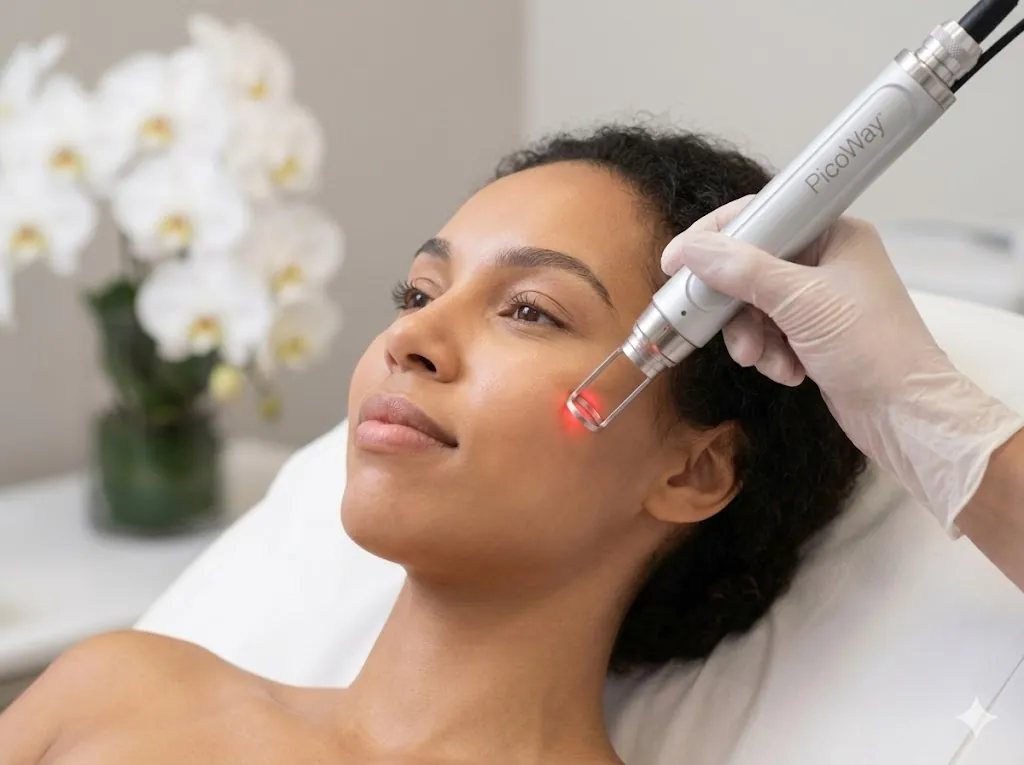
PicoSure and PicoWay are both picosecond lasers sometimes compared for Asian skin pigmentation; both use ultra-short pulses that shatter pigment with minimal heat, which lowers post-inflammatory hyperpigmentation risk compared with slower lasers. Which platform and settings suit a given case of freckles, sun spots, melasma or dermal pigment is decided through physician assessment at Skin Art MD in Burnaby.
PicoWay treats freckles, sun spots, melasma and dermal pigment with picosecond pulses that shatter pigment mechanically while producing little heat. For Asian skin (often Fitzpatrick III-V), less heat means a lower risk of post-inflammatory hyperpigmentation than slower lasers or IPL; the wavelength, settings and number of sessions depend on the type and depth of pigment.
If you have Asian skin and have ever been burned (literally or figuratively) by a laser treatment that left you with more dark spots than you started with, you are not alone. Post-inflammatory hyperpigmentation (PIH) after laser treatment is one of the most common and frustrating experiences for people with Fitzpatrick III-V skin types — and it is often the result of using the wrong laser technology.
PicoWay is different. Its picosecond-speed pulses shatter pigment particles with minimal heat transfer to surrounding tissue, which limits heat transfer in melanin-rich skin. At Skin Art MD in Burnaby, we use it with settings chosen for each skin type.
Why Does Asian Skin Need a Different Approach to Pigmentation?
Asian skin has more active melanocytes and more baseline melanin, so it reacts to heat and injury with a stronger pigment response, carries a higher PIH risk, and often has several pigment types at different depths on the same face.
Why Asian Skin Is Different
Asian skin (typically Fitzpatrick types III-V) has more active melanocytes and a higher baseline melanin content than Caucasian skin. This means:
- Faster and stronger inflammatory pigment response — any insult to the skin (UV, heat, trauma, laser) can trigger a melanin overproduction cascade
- Higher risk of PIH (post-inflammatory hyperpigmentation) from laser treatments
- Deeper pigment deposits — conditions like Hori's nevus and dermal melanocytosis involve pigment in the dermis, not just the epidermis
- Mixed pigmentation patterns — it is common to have freckles, sun spots, melasma, and dermal pigment coexisting on the same face
Common Pigmentation Concerns We Treat
| Condition | Depth | Description |
|---|---|---|
| Solar lentigines (sun spots) | Epidermal | Flat brown spots from cumulative UV damage |
| Freckles (ephelides) | Epidermal | Small, scattered brown dots — genetic + UV |
| Melasma | Epidermal + dermal | Diffuse brown-gray patches, often on cheeks and forehead |
| Hori's nevus | Dermal | Blue-gray bilateral patches, common in East Asian women |
| Post-inflammatory hyperpigmentation | Variable | Dark marks left after acne, eczema, or injury |
| Cafe-au-lait spots | Epidermal | Light brown, well-defined patches |
How Does PicoWay Work?
PicoWay delivers energy in picosecond pulses fast enough to create a photomechanical effect that breaks pigment into fine particles with little heat, and it offers three wavelengths for pigment at different depths.
Speed Matters — A Lot
PicoWay delivers laser energy in picosecond pulses (one trillionth of a second). Compare this to:
- Q-switched lasers: Nanosecond pulses (one billionth of a second)
- IPL: Millisecond pulses (one thousandth of a second)
Why does speed matter? It comes down to a concept called photomechanical vs photothermal effect:
- Slower pulses (IPL, Q-switched): Energy is absorbed and converted primarily to heat. This heat spreads to surrounding tissue, increasing the risk of thermal damage and PIH — especially dangerous in melanin-rich skin.
- Picosecond pulses (PicoWay): Energy is delivered so fast that it creates a photomechanical shockwave that shatters pigment into ultra-fine particles — with minimal heat generation. Less heat means less inflammation means less PIH risk.
Three Wavelengths for Comprehensive Coverage
PicoWay offers three wavelengths, each targeting different pigment depths and colors:
- 1064nm: Penetrates deepest. Ideal for dermal pigment (Hori's nevus), tattoo removal, and toning treatments. Wavelength selected for darker skin types.
- 785nm: Mid-depth penetration. Effective for mixed epidermal-dermal pigmentation.
- 532nm: Targets superficial pigment. Used for epidermal sun spots and freckles. Used more cautiously on darker skin types.
PicoWay Resolve: The Fractional Approach
For melasma and overall skin toning, we often use the PicoWay Resolve handpiece. Instead of targeting individual spots, Resolve delivers a fractional pattern of micro-pulses across the treatment area. This:
- Creates micro-injuries that stimulate collagen without bulk heating
- Gradually clears diffuse pigmentation over multiple sessions
- Minimizes PIH risk compared to spot-treatment of melasma (which can backfire)
- Improves overall skin tone, texture, and radiance simultaneously
How Does Skin Art MD Plan Pigmentation Treatment?
Every plan starts with a skin assessment that separates epidermal from dermal pigment, reviews history and Fitzpatrick type, and then sets wavelengths, settings and session numbers for each pigment pattern.
Initial Consultation and Skin Analysis
The Skin Art MD team begins every pigmentation consultation with:
- Visual assessment under natural and Wood's lamp lighting to distinguish epidermal vs dermal pigment
- Skin history review — previous treatments, reactions, hormonal factors (for melasma)
- Fitzpatrick typing and individualized risk assessment
- Treatment plan design — which wavelengths, settings, and protocols are right for your specific pigmentation pattern
Our Pigmentation Treatment Protocol
For freckles and sun spots:
- 1-3 sessions of targeted PicoWay 532nm or 1064nm
- Spots darken and crust in 3-7 days, then flake off revealing clearer skin
For melasma:
- Series of 4-6 PicoWay Resolve sessions using 1064nm
- Low-fluence, toning approach to gradually lighten without triggering rebound
- Combined with a topical regimen chosen for Asian skin
- Maintenance sessions every 2-3 months
For Hori's nevus / dermal pigmentation:
- 4-8 sessions of PicoWay 1064nm at higher fluence
- Deeper pigment requires more sessions — patience is key
- Results are cumulative and long-lasting once clearance is achieved
For PIH (post-inflammatory hyperpigmentation):
- PicoWay Resolve at very conservative settings
- Combined with topical brightening agents (tranexamic acid, niacinamide, vitamin C)
- Often 2-4 sessions
How Does PicoWay Compare With Other Lasers for Asian Skin?
Compared with Q-switched Nd:YAG and IPL, PicoWay's shorter pulses produce less heat and a lower PIH risk; compared with PicoSure, it has shorter pulse durations and a 1064nm wavelength generally considered gentler on Asian skin.
PicoWay vs Q-Switched Nd:YAG
- Both use 1064nm, but PicoWay's picosecond speed creates less thermal damage
- PicoWay shatters pigment into smaller particles that the body clears faster
- Lower risk of PIH with PicoWay — may be a consideration for Asian skin
- PicoWay may require fewer sessions for equivalent clearance
PicoWay vs IPL (Photofacial)
- IPL is poorly suited for Fitzpatrick III-V skin — high PIH risk
- IPL cannot target dermal pigment effectively
- PicoWay uses shorter pulses and may target a range of pigmentation types
- IPL may be acceptable for very fair Asian skin with superficial spots only
PicoWay vs PicoSure
- Both are picosecond lasers, but PicoWay has shorter pulse durations (294ps vs 550-750ps for PicoSure)
- Shorter pulses = more photomechanical, less photothermal = safer for dark skin
- PicoWay offers three wavelengths (532, 785, 1064nm) vs PicoSure's two (532, 755nm)
- The 1064nm wavelength on PicoWay is generally considered safer for Asian skin than 755nm
What Affects the Cost of PicoWay Treatment?
Cost depends on the size of the area, whether spot treatment, Resolve toning or both are used, and how many sessions the pigment type needs — from a few sessions for sun spots to a longer series for melasma or dermal pigment. The cost is explained at consultation.
How Should You Prepare for and Care for Skin After PicoWay?
Preparation centres on strict sun avoidance and pausing retinoids, and aftercare on high-SPF protection for at least four weeks, leaving darkened spots to flake off and avoiding heat for 48 hours.
Before Treatment
- Strict sun avoidance for 2-4 weeks (this is non-negotiable for Asian skin)
- Discontinue retinoids 5-7 days before
- Begin topical preparation if recommended (tranexamic acid, vitamin C)
- No self-tanning products for 2 weeks
After Treatment
- SPF 50+ applied every 2 hours when outdoors for a minimum of 4 weeks
- Avoid direct sunlight for 1 week
- Do not pick at darkened spots — let them naturally flake off
- Resume brightening serums after 3-5 days
- Avoid saunas, hot baths, and intense exercise for 48 hours
Frequently Asked Questions
Q: Will PicoWay make my melasma worse? A: When performed correctly with the right settings for Asian skin, PicoWay is one option for melasma. The key is using 1064nm at low fluence in toning mode — not aggressive spot treatment. The Skin Art MD team adjusts every parameter for melasma in Asian skin.
Q: How many sessions will I need for my freckles? A: Epidermal freckles and sun spots often improve within 1-2 sessions. Deeper or more extensive pigmentation may require 3-4 sessions.
Q: Is there downtime? A: Minimal. For spot treatments, treated areas may darken and form micro-crusts that flake off in 5-10 days. For Resolve toning, you may have mild redness for a few hours. Most clients return to normal activities the same day.
Q: Can I treat pigmentation during summer? A: We strongly advise scheduling pigmentation treatments in fall or winter when UV exposure is lower. If treatment during summer is necessary, extremely diligent sun protection is mandatory.
Q: Is PicoWay safe during pregnancy? A: Laser treatments are generally not recommended during pregnancy or breastfeeding as a precaution.
Book Your PicoWay Consultation
Whether PicoWay suits your pigmentation is decided in an assessment. Book a consultation at Skin Art MD Burnaby to discuss a personalized pigmentation treatment plan.
Skin Art MD — Metrotown, Burnaby BC. Serving Burnaby, Vancouver, New Westminster, Coquitlam, and Metro Vancouver.