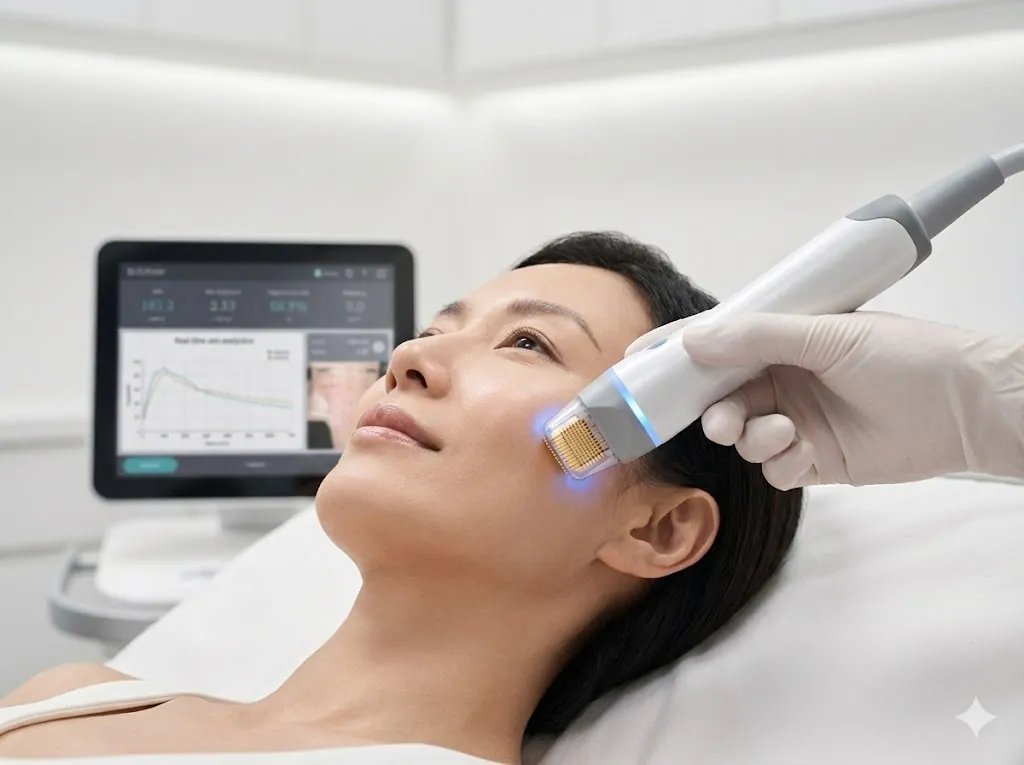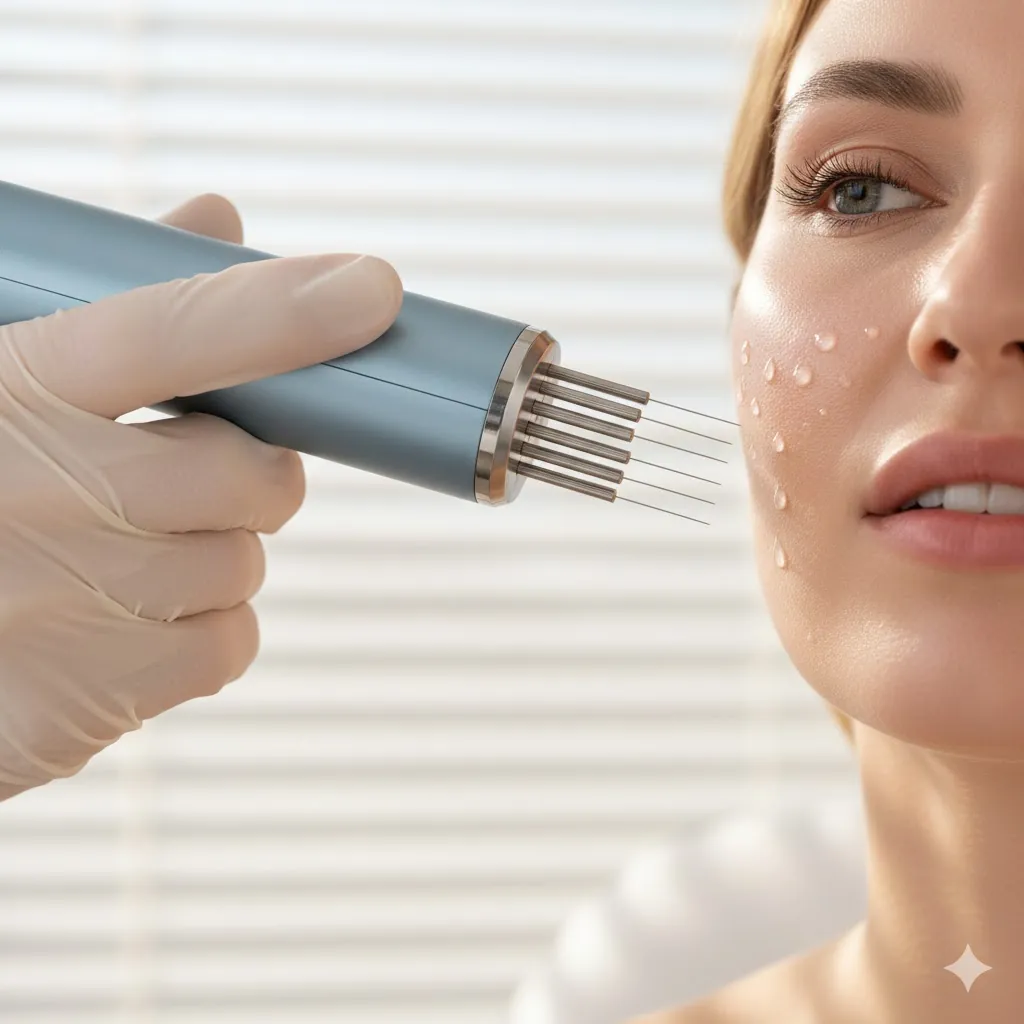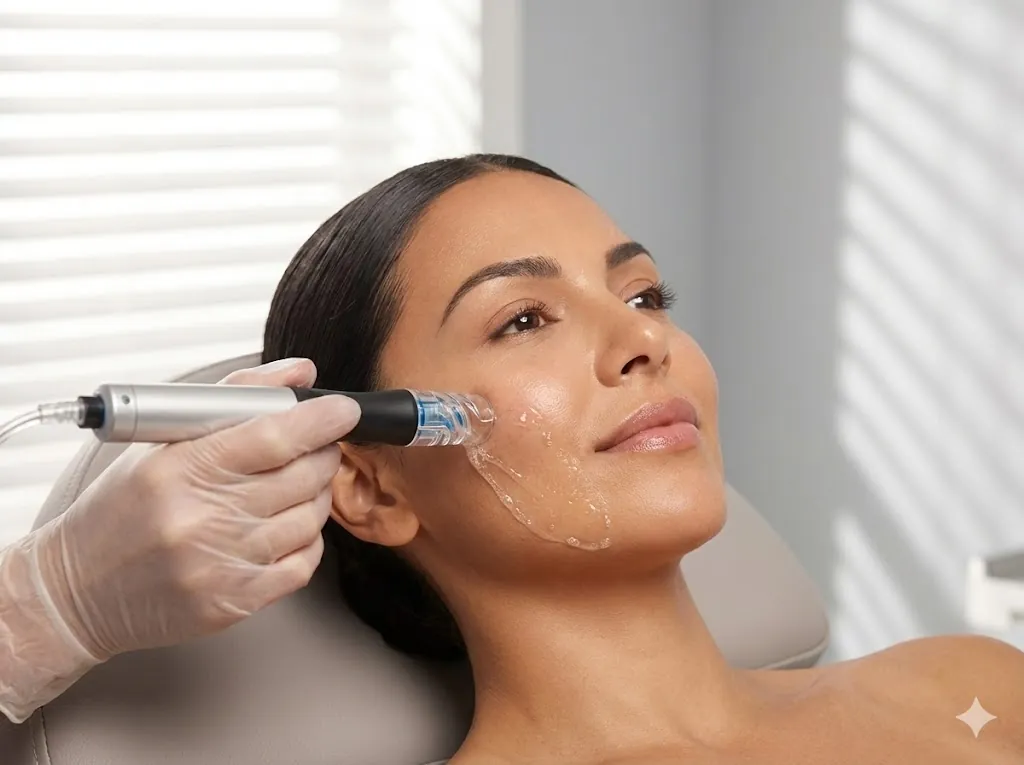
Microneedling (percutaneous collagen induction) creates controlled micro-channels in the skin that trigger a three-phase healing response — inflammation, proliferation and remodeling — which produces new collagen over the following weeks and months. Post-treatment care matters because the skin barrier is temporarily open: gentle products, hydration and strict sun protection in the first 72 hours support healing and lower the risk of post-inflammatory hyperpigmentation.
In the evolving landscape of medical aesthetics in 2026, few treatments have maintained the clinical staying power of microneedling. Also known as skin needling or Percutaneous Collagen Induction (PCI), this procedure has transitioned from a niche skin-care tool to a cornerstone of regenerative medicine. At Skin Art MD in Burnaby, BC, we approach this treatment through a lens of physiological precision. Led by Dr. Sharon Fong, a physician, our clinic prioritizes the biochemical pathways that turn controlled micro-injuries into visible skin transformation. Understanding the importance of post-treatment care is not merely about comfort; it is about optimizing the wound-healing cascade to support the production of new type I collagen. Whether you are addressing atrophic scarring, fine lines, or dyschromia, the success of your journey at our Burnaby clinic depends as much on the science of the procedure as it does on the recovery protocols followed at home. Learn more about Microneedling
How Does Microneedling Work at a Cellular Level?
Microneedling operates on the principle of controlled physical trauma. When the medical-grade needles penetrate the epidermis and reach the papillary dermis, they create thousands of microscopic channels.
This process triggers a predictable three-phase physiological response:
- The Inflammation Phase: Immediately following the procedure, platelets are activated, releasing growth factors such as Transforming Growth Factor-alpha (TGF-α) and Platelet-Derived Growth Factor (PDGF). This phase is characterized by the redness and mild swelling patients often observe.
- The Proliferation Phase: Within days, fibroblasts—the "engine rooms" of our skin—begin to migrate to the micro-channels. They start the synthesis of the extracellular matrix (ECM), producing new collagen and elastin fibers. This is the heart of collagen induction.
- The Remodeling Phase: Over the following weeks and months, the initial type III collagen (often associated with scar tissue) is replaced by the more resilient, organized type I collagen. This leads to a tightening of the skin and a reduction in the appearance of imperfections.
Dr. Sharon Fong emphasizes that the depth of the treatment must be customized. At Skin Art MD, we evaluate the thickness of the patient’s dermis to ensure we are reaching the "sweet spot" for collagen synthesis without causing unnecessary trauma. For our patients in Greater Vancouver, this physician-led oversight ensures both safety and efficacy.
What Does the Clinical Evidence Show?
The efficacy of microneedling is well documented in peer-reviewed medical literature. At Skin Art MD, we rely on evidence-based protocols to guide our treatments.
- Aust et al., Plastic and Reconstructive Surgery: This landmark study demonstrated a significant increase in collagen and elastin deposition six months post-treatment, with a 140% increase in epidermal thickness noted in some subjects.
- Fabbrocini et al., Journal of Dermatological Treatment: Researchers found that microneedling was highly effective for acne scarring, showing significant improvement in skin texture and patient satisfaction scores without the downtime associated with more aggressive lasers.
- McCrudden et al., Journal of Controlled Release: This study highlighted the role of micro-channels in increasing skin permeability, emphasizing why the products used during the post-treatment care window are so critical for absorption.
Currently, microneedling devices used at Skin Art MD have an established safety profile in professional clinical settings.
Why Does Post-Treatment Care Matter So Much?
If the procedure is the catalyst, post-treatment care is the fuel. Because the skin’s natural barrier is temporarily compromised, the 48 to 72 hours following your session in Burnaby are vital. Proper aftercare ensures that the inflammatory response remains productive rather than destructive.
Immediate Aftercare (0–24 Hours)
During this window, the micro-channels are still closing. We advise patients to avoid any makeup or harsh cleansers. Use only the sterile, soothing serums provided or recommended by our team. This prevents exogenous particles from entering the dermis, which could cause granulomas or unwanted irritation.
The Healing Window (Days 2–7)
As the skin begins to flake or feel tight, hydration is paramount. We recommend hyaluronic acid-based products that support the moisture barrier. Sun protection is non-negotiable. The Greater Vancouver climate can be deceptive; even on cloudy days in Burnaby, UV radiation can penetrate the healing epidermis, leading to post-inflammatory hyperpigmentation (PIH).
Long-Term Maintenance
To sustain the results of skin needling, we integrate medical-grade skincare into your routine. This often includes Vitamin C to support collagen synthesis and retinoids (introduced only after full healing) to maintain cellular turnover. Book a Consultation
How Does Microneedling Compare With Lasers and Peels?
Microneedling uses mechanical energy, while fractional lasers use light energy to create thermal injury and chemical peels rely on chemical exfoliation. Because it relies less on heat, microneedling is often considered a lower-risk option for patients with higher Fitzpatrick skin types (darker skin tones), who are more prone to heat-induced pigmentation.
| Feature | Microneedling (PCI) | Fractional Laser | Chemical Peels |
|---|---|---|---|
| Mechanism | Mechanical micro-injury | Thermal (heat) injury | Chemical exfoliation |
| Primary Goal | Collagen induction | Resurfacing/Pigment | Texture/Clarity |
| Downtime | 24–48 hours | 3–7 days | 1–5 days |
| Skin Type Safety | Suitable for most skin types after assessment | Risk for darker tones | Variable based on depth |
| Commonly Used For | Scars, fine lines, pores | Deep wrinkles, sun damage | Surface dullness, acne |
Who Is Microneedling Suitable For?
Microneedling is commonly used for acne scars, fine lines, enlarged pores and uneven texture, but it is not appropriate for everyone; a physician assessment decides suitability.
Under the guidance of Dr. Sharon Fong, the team performs a comprehensive skin assessment before any microneedling treatment.
Concerns microneedling is commonly used to address:
- Acne scars (atrophic or "pitted" scars)
- Fine lines and moderate wrinkles
- Enlarged pores and uneven skin texture
- Mild skin laxity
Contraindications include:
- Active acne or skin infections in the treatment area
- A history of keloid scarring
- Current use of certain blood-thinning medications
- Active eczema or psoriasis flares
For our Mandarin-speaking community in Burnaby, our bilingual staff is available to explain these medical nuances in detail, so every patient understands the treatment plan. Book a Consultation
Why Choose Skin Art MD in Burnaby?
Choosing a physician-led clinic like Skin Art MD means your treatment is performed with medical-grade equipment and sterile protocols that go beyond standard spa requirements.
- Physician Oversight: Dr. Sharon Fong oversees our clinical protocols, with patient safety as the priority.
- Personalized Science: We don't believe in a one-size-fits-all approach. We adjust needle depth and frequency based on your specific skin anatomy.
- Bilingual Care: We offer consultations in English and Mandarin to better serve the diverse community of the Greater Vancouver area.
- Medical-Grade Technology: We use medical-grade devices that allow precise, adjustable needle depth.
What Do People Ask About Microneedling?
The most common questions cover how many sessions are needed, what the procedure feels like, which aftercare step matters most, and how cost is set.
Q: How many sessions of microneedling will I need? While some patients see a "glow" after one session, most clinical outcomes for collagen induction require 3 to 6 treatments spaced 4 to 6 weeks apart. This allows the remodeling phase of the wound-healing cascade to complete.
Q: Does the procedure hurt? A high-strength topical numbing cream is applied before the treatment. The sensation is commonly described as a light sandpaper-like feeling or a vibrating tingle.
Q: What is the most important part of post-treatment care? Sun protection and avoiding contamination. Because the skin barrier is open, it is very vulnerable to UV damage and bacteria. Following the clinic's aftercare guide is essential for a smooth recovery.
Q: How much does microneedling cost? Cost depends on the area treated and whether adjuncts like growth factor serums are included; it is discussed at your consultation.
What Is the First Step Toward Microneedling?
If you are ready to address skin texture or scarring through the science of collagen induction, the first step is a professional assessment. Our team will map out a journey that respects your skin's biology and your aesthetic goals.
Want to Learn What Microneedling Could Do for Your Skin? After a physician assessment, our medical team at Skin Art MD in Burnaby can create a personalized treatment plan. Book a consultation — available in English and Chinese.
Disclaimer: This article is for educational purposes only and does not constitute medical advice. Please consult with a qualified healthcare professional before undergoing any treatment. Individual results depend on various factors and may vary.