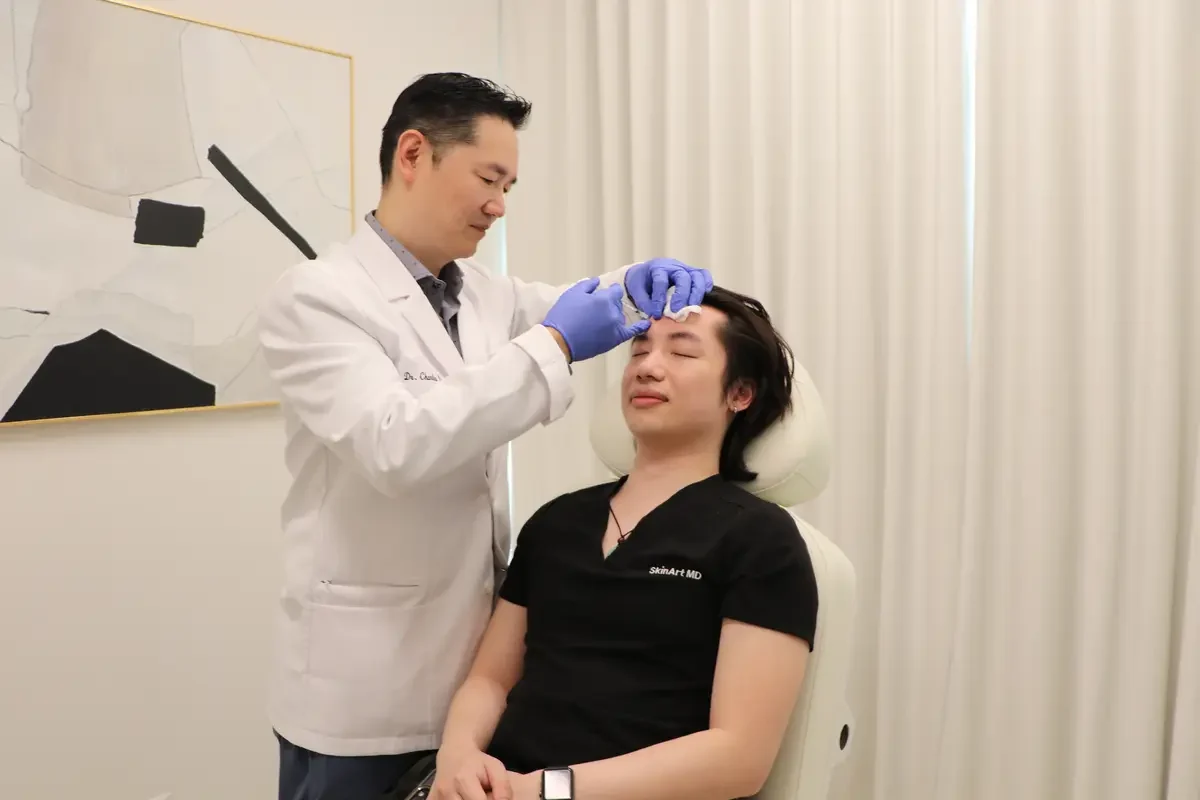
Skin Art MD gives Skin Booster pricing only after a physician assessment, because cost depends on which areas are treated, how many sessions a course needs, how much hyaluronic acid gel is used, whether maintenance visits are planned, and who performs the injections. These factors vary person to person, so a written quote follows your consultation rather than a flat online figure.
What determines the cost of Skin Boosters?
The main cost drivers are the number of areas treated, how many sessions make up a course, how much hyaluronic acid gel is used, and whether a maintenance plan is included.
Skin Boosters are micro-injections of a fluid hyaluronic acid gel placed in the dermis to hydrate skin from within and support its overall quality, rather than to change face shape. They are typically discussed for dullness, dryness and fine lines, and at Skin Art MD a physician plans both the product and the course for the area being treated.
Gel choice also factors into cost. Skin booster gels fall into broad categories — non-cross-linked HA, microdroplet HA, HA with added amino acids, and hybrid formulations — and a physician selects one to suit the skin and the goals discussed at consultation. Different gels and the volume used per area can affect pricing.
Course structure matters too. A common approach involves about 3 sessions spaced 3-4 weeks apart, since skin quality tends to build gradually rather than appear after a single visit. Because effects typically last around 6-9 months before fading as the HA is naturally metabolised, many treatment plans also factor in periodic maintenance sessions on a similar timeline, which is reflected in how a quote is structured.
Why do skin booster quotes differ between clinics?
Quotes can differ because clinics may use different hyaluronic acid gel types, injection techniques, and treatment courses tailored to each person's skin.
Skin booster gels are not one single product. They fall into broad categories, including non-cross-linked HA, microdroplet HA, HA with added amino acids, and hybrid gels. A physician assessment decides which category suits a given skin type and goal, and that choice can affect what a clinic quotes.
Gels also differ in thickness and how they spread through the dermis. A thinner, more fluid gel may suit delicate areas, while a different formulation may be chosen for areas needing broader coverage. This selection is part of the planning that goes into a quote, since product cost and technique both factor in.
Pricing can also reflect how a course is planned over time, including whether skin boosters are sequenced alongside energy-based treatments. When this kind of combination planning is involved, timing and spacing between appointments are mapped out by a physician, which can change how a quote is structured compared with a single standalone session.
Because gel type, technique and course planning vary by individual, two quotes for "skin boosters" may reflect genuinely different treatment plans rather than simply different price lists.
What should a consultation quote itemise?
A clear quote should break down the gel type chosen, the number and spacing of sessions, the areas being treated, and the suggested maintenance schedule.
Before any pricing is given, a consultation at Skin Art MD typically works through the planning details first. The physician reviews skin type, hydration concerns and goals, then matches a product and technique to the skin, since gels differ in thickness and spread. This consultation and customization step is where the chosen gel category gets written into the quote, along with the areas of the face, neck, décolletage or hands being addressed.
A written quote should also set out the course structure. A common course is about 3 sessions, spaced roughly 3-4 weeks apart, with results building gradually over that period. The quote should note what maintenance looks like afterward, generally repeated every 6-9 months, so there are no surprises about ongoing cost once the initial course is complete.
Useful items to look for on a quote include:
- Gel category selected and why it suits the treatment areas
- Number of sessions in the initial course and spacing between them
- Specific areas included (face, neck, hands, etc.)
- Suggested maintenance interval
A quote missing any of these points may be harder to compare against another clinic's pricing.
What happens during a Skin Booster visit?
A typical visit moves from consultation and product selection to numbing, precision micro-injections, and short aftercare guidance.
Before the appointment, preparation matters. Alcohol, aspirin and blood thinners are typically avoided for 3 days beforehand unless a physician advises otherwise, and retinoids or exfoliating products are usually paused 3-5 days prior to reduce sensitivity.
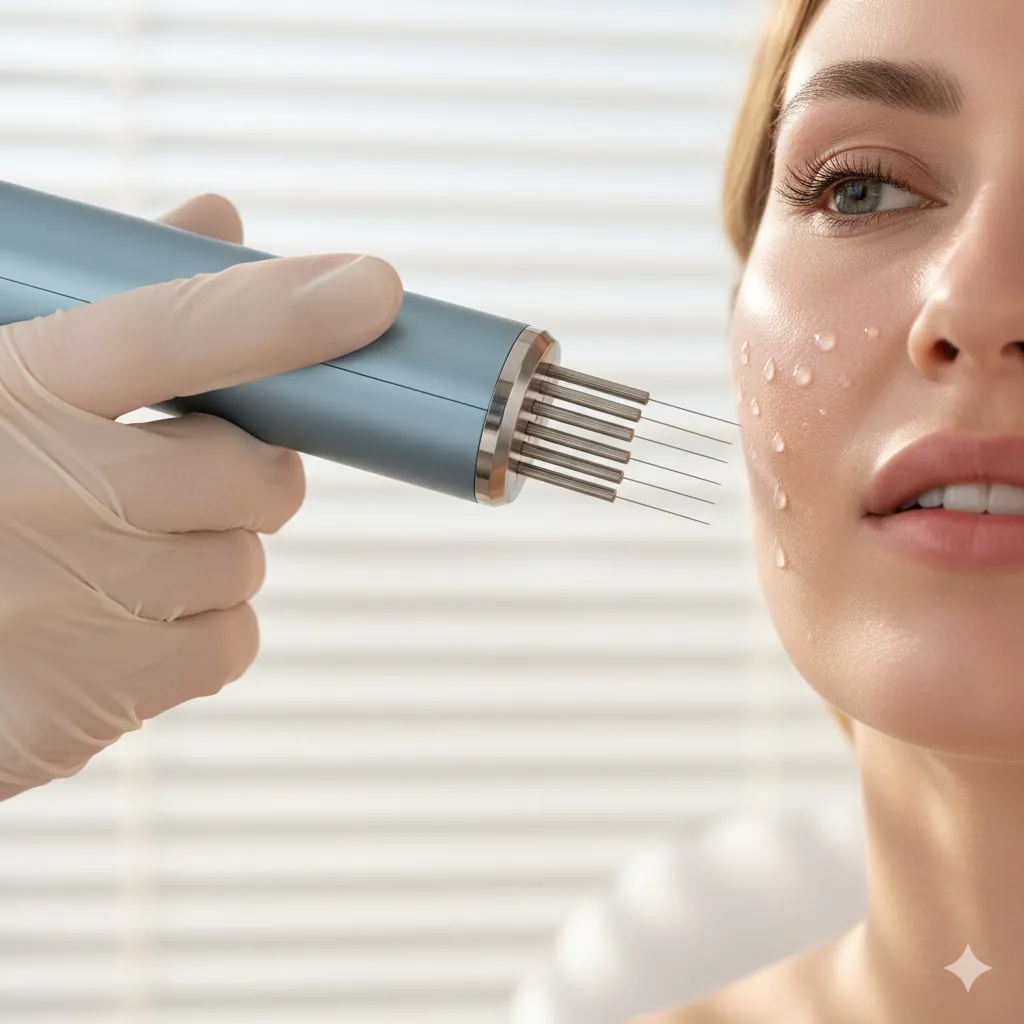
At the visit itself, a physician reviews skin goals and confirms the planned product. A topical numbing cream is then applied, generally left on for about 30-45 minutes, to help keep the micro-injections comfortable. Once the skin is numbed, fine needles are used to place hyaluronic acid evenly through the dermis in a series of precision micro-injections.
Afterward, small bumps at injection points are common and usually settle within 24-48 hours as part of the normal recovery process. Aftercare guidance given before leaving generally includes:
- Avoiding touching, massaging, or applying makeup to the area for several hours
- Skipping strenuous exercise for 24-48 hours
- Keeping skin hydrated with gentle moisturizer and daily sunscreen
- Avoiding saunas, hot tubs, and sun exposure for 3 days, and sleeping on the back or untreated side the first night
The entire visit is structured to be efficient, with most of the time spent on numbing and aftercare instructions rather than the injections themselves.
Who might consider Skin Boosters, and who should not?
A physician assessment at Skin Art MD decides suitability based on skin type, goals, and health history, since some conditions mean the treatment is not advised. Skin boosters are generally discussed for dull, dry, or dehydrated skin, for fine lines and uneven texture, and for anyone interested in improving skin quality without changing facial volume or shape. They are considered a non-surgical option with limited downtime, and technique can be adjusted across different skin types, including sensitive or melanin-rich skin.
Skin boosters are not advised in certain situations, including:
- Pregnancy or breastfeeding
- Active skin infection or inflammation in the treatment area
- A known allergy to hyaluronic acid or to a numbing ingredient
- Recent dermal treatments in the same area
- Blood thinner use or a bleeding disorder, until reviewed by a physician
- An active cold sore, or an autoimmune condition affecting the skin, which requires assessment first
Because these factors vary by individual, a consultation reviews medical history and current medications before any product is chosen. This step also helps a physician plan technique in a way that limits trauma to the skin, which matters for reducing the risk of post-inflammatory hyperpigmentation in reactive or melanin-rich skin.
How do Skin Boosters compare with HydraFacial, and does that affect cost?
Skin Boosters place hyaluronic acid gel into the dermis for deeper hydration, while HydraFacial works at the skin's surface, and the different mechanisms are part of why their course structures and costs are planned differently.
Unlike traditional dermal fillers that add volume to change shape, skin boosters are micro-injections of a fluid hyaluronic acid (HA) gel aimed at skin quality rather than contour. Stabilized HA is placed into the dermis, where it binds and holds water, hydrating skin from beneath the surface in a way that topical creams or surface treatments have limited reach to achieve. Some people also notice firmer-feeling skin over the following weeks as the gel settles.
HydraFacial, by contrast, cleanses, exfoliates and infuses the skin's outer layers rather than placing anything into the dermis. It is also worth distinguishing skin boosters from dermal fillers: both use hyaluronic acid, but fillers are thicker and add volume or shape, while skin boosters are fluid and placed superficially within the dermis to hydrate and improve skin quality without changing face shape.
Because each approach targets a different depth and purpose, pricing is structured differently — a skin booster course is quoted around a series of injection sessions, while HydraFacial is typically priced per surface treatment. A physician assessment at Skin Art MD can help clarify which approach, or combination, suits your skin.
What questions should you ask about Skin Booster pricing?
Useful questions cover the gel type being used, how many sessions are recommended, how often maintenance is needed, and who will perform the injections. These details affect what a quote actually includes, so it is worth asking about them before comparing numbers between clinics.
A few specific points to raise:
- Gel type: skin booster gels differ (non-cross-linked HA, microdroplet HA, HA with added amino acids, hybrid gels), and the choice may affect how a course is structured.
- Session plan: a common course is about 3 sessions spaced 3-4 weeks apart, since results build gradually over the following weeks rather than appearing all at once.
- Maintenance interval: effects typically last 6-9 months, and many people repeat treatment on roughly that cycle; results vary by person, so ask how this is assessed at follow-up.
- Settling time: small bumps from the injections usually settle within 1-2 days, which is worth knowing when planning the visit around other commitments.
- Who injects: confirming whether a physician or another member of the care team performs the injections helps clarify what is included in the price.
Asking these questions upfront, rather than focusing only on a per-session figure, gives a clearer picture of the total cost of a course and what to expect from it.
Frequently asked questions
How much is skin booster treatment?
Skin Art MD quotes skin booster treatment only after a physician assessment, since cost depends on factors like how many areas are treated, the number of sessions planned, and which hyaluronic acid gel is selected for your skin.
How much are skin booster injections?
There is no fixed price list because the cost reflects the treatment plan a physician builds for you, including the areas addressed, the course length, and whether maintenance sessions are included.
Why do skin booster quotes differ between clinics?
Quotes can differ because clinics may use different HA gel categories, plan a different number of sessions (a common course is about 3 sessions 3-4 weeks apart), and have treatment performed by different levels of practitioner oversight.
What should a consultation quote itemise?
A clear quote should break down the areas being treated, the number of sessions in the course, the specific HA gel category chosen, and any planned maintenance visits roughly every 6-9 months, so there are no surprises.
What should I ask before booking a skin booster treatment?
It is reasonable to ask which areas and how many sessions are included in a quoted plan, which HA gel category will be used, who performs the injections, and what maintenance schedule is recommended.
水光针多少钱?
Skin Art MD 不设固定价目表,水光针的费用会在医生评估后根据治疗部位、疗程次数以及所选的透明质酸凝胶类型来确定,建议预约咨询获取个人化报价。
How does skin booster cost compare with HydraFacial?
Both are offered at Skin Art MD, but they work differently and are priced separately after assessment; a HydraFacial addresses surface exfoliation and hydration, while skin boosters place HA gel into the dermis, so your physician can discuss which fits your goals and plan a personalized quote.
Next steps
If you are weighing Skin Boosters, a physician-led assessment at Skin Art MD in Burnaby can clarify whether it suits you. Book a consultation — available in English and Chinese. You can also read more on the Skin Boosters treatment page.
This article is for educational purposes only and does not constitute medical advice. Please consult with a qualified healthcare professional before undergoing any treatment.