Skin Art MD does not publish Ultherapy prices online. Cost depends on the areas treated, how many treatment lines are mapped, and whether the neck or added zones are included. An assessment reviews anatomy and goals, then an itemised quote explains what the price covers before any decision is made.
Why doesn't Skin Art MD publish an Ultherapy price online?
Skin Art MD does not list Ultherapy prices online because cost is only confirmed after an assessment reviews the areas and plan involved. Ultherapy Prime treatment is mapped to each face rather than applied from a fixed template, so the number of lines, the depths used, and the areas included all vary from one plan to the next.
Because of this, a general price list would not reflect what an individual plan actually involves. Cost depends on the areas treated and the planned lines, and the physician assessment is what confirms both the plan and the cost for a given visit.
This approach also applies to the Burnaby location specifically. Ultherapy at the Metrotown clinic is reviewed in person so that:
- the treatment areas (jawline, brow, neck, lower face) are confirmed before any lines are planned
- comfort options and realistic timing for gradual results are discussed
- the plan reflects tissue laxity and facial proportions rather than a standard package
Publishing a flat number online would not account for these variables, which is why Skin Art MD treats the consultation as the step where pricing is actually set, rather than estimating it in advance.
What determines Ultherapy's cost?
Cost generally scales with the number of areas treated, how many treatment lines are planned, and the depths and energy settings used. Protocols can combine 4.5 mm, 3.0 mm and 1.5 mm depths, depending on the goal for a given layer of tissue, and reaching more depths with more lines naturally affects the scope of a session.
Planning is individual, so the areas discussed at a consultation vary by anatomy. Commonly requested areas include:
- The lower face and jawline, for contour along the jaw and early jowl area
- Under the chin, for laxity affecting profile definition
- The neck, for mild to moderate laxity and horizontal lines
- The brow area, as part of a broader facial plan
Each of these may be treated alone or combined, and combining areas typically means more treatment lines, which affects planning time and the overall scope of the visit.
How many sessions are advised, and how long results may last, also factors into overall planning. Ultherapy is often approached as a single structured session per area, with maintenance considered later depending on how tissue responds and how ageing progresses; this varies by individual. All of these variables are reviewed together during a physician assessment before a specific plan and cost are confirmed.
Why do Ultherapy quotes differ between clinics?
Quotes can vary between clinics depending on device authenticity, consumables used, and who performs the mapping and treatment.
Ultherapy relies on a genuine Ultherapy Prime system paired with manufacturer-specific consumables, and these components factor into how a clinic prices a session. A system that uses authentic applicators and tips, maintained to manufacturer specifications, is a different cost basis than one using substitute parts, and this can show up in how quotes are structured.
Who maps and delivers the treatment also matters. At Skin Art MD, a physician-led skin clinic in Burnaby (Metrotown), treatment planning sits within a physician-led framework, with Dr. Charles Jiang as medical director. A physician assessment decides whether Ultherapy suits a given face, and that assessment also shapes how lines are mapped before any pricing is confirmed.
Factors that commonly influence quote differences include:
- Whether the device and tips are genuine Ultherapy Prime components
- The depth protocols and line counts mapped for the treatment areas
- The experience and oversight involved in planning and delivering treatment
Because these variables differ by clinic, comparing quotes on price alone, without confirming the system and planning behind it, may not reflect the full picture.
What should an Ultherapy consultation quote itemise, and who decides if it suits me?
A consultation quote should break down the areas, treatment lines and session length discussed, and a physician assessment at Skin Art MD decides whether Ultherapy suits your anatomy and goals.
Tissue laxity, facial proportions and aesthetic preference are reviewed first. Treatment lines are then mapped with DeepSEE visualization so energy reaches the intended depths, rather than applying a fixed template to every face. Dr. Charles Jiang, Medical Director at Skin Art MD, oversees this physician-led process.
A written quote at Skin Art MD typically covers:
- Which areas are included (jawline, brow, neck, under-chin, or a combination)
- The number and direction of treatment lines planned for those areas
- Expected session length — typically 60–90 minutes for face and neck, with a single smaller area such as the brow or under-chin taking less time
Session count also varies by plan. Some protocols are a single visit, while others may be staged across more than one session or combined with other treatments depending on the laxity pattern identified. How long results last is individual as well — collagen renewal develops gradually, and many people review maintenance after roughly a year, with timing influenced by ongoing ageing rather than a fixed schedule.
Does Ultherapy hurt, and does comfort affect the plan?
Discomfort during Ultherapy varies by person and treatment area, and comfort options discussed beforehand are part of planning rather than a separate add-on.
Most people describe the sensation as intermittent deep heat or tingling as ultrasound energy reaches set depths beneath the skin. The sensation tends to be brief with each pass and is not constant throughout the session.
Comfort options are discussed before treatment begins, not improvised partway through. These may include:
- A topical numbing cream applied before the session
- An oral pain reliever, where appropriate
- Checking in on comfort throughout the session so settings or pacing can be adjusted
Because comfort planning happens upfront, it does not change what areas get treated or how treatment lines are mapped. It affects how the session feels, not the underlying plan built from your anatomy and goals.
A physician assessment at Skin Art MD reviews your tolerance expectations alongside the treatment areas being considered, so comfort measures are factored in from the start rather than addressed only if discomfort comes up during the appointment itself.
How does Ultherapy compare with Thermage FLX?
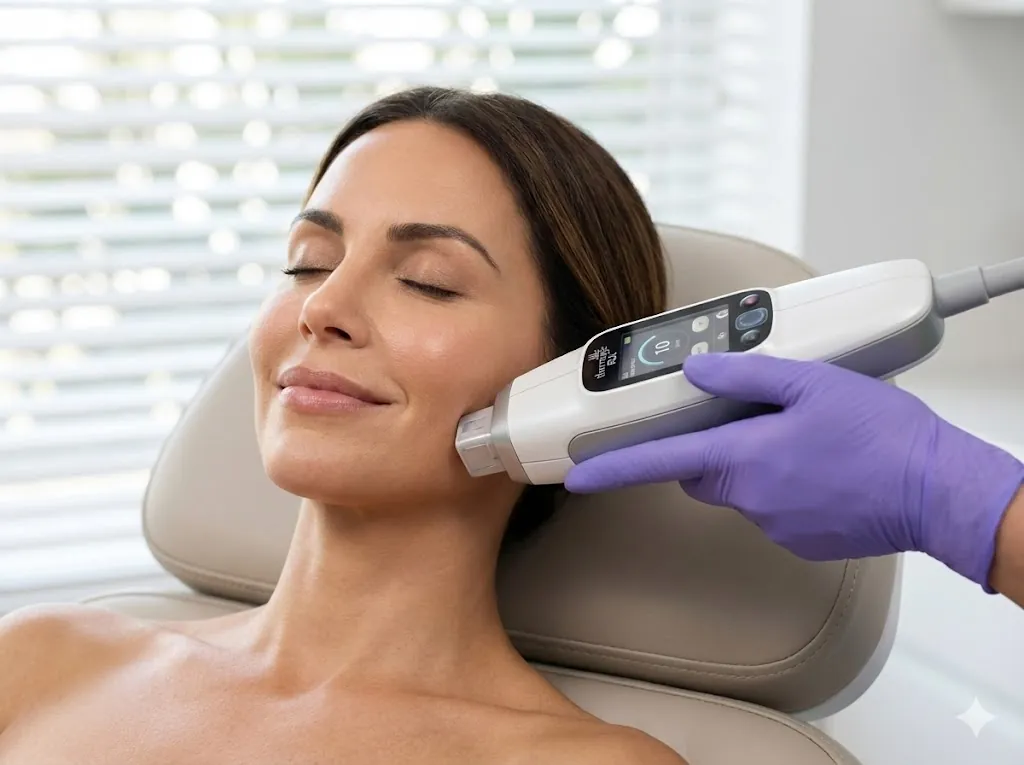
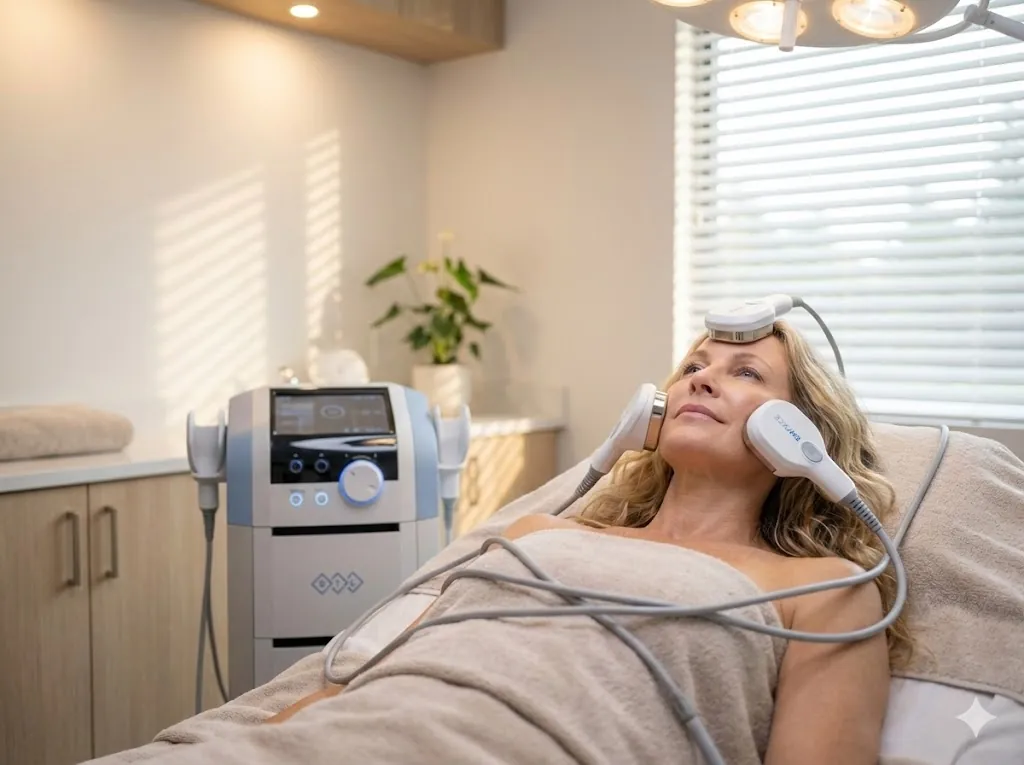
Ultherapy and Thermage FLX use different energy types and session structures, which is part of why they can be planned or priced differently for similar goals. Ultherapy relies on micro-focused ultrasound, delivering energy to set depths beneath the skin, with imaging used to confirm those layers before each pass. Thermage FLX works with radiofrequency, warming the skin's surface and underlying tissue more broadly rather than targeting discrete depth layers.
Because the energy sources and treatment patterns differ, the number of lines, the pattern of passes, and the overall time in the room are not directly comparable between the two devices. This is one reason a quote for one cannot simply be substituted for the other.
Deciding between them is not a matter of one being generally preferable. It depends on the laxity pattern being addressed, the area involved, and the aesthetic goal. A physician assessment at Skin Art MD weighs these factors and decides which approach, or whether a staged combination of both, fits a particular case.
Some treatment plans do incorporate both technologies at different points, addressing different tissue layers or areas over time rather than in a single session.
What happens during an Ultherapy session?
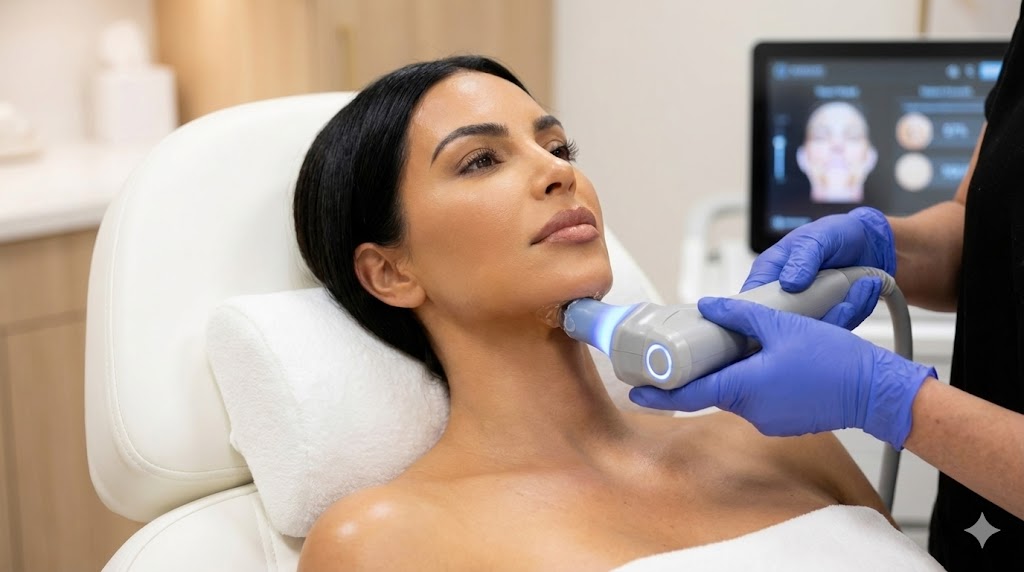
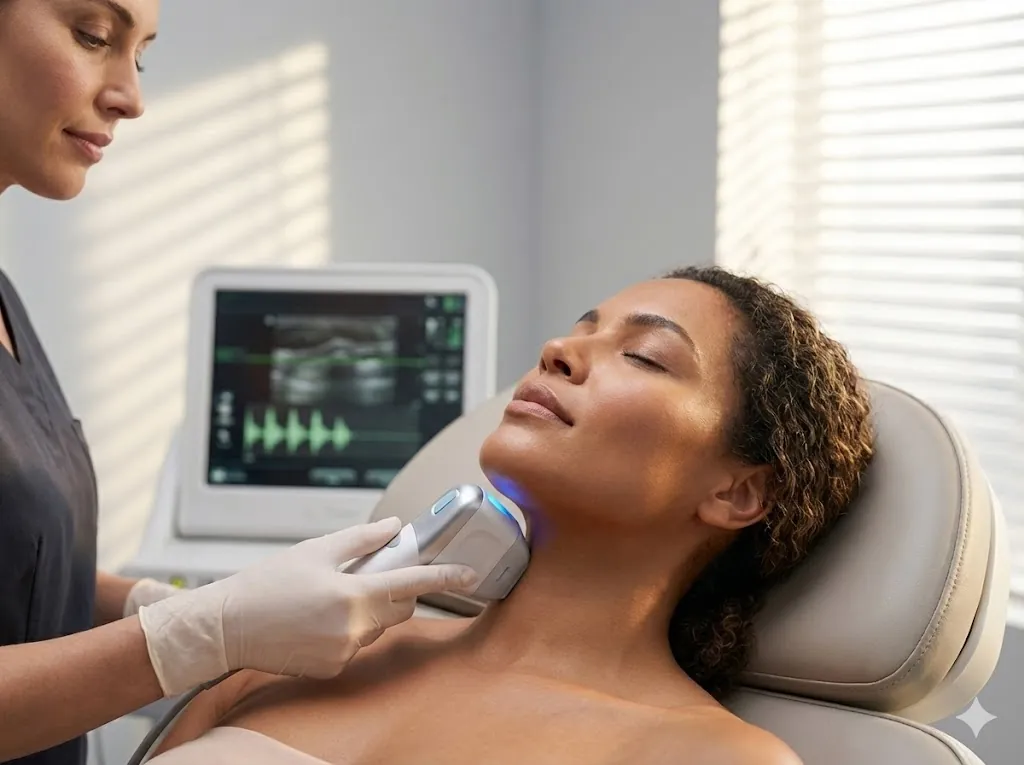
A typical Ultherapy session uses DeepSEE imaging to plan treatment lines before delivering ultrasound energy to the jawline, brow or neck. The imaging allows the treatment lines to be mapped in advance and helps confirm tissue layers before each treatment pass, so energy is directed to the depth intended for that area rather than applied on a fixed template.
Once the lines are mapped, the device delivers controlled ultrasound energy along those paths. A session covering the face and neck typically takes 60–90 minutes. Treating a single, smaller area — such as the brow or under the chin — generally takes less time, since fewer lines are mapped.
Session length at Skin Art MD in Burnaby depends on:
- How many areas are included (jawline, brow, neck, or a combination)
- The number of treatment lines mapped to the anatomy being treated
- Depth settings selected for the goals discussed at assessment
Because planning is individualized, two people treating the same area may still have sessions of different lengths. A physician assessment reviews the anatomy first and confirms what the session will involve before treatment begins.
What downtime or limits should I expect after Ultherapy?
Most people return to normal activities the same day, though temporary redness, tenderness or tingling can last from a few days to a few weeks. Slight swelling along the treated lines is also possible during that window.
There is no formal recovery period in the sense of bandages or time off work. A session does not interrupt a typical schedule, and most routines, including light exercise, can resume right away.
While skin settles, a few simple habits are usually discussed:
- Gentle skincare, avoiding harsh exfoliants or active ingredients until redness and tenderness ease
- Daily sunscreen on treated areas
- Patience with mild tenderness, which tends to fade gradually rather than all at once
Because Ultherapy works on structural layers rather than adding or removing volume, it is not expected to leave the face looking hollow; mapping is planned around individual anatomy, and expectations are discussed at the physician assessment before treatment begins.
A history of dermal filler is generally compatible with Ultherapy. Injection history is reviewed first, and treatment lines are mapped around previously treated zones, so planning accounts for what is already present beneath the skin rather than treating every area the same way.
Frequently asked questions
How much does Ultherapy cost?
Skin Art MD does not publish Ultherapy prices online because cost depends on the areas treated, the number of treatment lines mapped, and the energy settings a physician plans for your anatomy. A physician assessment reviews your goals and confirms a personalized plan and cost at consultation.
How much does Ultherapy cost in Canada?
Costs for Ultherapy can vary between clinics across Canada depending on the areas planned, the amount of ultrasound energy used, and whether maintenance sessions are considered. At Skin Art MD in Burnaby, pricing is confirmed only after a physician assessment maps your specific treatment plan.
What should an Ultherapy quote include?
A clear quote should itemise which areas are being treated (such as jawline, brow, neck or under-chin), the planned treatment lines or depths, and whether any follow-up or maintenance session is anticipated. Asking who performs the treatment and whether a genuine Ultherapy Prime system with manufacturer consumables is used can also help you compare quotes.
How much does Ultherapy hurt?
Discomfort varies by person, and most people describe intermittent deep heat or tingling during treatment rather than constant pain. Comfort options, such as a topical numbing cream or an oral pain reliever, may be discussed before the session, and comfort is checked throughout.
Ultherapy or Thermage FLX, which is right for me?
They work differently: Ultherapy uses focused ultrasound at set depths, while Thermage FLX uses radiofrequency to warm skin more broadly across the surface. A physician assessment at Skin Art MD decides which approach suits your anatomy, and some plans stage both over time.
How long do Ultherapy results take to show, and does that affect cost?
Changes build gradually, with some people noticing early tightening within weeks and more visible change around three to six months; results vary by anatomy and treatment plan. Because the number of areas and lines mapped influences both the plan and the eventual quote, this is confirmed at your physician assessment rather than online.
Where can I get an Ultherapy cost consultation near Burnaby or Vancouver?
Skin Art MD is located at #101 - 4378 Beresford St, Burnaby (Metrotown), near Metrotown SkyTrain Station on the Expo Line, open Tuesday to Sunday 10:00-18:00 and closed Monday. A physician assessment there reviews your anatomy and goals before confirming a personalized plan and cost.
Next steps
If you are weighing Ultherapy, a physician-led assessment at Skin Art MD in Burnaby can clarify whether it suits you. Book a consultation — available in English and Chinese. You can also read more on the Ultherapy treatment page.
This article is for educational purposes only and does not constitute medical advice. Please consult with a qualified healthcare professional before undergoing any treatment.