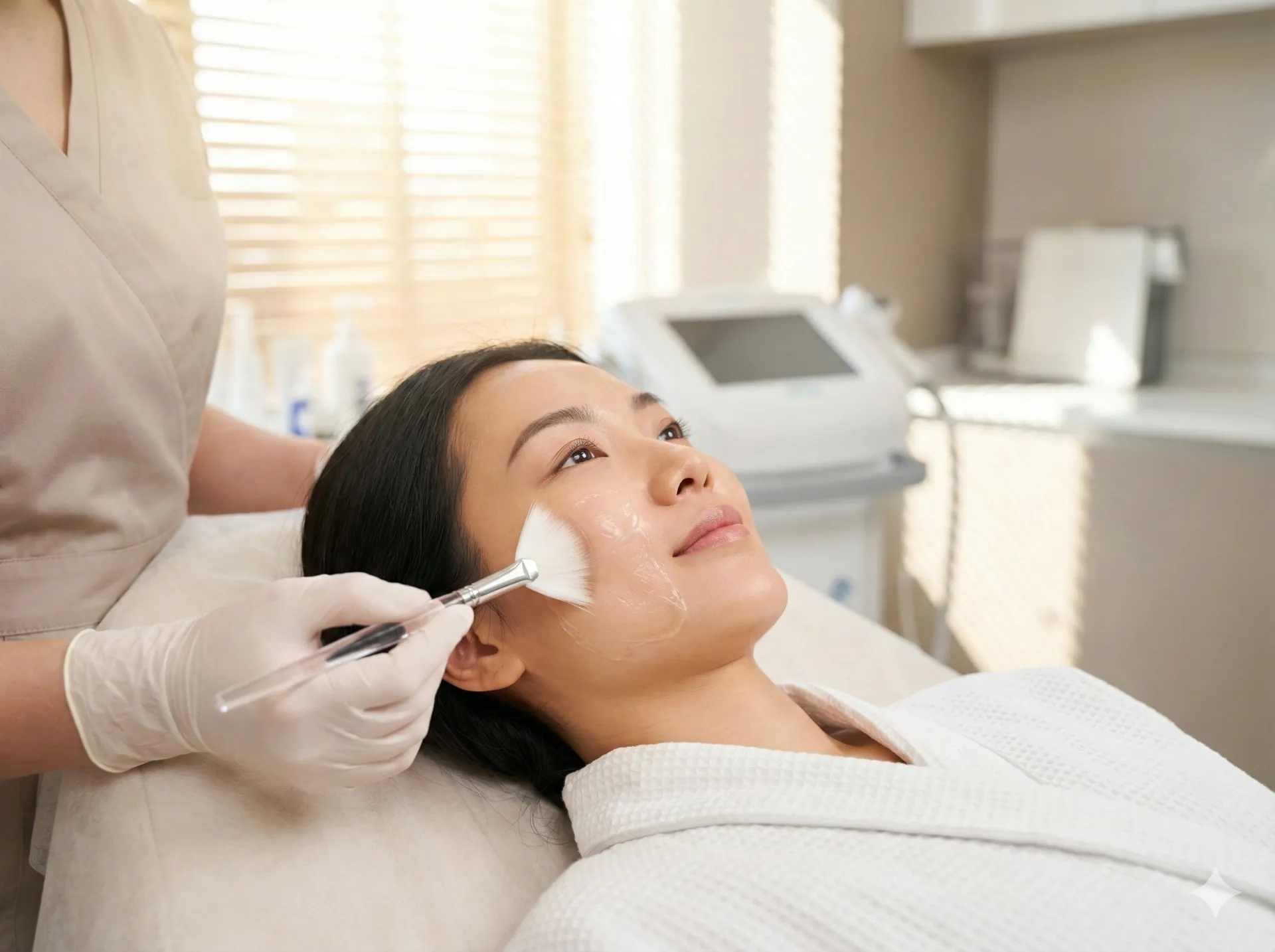
A chemical peel and a HydraFacial both exfoliate, but they work at different depths and lead to different recovery. A peel applies exfoliating acids at a chosen strength so the outer layer sheds over several days, and it is used for tone, texture and superficial pigment. A HydraFacial cleanses, extracts pores with suction and infuses serums in about 30 minutes, usually with no visible peeling, and is used for congestion and hydration.
People in Burnaby and across Greater Vancouver often search "chemical peel near me" and "HydraFacial near me" side by side, as if they were two versions of the same thing. They are not. This guide explains how each one works, what recovery looks like, how season and skin type change the plan, and who should wait. It is general information, not medical advice. At Skin Art MD, a physician-led clinic at Metrotown, either treatment starts with an assessment.
What is the actual difference between a chemical peel and a HydraFacial?
The difference is mechanism and depth: a peel uses acids to loosen and remove a layer of skin, while a HydraFacial cleans and hydrates the surface without removing a visible layer.
A chemical peel is a controlled, planned injury to the surface. An acid solution (at Skin Art MD, the Longevity Peel uses TCA and AHA in its protocol) loosens the bonds between dead and damaged cells. Over the following days the treated layer sheds and newer skin shows underneath. Peels range from light, which may only flake, to deeper corrective peels that shed more and take longer to settle. The strength and depth are chosen for the person, not set in advance.
A HydraFacial is a device-based facial. A handpiece with a spiral tip and vacuum suction moves across the skin in three steps: cleanse and exfoliate, extract congestion from pores, then infuse hydrating serums. One detail people often miss is that the exfoliating step uses a mild acid solution, so a HydraFacial is not completely acid-free. It is simply much more superficial than a peel and does not aim to make the skin shed.
How do they compare side by side?
In short, a peel trades several days of shedding for a stronger effect on tone and texture, and a HydraFacial trades depth for a same-day return to normal plans.
| Chemical peel (Longevity Peel) | HydraFacial | |
|---|---|---|
| How it works | Exfoliating acids at a chosen strength remove the outer layer | Vortex cleansing, suction extraction and serum infusion |
| Depth | Light to deeper, set by the physician | Superficial |
| Time in clinic | About 20–45 minutes for the peel, plus assessment | About 30 minutes |
| Visible peeling | Yes, typically over 3–5 days | Usually none |
| Typical downtime | Redness and tightness, then shedding | Minimal; some people look slightly pink briefly |
| Commonly used for | Dullness, uneven tone, rough texture, fine lines, superficial pigment | Congested pores, blackheads, dull or dehydrated-looking skin |
| Common rhythm | Series of lighter peels about 4–6 weeks apart; deeper peels less often | Monthly maintenance is common |
| Sun sensitivity afterwards | Higher; strict sun protection matters | Lower, but daily sunscreen still advised |
Individual results vary with skin type, depth, home care and sun exposure.
What does recovery look like after each one?
After a HydraFacial most people go straight back to work; after a peel you should expect a few days of visible flaking.
With a HydraFacial, skin may look a little pink for a short time because circulation increases. Makeup is usually fine the same day once the skin feels comfortable. This is why it is often booked a couple of days before an event.
With a peel, the sequence is usually tightness and mild redness for a day or two, a little like a mild sunburn, followed by shedding over about three to five days. Lighter peels may only flake slightly; deeper peels shed more. Many people keep working, but they plan the peel so that shedding does not fall on a wedding, a photo shoot or an important meeting. Leave flakes alone and moisturize; picking raises the chance of irritation and pigment changes.
Does the season matter, especially in Vancouver?
Season matters much more for a peel than for a HydraFacial, because freshly peeled skin is more sensitive to UV.
Many people in Greater Vancouver schedule peel series in fall and winter, when days are shorter and they spend less time outdoors. That does not mean UV disappears; cloud cover does not block it, and daily sunscreen is still part of aftercare all year. Things to plan around:
- Travel. Avoid booking a peel shortly before a beach or ski trip, since high UV and wind can irritate new skin.
- A recent tan or sunburn. Tanned or sunburned skin is a reason to postpone a peel.
- Outdoor work or sport. If you are outside for long stretches, tell the team so the depth and timing can account for it.
A HydraFacial is easier to fit in year-round.
Which is better for sensitive skin, rosacea or melasma?
Neither is automatically right or wrong for these conditions; it depends on the individual, which is why an assessment comes first.
Sensitive skin. A HydraFacial is often tolerated because suction and serums can be adjusted area by area. Peels can also be adapted, but acids are more likely to sting, so strength is chosen conservatively.
Rosacea. During an active flare, the usual advice for both treatments is to wait until the skin settles. Peels can aggravate reactive, flushing skin, so the physician weighs whether a peel suits you at all, and at what strength.
Melasma. Melasma is a chronic pigment condition that can return, and irritation or heat can make it darker. Some lighter peels are used as part of a melasma plan, but aggressive exfoliation can backfire. Expectations should be modest, sun protection is essential, and maintenance is usually discussed at follow-up.
Are peels suitable for darker or melanin-rich skin tones?
They can be, with care, because melanin-rich skin is more prone to darkening after irritation, called post-inflammatory hyperpigmentation (PIH).
PIH is not a reason to rule peels out, but it shapes every decision: the acid chosen, the strength, how the skin is prepared beforehand, and how strictly sun is avoided afterwards. Tell the physician about any past dark marks after acne, bites, waxing or other treatments, because that history helps predict how your skin may react. A HydraFacial carries less of this risk because it is more superficial, which is one reason some people start with it.
How often can you have each treatment?
A HydraFacial is commonly repeated about monthly; lighter peels are often done as a series about 4–6 weeks apart, and deeper peels less often.
These are typical patterns, not fixed rules. The physician checks your skin before each peel and adjusts spacing if needed. How long either effect lasts varies with ageing, sun exposure and routine.
Can you combine a chemical peel and a HydraFacial?
Yes, they are often used together in one plan, but usually on separate days rather than stacked in one visit.
A common approach is to use peels for tone and texture, then HydraFacials between peel sessions for upkeep and pore congestion. Key sequencing points:
- Wait until the peel has settled. A HydraFacial should not be done on skin that is still red or shedding. The team will tell you how long to wait for your peel depth.
- Avoid stacking exfoliation. Because a HydraFacial includes a mild acid step, doing it right before a peel adds to the total exfoliation. Spacing is set by the physician.
- Account for other treatments. Recent laser, microneedling or waxing in the same area also affects timing, so mention anything you have had in the past few weeks.
If pores and congestion are your main concern rather than tone, our earlier comparison of HydraFacial vs HydraPeel looks at the two cleansing facials in more detail.
Who should wait before a chemical peel or HydraFacial?
Some situations call for postponing treatment, and they are worth raising when you book rather than on the day.
- Oral isotretinoin (a prescription acne medication). Skin can stay fragile for some time after a course ends. Many practitioners recommend waiting several months before a peel; the physician decides based on your history.
- Active infection, cold sores or open wounds. Treatment waits until the skin has healed. If you get cold sores, say so, because a peel can trigger a flare.
- Pregnancy or breastfeeding. Some acids are not used during pregnancy or breastfeeding. For a peel, the physician will generally advise postponing. For a HydraFacial, some serums, including those with salicylic acid, may be skipped and the physician decides whether to go ahead. If in doubt, check with your own doctor or midwife.
- Topical retinoids and strong acids. These are usually paused for a period before a peel, as advised.
- A recent tan, sunburn or active rosacea flare. Wait until the skin has settled.
- A history of keloids, unusual scarring or pigment reactions. Mention it so the plan can be adjusted.
Why is an assessment the first step?
Because the same concern, such as "dull skin", can point to a HydraFacial for one person and a peel series for another, and the right depth depends on details only an in-person look can show.
During the assessment, the medical team reviews your skin type and history, medications, previous reactions, recent procedures and what you want to change. From there you get a plan: one treatment, a combination, or a reason to wait. Quotes are given after the assessment, since cost depends on the treatment, depth and number of sessions.
Frequently asked questions
Is a HydraFacial a type of chemical peel? No. It includes a mild acid exfoliating step, but it is a cleansing, extraction and hydration facial and does not aim to make the skin shed.
Will I peel after a HydraFacial? Usually not. Some people look slightly pink for a short time afterwards.
Which one is used for pigment? A peel is more often used for superficial pigment and uneven tone. Pigment concerns such as melasma can return, and results vary.
Can I wear makeup afterwards? After a HydraFacial, usually the same day. After a peel, it is generally advised to wait until redness and shedding settle.
Does a chemical peel hurt? Most people feel warmth, tingling or stinging for a few minutes during application. Deeper peels can feel stronger.
Do I need a consultation for a HydraFacial too? Yes. A short assessment checks medications, sensitivities and recent procedures before the first session.
Booking an assessment in Burnaby
Skin Art MD is at #101 – 4378 Beresford St in Burnaby, a short walk from Metrotown Station, and sees clients from across Greater Vancouver. If you are deciding between a chemical peel and a HydraFacial, book a consultation and the team will assess your skin, explain the options and recommend timing that fits your schedule and the season.