Neuromodulator micro-dosing spreads lower doses of a prescription neuromodulator across more injection points, so facial muscles relax partially rather than fully. The aim is to soften dynamic lines while keeping natural expression; results typically last about 2–3 months, and a physician assessment decides suitability.
What Is Neuromodulator Micro-Dosing — and Why Is Everyone Talking About It?
If you've been researching subtle, natural-looking ways to address fine lines and early signs of aging, you've likely come across the term micro-dosing. At Skin Art MD in Burnaby, we often hear questions about this technique — what it means, how it differs from standard treatment, and whether it is suitable for you.
Micro-dosing refers to the administration of lower doses of neuromodulators — purified proteins derived from Clostridium botulinum — strategically distributed across more injection points to achieve a subtle, movement-preserving result. Rather than fully immobilizing a muscle group, the goal is softening without freezing. Learn more about neuromodulator treatment and how we approach treatment at Skin Art MD.
These neuromodulators are prescription products, administered under physician supervision, used to temporarily relax targeted facial muscles and reduce the appearance of dynamic wrinkles. Micro-dosing is a clinical refinement of how these same molecules are applied, not a separate product.
How Do Neuromodulators Work at the Neuromuscular Junction?
Neuromodulators block the release of acetylcholine at the nerve-muscle junction by cleaving SNARE proteins, so the muscle receives a weaker signal to contract; micro-dosing makes that block partial rather than complete.
The SNARE Complex and Acetylcholine Release
Voluntary muscle contractions depend on the neurotransmitter acetylcholine (ACh) being released at the neuromuscular junction. ACh is packaged in vesicles inside motor nerve terminals and released via a protein complex called SNARE (Soluble NSF Attachment Protein Receptor). SNARE proteins — specifically SNAP-25, syntaxin, and synaptobrevin — act like a molecular zipper, fusing vesicle membranes to the terminal membrane so ACh can be expelled into the synaptic cleft and bind to muscle receptors.
Type A neuromodulators are zinc-endopeptidases. Once internalized by the nerve terminal, they cleave SNAP-25. When SNAP-25 is cleaved, the SNARE zipper cannot form, ACh vesicles cannot fuse with the membrane, and the muscle receives no signal to contract.
Why Dose Determines Expression
The degree of muscle relaxation scales with the amount of neuromodulator that reaches each motor end-plate. In a standard protocol, enough is delivered to achieve substantial or complete inhibition of a target muscle. In a micro-dosing protocol, smaller doses are distributed across more injection points. The result: partial inhibition across many motor units rather than complete inhibition of a focal group.
Muscles retain some range of motion — expressions like raising an eyebrow or smiling remain natural — while the repeated micro-contractions that etch static lines over time are diminished. This dose-response relationship is why technique, anatomy, and precise placement are critical. The margin between too little (no visible effect) and too much (frozen appearance) is narrower in micro-dosing, which is why a physician evaluates each patient's muscle anatomy before designing a plan. Book a consultation to discuss whether micro-dosing suits your goals.
What Does the Research Show About Low-Dose Techniques?
Published work on dilution and multi-point injection technique supports the rationale for distributed low-dose patterns, while research on preventive use is still emerging.
Technique and Diffusion
Work by Hexsel et al., published in the Journal of Cosmetic Dermatology, examined dilution protocols and multi-point injection techniques. The authors found that distributed low-dose injection patterns can reduce diffusion to non-target muscles, supporting the mechanistic rationale behind precision micro-dosing.
This is consistent with why micro-dosing techniques, when executed with appropriate dilution and detailed anatomical mapping, aim for more nuanced results with less unintended brow heaviness or asymmetry.
Preventive Use: Emerging Evidence
A growing body of literature investigates neuromodulators as a preventive strategy — intervening before static lines fully form. The underlying theory: dynamic wrinkles (visible only with expression) precede static wrinkles (visible at rest). By reducing the amplitude and frequency of repetitive muscle contractions while collagen is still resilient, the depth of eventual line formation may be attenuated. Prospective controlled data in this area are still accumulating.
How Does Micro-Dosing Compare With Standard-Dose Treatment?
Micro-dosing uses lower, distributed doses of neuromodulator to partially preserve muscle movement, compared to standard treatments that use higher doses for more significant reduction.
| Feature | Standard-Dose Treatment | Micro-Dosing |
|---|---|---|
| Units per area | Higher (full inhibition target) | Lower (partial inhibition) |
| Injection points | Fewer, concentrated | More, distributed |
| Muscle movement after treatment | Significantly reduced | Partially preserved |
| Expression preservation | Reduced in treated areas | High — natural-looking |
| Duration | Typically 3–4 months | Often 2–3 months |
| Typically discussed for | Established dynamic or static lines | Preventive, subtle correction, expressive faces |
| Technique complexity | Standard | Higher — requires detailed anatomy mapping |
Different neuromodulator formulations can be used in micro-dosing protocols. Some have a slightly wider diffusion radius, which influences dilution strategy; the choice depends on the injection zone, desired spread pattern, and the treating physician's clinical judgment.
Who Is Micro-Dosing Usually Discussed For?
Micro-dosing is generally discussed for dynamic lines that are not yet etched at rest, for expressive faces and for people who found standard doses too frozen, and a physician assessment of anatomy and health history decides suitability.
At Skin Art MD in Burnaby, the physician assessment considers several factors:
- Stage of line formation. Micro-dosing is aimed at dynamic lines — wrinkles visible during expression but not fully etched at rest. Deep static furrows already present at rest usually call for higher doses or combination approaches (e.g., with dermal filler).
- Facial animation patterns. People whose work or identity depends on expressive face use — performers, public speakers, educators — often prefer micro-dosing because subtle movement is preserved.
- Age and skin quality. Micro-dosing is often discussed in the late twenties and early thirties as a preventive approach, and at any age where strong facial muscle activity has produced early dynamic lines.
- Treatment history. People who previously found standard doses produced an overly "frozen" look may prefer a micro-dosing protocol.
- Systemic health. Neuromuscular disorders, pregnancy or breastfeeding, and aminoglycoside antibiotics (which can potentiate the effect) rule treatment out or call for caution. A medical history review is part of every consultation.
Book a consultation with our team for a personalized assessment.
What Are the Limitations and Contraindications of Micro-Dosing?
Micro-dosing does not address static wrinkles, volume loss, laxity or texture, its effect is shorter than standard dosing, and it is avoided in pregnancy, neuromuscular disorders, active infection or known hypersensitivity.
What Micro-Dosing Cannot Do
Micro-dosing is not appropriate for — and will not meaningfully address — static wrinkles fully formed at rest, significant volume loss, skin laxity, or textural irregularities. Treating these concerns with micro-dosing alone leads to disappointment, which is why candidate screening matters.
Duration Is Shorter
Partial inhibition means the nerve terminal recovers and re-establishes SNARE function more quickly than under full inhibition. Micro-dosing results often last 2–3 months versus the 3–4 months typical of standard dosing. This trade-off should be discussed in advance.
Technique Sensitivity
Because the margin between effect and no effect is narrow, micro-dosing results are highly sensitive to injector skill, mapping accuracy, and consistent technique. Variability between visits can occur if injection points or dilution differ, which is why it should be performed by an experienced physician-led team.
Known Contraindications
- Pregnancy or breastfeeding
- Known hypersensitivity to botulinum toxin or formulation components (human albumin)
- Active infection at proposed injection sites
- Neuromuscular junction disorders (myasthenia gravis, Lambert-Eaton syndrome, ALS)
- Concurrent aminoglycoside or anticholinergic medication use (relative contraindication)
Prescribing information for neuromodulator products in Canada includes contraindication guidance, and Skin Art MD follows it as part of our standard of care.
How Does Skin Art MD Approach Micro-Dosing in Burnaby?
At Skin Art MD, anti-wrinkle injections are performed or directly supervised by a physician after an anatomical assessment, with an individual injection map, clear explanations and consistent records across visits.
- Physician-led care. Every anti-wrinkle injection at Skin Art MD is performed or directly supervised by a physician. Anatomical assessment — including muscle bulk, symmetry, and movement patterns — precedes every treatment plan.
- Individual mapping. Rather than applying a fixed template, we map each patient's facial musculature. Micro-dosing depends on this, because the target is preserving specific movements while damping others.
- Personalized treatment plans. We explain what we are doing, why, and what to realistically expect at every stage.
- Bilingual staff — English and Mandarin (普通话). Concerns, expectations and aftercare instructions can be discussed in either language.
- Continuity. Micro-dosing benefits from consistent mapping across visits, so the protocol can be refined over time.
Book a consultation to discuss your options.
What Happens During a Micro-Dosing Appointment?
An appointment involves a physician consultation and mapping, a 15–30 minute injection session with fine needles, brief aftercare precautions, visible relaxation within days and a two-week check-in.
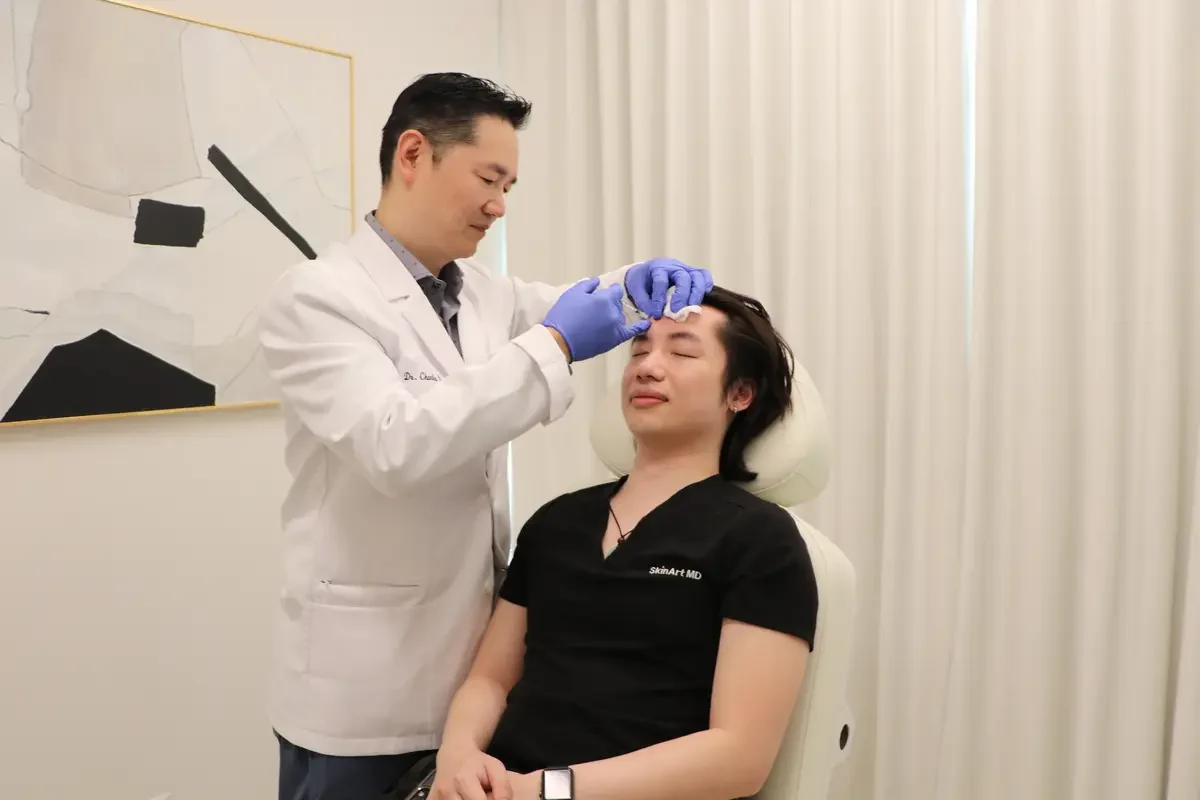
- Consultation and mapping. The physician reviews your medical history, assesses your facial anatomy in motion, and photographs resting and animated expressions. Target zones and unit estimates are documented.
- Pre-treatment preparation. Avoid blood thinners and alcohol for 24–48 hours prior to reduce bruising risk. Topical numbing cream is optional.
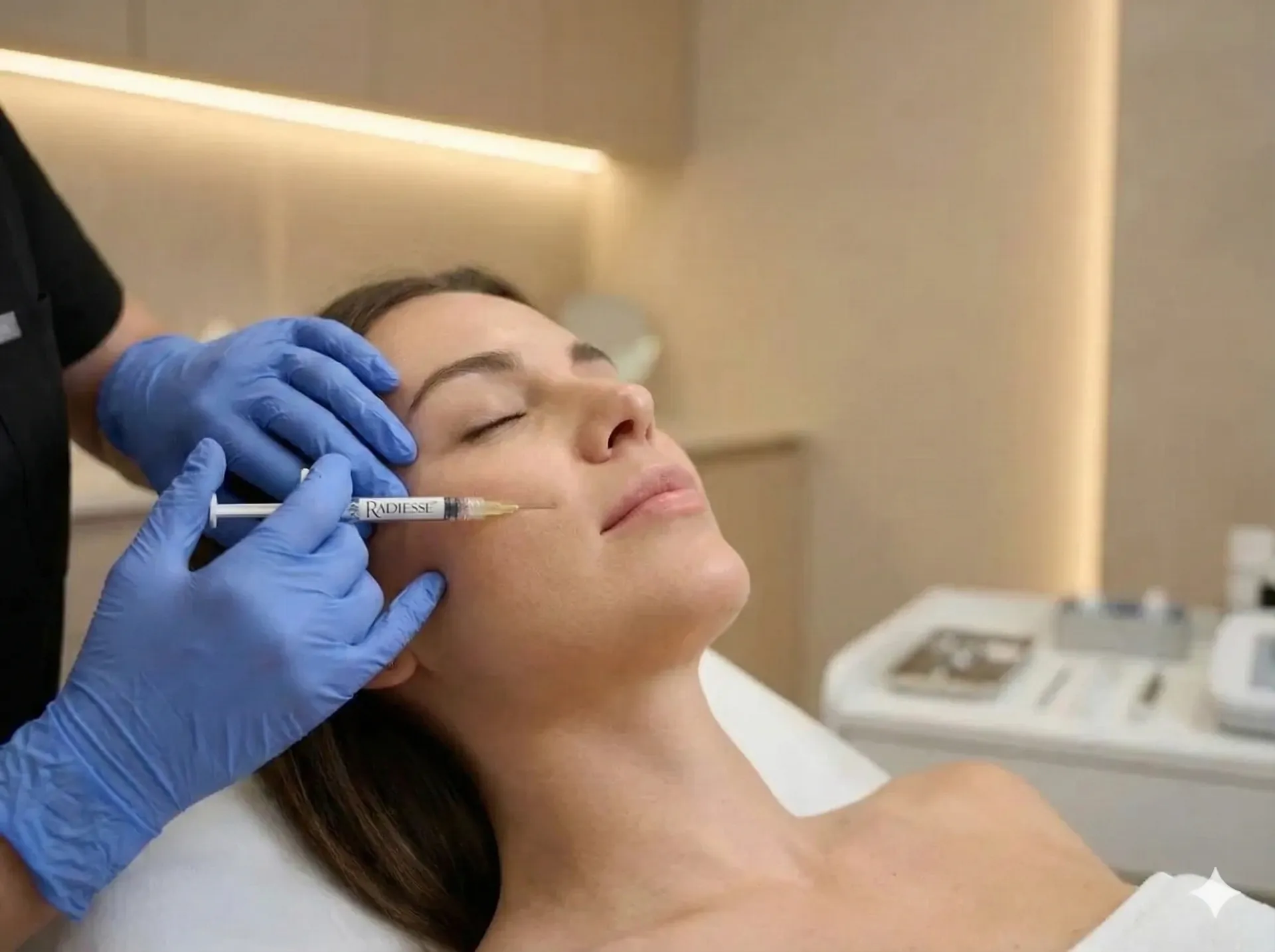
- Injection session. Typically 15–30 minutes. Multiple small-gauge needle insertions across mapped points. You may feel mild pressure or a brief sting at each point.
- Immediate aftercare. Avoid lying flat, vigorous exercise, or applying pressure to treated areas for 4 hours post-treatment. No massage of injection sites.
- Onset. Initial relaxation visible within 3–5 days; full effect at 10–14 days.
- Two-week check-in. A follow-up assessment allows evaluation of symmetry and effect, with any minor touch-up if needed.
- Maintenance. Repeat treatment is typically scheduled every 2–3 months to sustain results.
What Else Do People Ask About Micro-Dosing?
Common questions cover how it differs from standard dosing, how long it lasts, discomfort, prevention, who should not have it and cost.
What is the difference between micro-dosing and standard-dose treatment? Micro-dosing uses lower doses distributed across more injection points, achieving partial rather than full muscle relaxation, so more natural facial movement is preserved. It uses the same prescription neuromodulator products — the dosing technique and injection mapping differ, not the molecule.
How long does micro-dosing last? Due to partial inhibition, duration is typically 2–3 months — somewhat shorter than standard dosing. Individual variation depends on muscle mass, metabolism, and activity level.
Is micro-dosing painful? Discomfort is usually minimal — a brief sting at each injection point. The needles are very fine-gauge, and topical numbing is available on request.
Can micro-dosing help prevent wrinkles from forming? Emerging research is exploring a preventive role for low-dose neuromodulator treatment where dynamic lines have not yet become static, by reducing the repetitive muscle contractions that deepen lines over time. A physician consultation determines whether this approach is appropriate for you.
Who is NOT a good candidate? People with neuromuscular disorders, those who are pregnant or breastfeeding, those with active skin infection at proposed injection sites, or those with known hypersensitivity to formulation components are not appropriate candidates. A physician consultation is required to assess individual suitability.
How much does micro-dosing cost? Unit counts and treatment areas vary with anatomy and goals. Contact us for current pricing.
How Do I Book a Micro-Dosing Assessment in Burnaby?
You can book an in-person assessment at Skin Art MD in Burnaby, where your facial anatomy is examined in motion and a physician assessment decides whether micro-dosing or another approach is suitable.
Book a consultation — available in English and Chinese.
This article is for educational purposes only and does not constitute medical advice. Please consult with a qualified healthcare professional before undergoing any treatment.