Ultherapy Body uses micro-focused ultrasound with real-time imaging to heat the deep structural layers of the skin, prompting new collagen that gradually lifts and tightens areas such as the chest, abdomen, knees and upper arms. It is usually a single session, most people resume normal activities the same day, and a physician assessment decides suitability.
We often focus on our faces, but the skin on the body — the décolletage, the abdomen, the knees and the arms — can also show laxity that doesn't respond to diet and exercise alone. If you have been searching for Ultherapy Body in Burnaby, this guide explains how it works and what to expect.
At Skin Art MD, a physician-led clinic near Metrotown, Ultherapy Body is offered for patients from Burnaby, Vancouver and across the region. Learn more about Ultherapy Body.
What Is Ultherapy Body and How Does It Work?
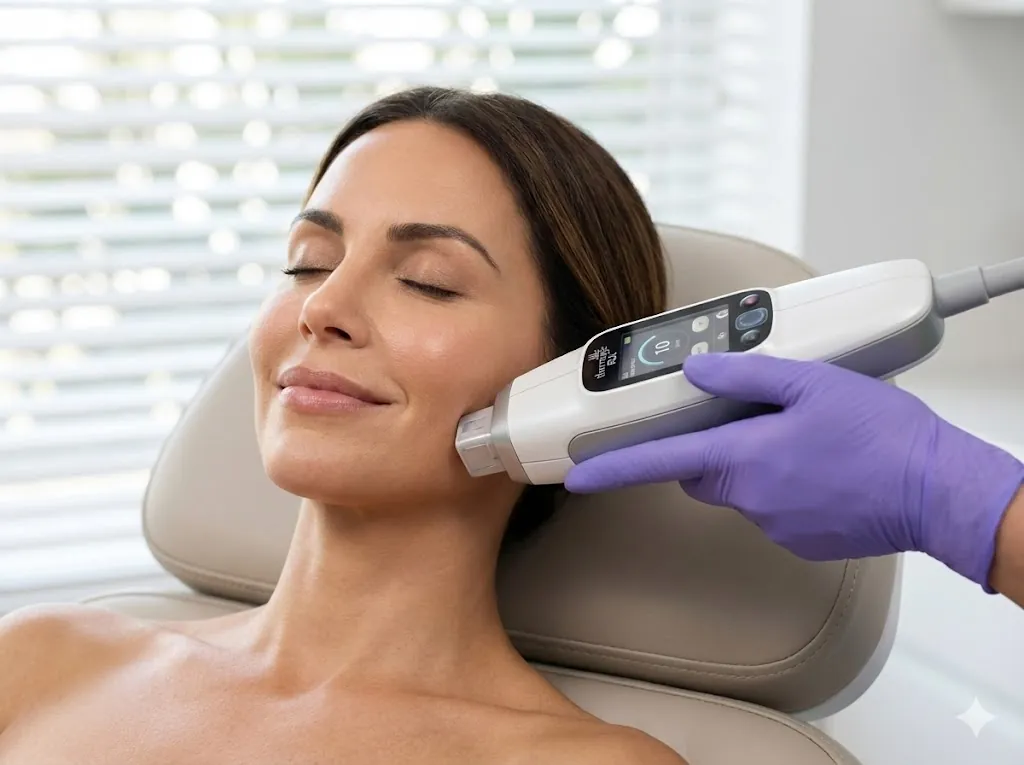
Ultherapy is a non-invasive focused-ultrasound treatment used to lift and tighten the skin; Ultherapy Body applies it to body areas, delivering energy to precise depths to stimulate new collagen.
It uses micro-focused ultrasound with visualization (MFU-V) to target the deep structural layers of the skin — the same layers typically addressed in a surgical lift — without breaking the surface.
By delivering precise ultrasound energy to specific depths, Ultherapy triggers a natural response under the skin that produces new collagen. This process, known as neocollagenesis, may gradually lift and tighten the skin over time, which is why results tend to look natural.
If you would like to explore this treatment, Book a Consultation with our team in Burnaby.
Which Body Areas Can Ultherapy Treat?
Ultherapy Body is used on the chest (décolletage), abdomen, knees and elbows, upper arms, buttocks and thighs where there is mild to moderate laxity.
- The Chest (Décolletage): To smooth fine lines and wrinkles caused by sun damage or side-sleeping.
- The Abdomen: To address mild skin laxity that may occur after weight loss or pregnancy.
- The Knees and Elbows: Areas where skin often becomes "crepey" or loose with age.
- The Buttocks and Thighs: To provide a subtle lift and improve the overall texture of the skin.
How Does Ultherapy Compare With RF and Surgery?
Ultherapy reaches the deeper SMAS layer with real-time imaging in usually one session, radiofrequency works more superficially over several sessions, and surgery gives structural change with weeks of recovery.
| Feature | Ultherapy (MFU-V) | Radiofrequency (RF) | Surgical Lift |
|---|---|---|---|
| Depth of Action | Deep (up to 4.5mm - SMAS layer) | Superficial to Mid-dermal | Deep Structural |
| Visualization | Yes (Real-time ultrasound) | No | Direct Visualization |
| Downtime | Usually same-day return | Minimal | 2-4 Weeks |
| Session Frequency | Usually 1 session | Multiple sessions (3-6) | One-time procedure |
| Natural Results | Collagen-based, gradual | Moderate | Structural (invasive) |
What Happens During an Ultherapy Body Treatment?
After a consultation, the skin is cleaned and mapped, comfort options are discussed, the provider images the skin layers on screen and delivers ultrasound energy to set depths, and most people return to daily activities the same day.
1. The Consultation
Every visit begins with an assessment of your concerns, medical history and goals, and a clear plan for your specific needs.
2. The Preparation
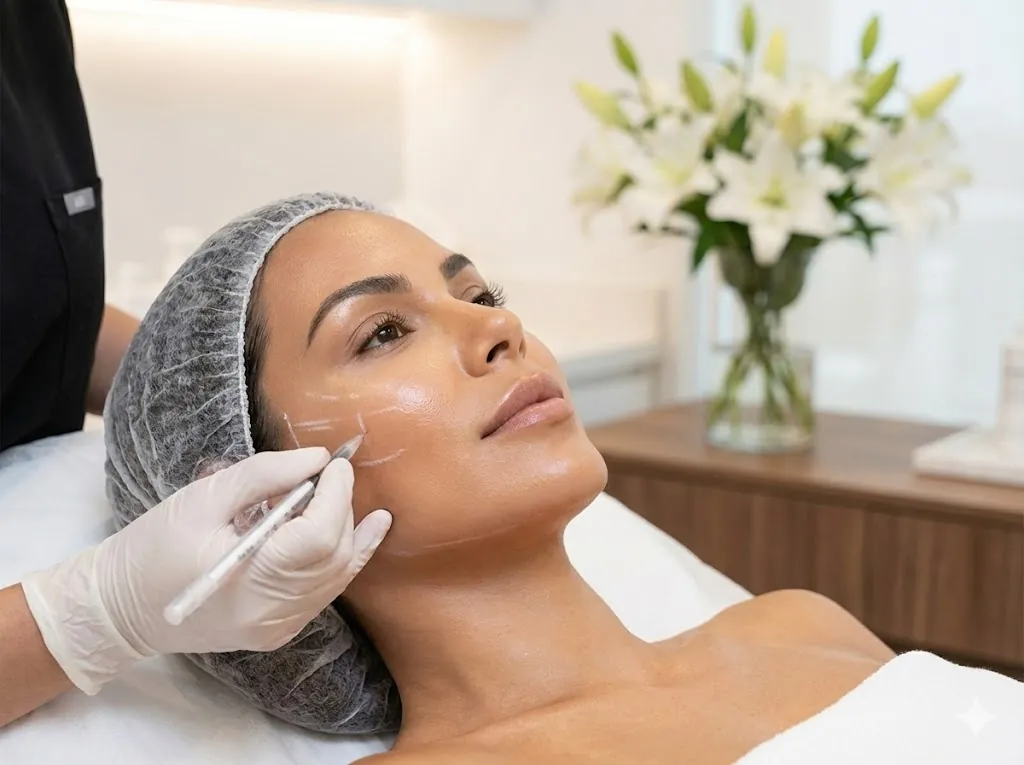
On the day of treatment, the skin is cleaned, and the treatment areas are mapped. Because Ultherapy can involve some discomfort as the energy is delivered, comfort management options are discussed beforehand.
3. The Procedure
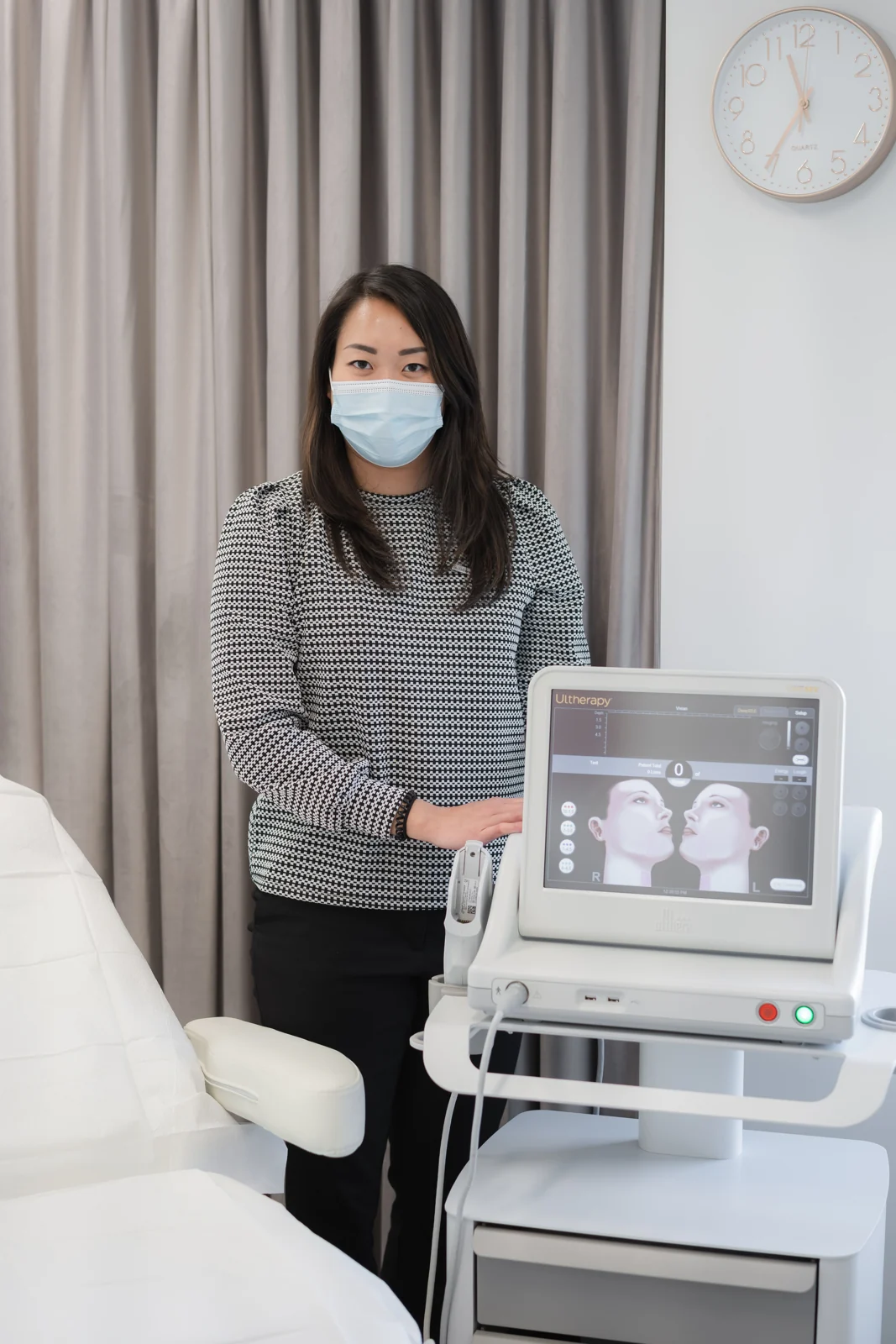
Using the ultrasound applicator, your provider first visualizes the skin layers on a screen so energy is delivered to the intended depth. You will feel small amounts of energy being deposited at those depths.
4. Post-Treatment
Most people return to daily activities in Burnaby or Vancouver the same day. Some experience slight redness or swelling, which usually subsides within a few hours to a few days.
Is Ultherapy Body Worth the Cost?
Whether it is worthwhile depends on your laxity, goals and budget: it reaches deeper layers than many surface treatments and results typically last a year or more, while pricing depends on the number of lines needed for each area.
Unlike many skin-tightening treatments that only reach the superficial layers of the skin, Ultherapy reaches the foundational layers, and results often last up to a year or more depending on your skin's natural aging process.
The price is determined by the number of ultrasound "lines" required for each area — a smaller area like the knees differs from a full abdomen. Contact us for current pricing and to discuss a plan that fits your goals.
How Does Skin Art MD Approach Ultherapy Body?
At Skin Art MD, Ultherapy Body plans are physician-overseen, use genuine Ultherapy devices with real-time imaging, and are explained in English or Chinese.
- Physician-Led Care: Physicians oversee every treatment plan, with safety as the priority.
- Genuine Devices: We use authentic Ultherapy devices with real-time visualization, so we can see where energy is delivered.
- Bilingual Staff: Our team provides consultations and care in both English and Chinese.
- Personalized Plans: We assess your skin laxity and lifestyle to decide whether Ultherapy is suitable for you.
Book a Consultation to discuss your options.
What Do People Ask About Ultherapy Body?
Common questions cover treatment areas, aftercare, side effects, risks and how often to repeat treatment.
1. What are the treatment areas?
Ultherapy Body can be used on the décolletage (chest), abdomen, arms (above the elbows), buttocks, and above the knees, in areas with mild to moderate skin laxity.
2. What precautions should you take after Ultherapy?
We recommend avoiding very hot water (like saunas or hot tubs) for 24 hours and staying hydrated, and using sunscreen to protect your skin as it begins the collagen-building process.
3. What are the rare side effects of Ultherapy?
Rare side effects can include temporary nerve inflammation, which might cause localized numbness or tingling, and occasionally bruising or welting. These are typically transient and resolve on their own.
4. What are the risks of Ultherapy?
As with any medical aesthetic procedure, there are risks such as burns or scarring if the device is used incorrectly, which is why physician oversight matters.
5. How often should you get Ultherapy?
A single session is typical. Because natural aging continues, some people choose a maintenance treatment every 12 to 18 months.
6. What are common side effects?
Common side effects include temporary redness, slight swelling, tingling, and tenderness to the touch, which usually resolve quickly.
How Do I Book an Ultherapy Body Consultation in Burnaby?
You can book a consultation at Skin Art MD in Burnaby, where the medical team assesses your skin laxity and goals and a physician decides whether Ultherapy Body or another option is suitable.
Book a consultation — available in English and Chinese.
Disclaimer: This article is for educational purposes only and does not constitute medical advice. Please consult with a qualified healthcare professional before undergoing any treatment. Individual results may vary, and outcomes depend on individual skin health and aging factors.