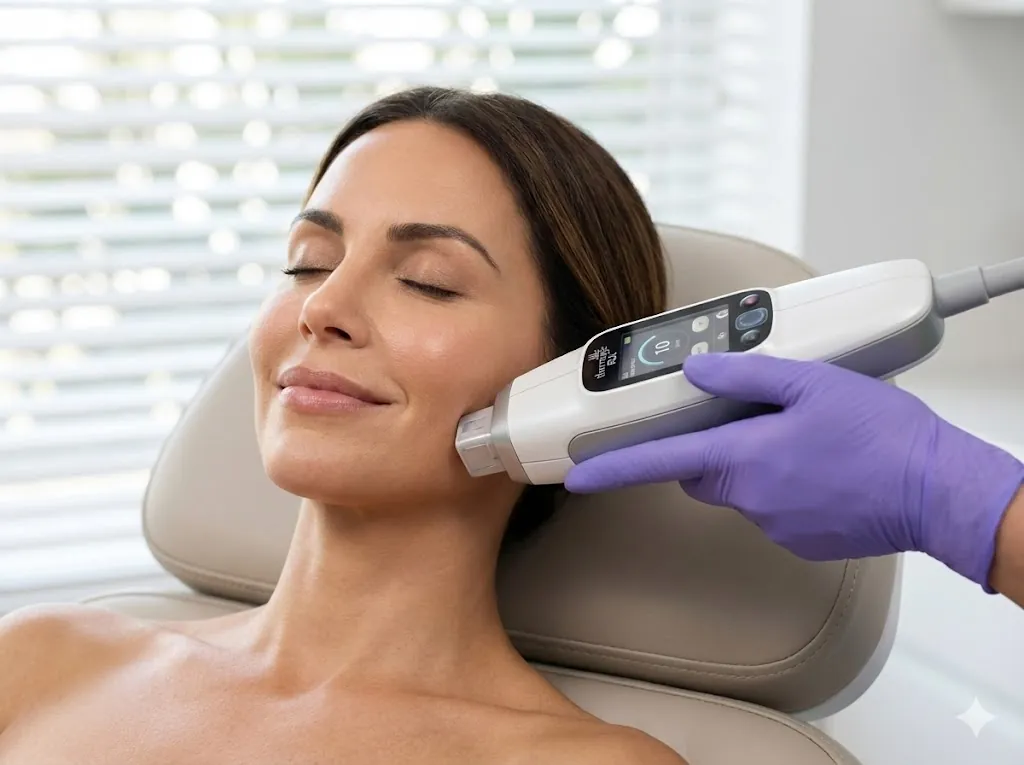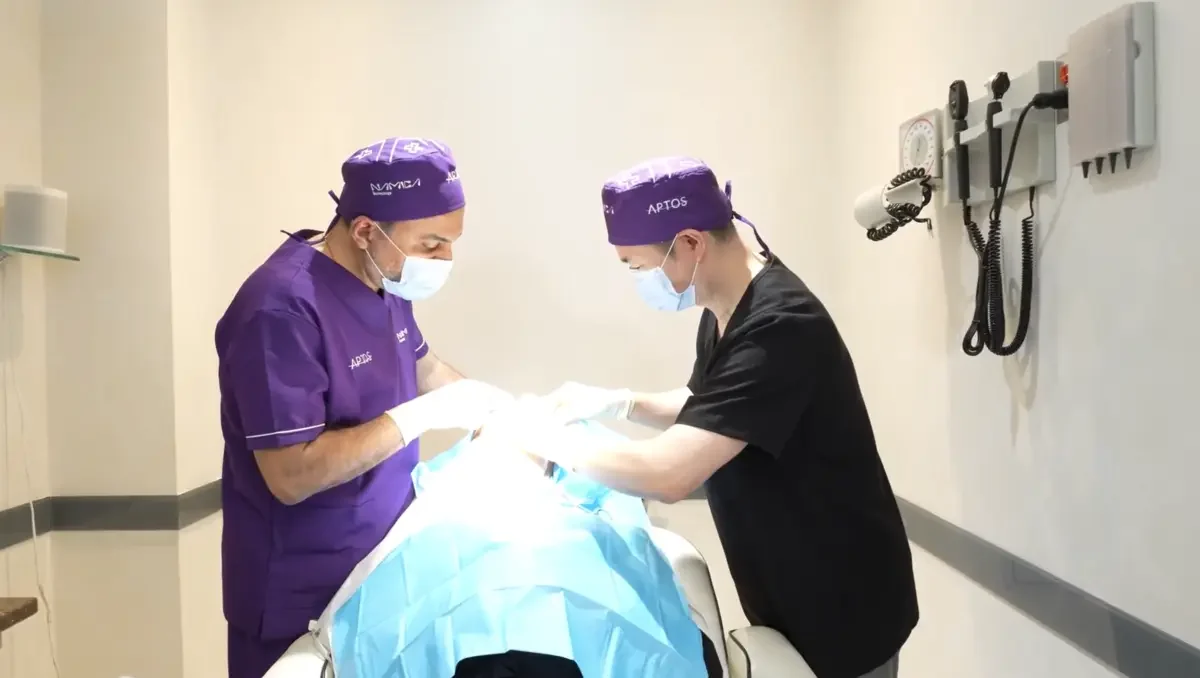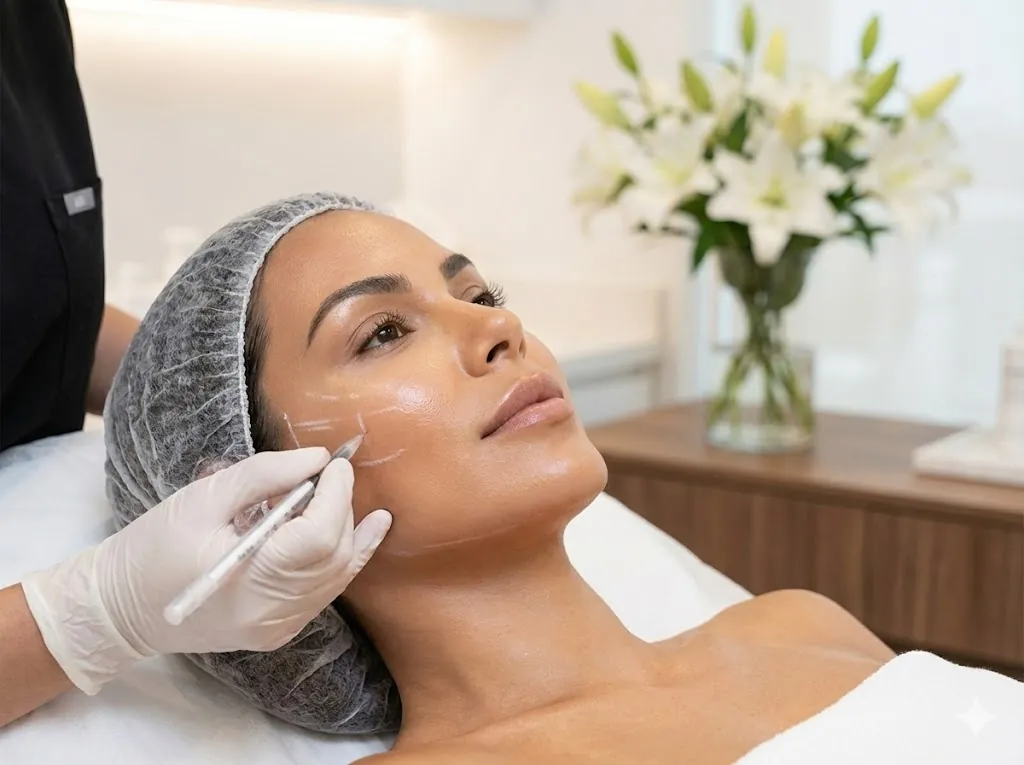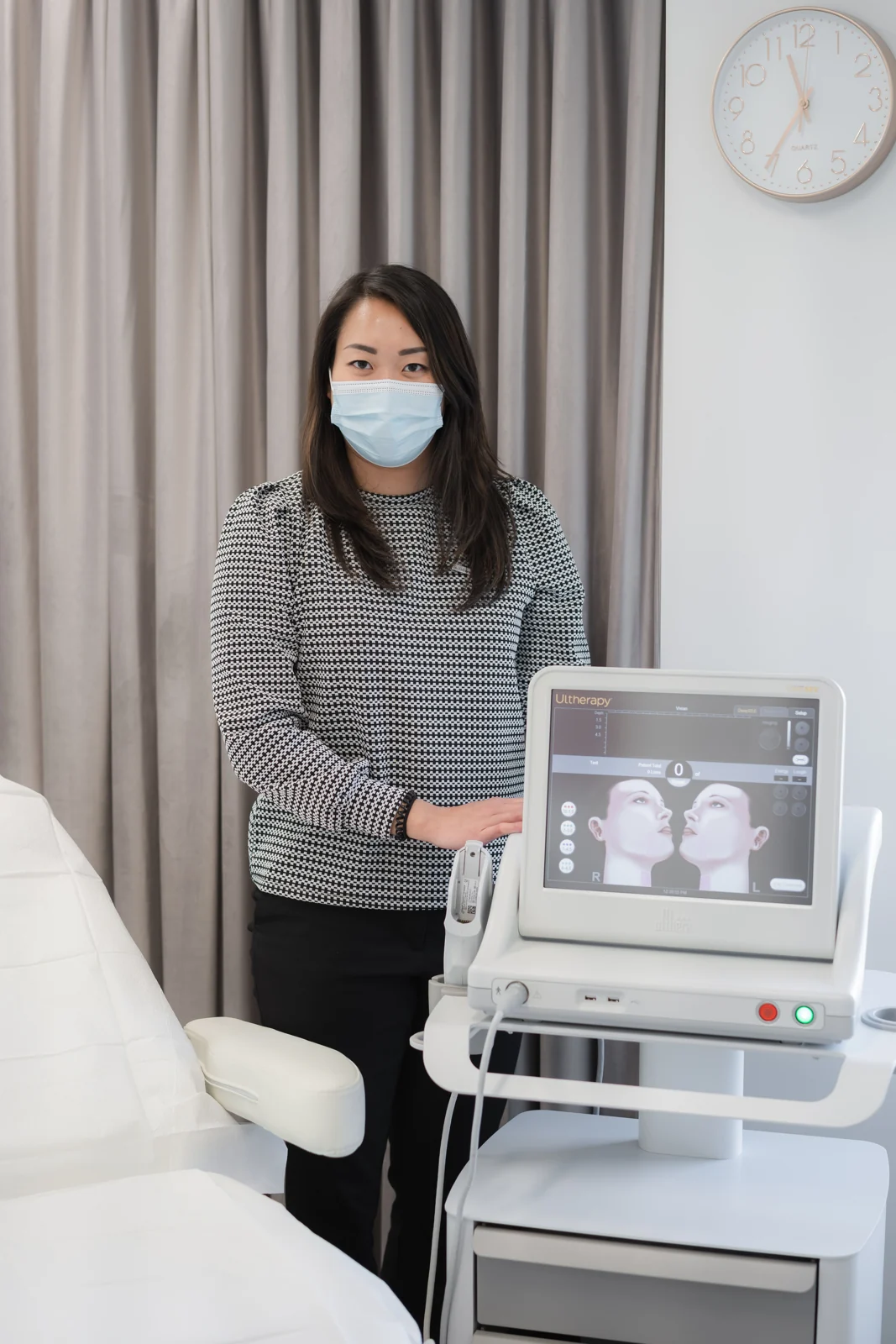
Ultherapy in Burnaby is a non-surgical, physician-led treatment that uses micro-focused ultrasound to reach the SMAS layer — the same connective-tissue layer addressed in a surgical facelift — to encourage a gradual lift of the brow, jawline, and neck. Skin Art MD, a physician-led skin clinic near Metrotown, offers Ultherapy assessments to determine candidacy before treatment is planned.
If you've been researching non-surgical facelifts and feeling overwhelmed by the options — RF microneedling, thread lifts, laser tightening — here is the short answer. Ultherapy is a non-invasive, medical-grade treatment that uses micro-focused ultrasound to reach the SMAS layer, aiming to lift (not just tighten) skin on the brow, chin, neck, and décolletage. Results build gradually over several months as the body produces new collagen, and a physician assessment decides whether it suits you.
Here is how it works, what a session at Skin Art MD in Burnaby involves, and how results develop.
What Makes Ultherapy Different from Everything Else?
Most non-surgical "lifting" devices work on the skin's surface or the dermal layer. They tighten, smooth, and improve texture — all good things, but they can't truly lift sagging tissue. Ultherapy works deeper.
The SMAS Layer: Why It Matters
SMAS stands for Superficial Muscular Aponeurotic System — it's the fibrous connective tissue layer that sits between your skin and your facial muscles. This is the exact layer that plastic surgeons manipulate during a traditional facelift. When SMAS sags, your whole face drops: jowls form, the jawline softens, the mid-face deflates, and the neck loses definition.
Ultherapy uses micro-focused ultrasound with visualization (MFU-V) to deliver precise thermal energy to the SMAS layer — reaching depths of 1.5mm, 3.0mm, and 4.5mm. This creates tiny thermal coagulation points that trigger your body's natural wound-healing response, resulting in new collagen production and tissue contraction at a structural level.
Targeting the SMAS layer with real-time imaging is how Ultherapy works differently from RF devices (Thermage, Morpheus8), IPL, and laser treatments, which work mainly in the dermis or at the surface.
How Ultherapy Compares
| Treatment | Depth | Mechanism | True Lifting? |
|---|---|---|---|
| Ultherapy | SMAS (4.5mm) | Focused ultrasound | Designed for lift |
| Thermage | Dermis (1-3mm) | Radiofrequency | Mainly tightening |
| Morpheus8 | Dermis (1-4mm) | RF microneedling | Tightening + remodeling |
| Thread lift | Subcutaneous | Physical threads | Temporary mechanical lift |
| Surgical facelift | SMAS + deeper | Surgical | Yes |
Who Is Ultherapy Prime For?
Ultherapy is commonly considered for early-to-moderate sagging of the brow, jawline and neck; it is less suited to significant laxity, and a physician assessment decides suitability.
At Skin Art MD, we call our customized protocol Ultherapy Prime because each treatment is tailored to the person's anatomy, age, and goals. People who consider it usually fall into two broad groups:
Early Laxity (Often Early 30s to Early 40s)
Early changes can include:
- Early jawline softening — not quite jowls, but the definition is fading
- Subtle brow heaviness — eyelids look "heavier" in photos
- Minor neck laxity — the beginnings of a less-defined chin-to-neck angle
- Good skincare habits, but gravity is starting to show
At this stage, the aim is to stimulate collagen and help maintain existing jawline definition; how much change each person sees varies.
More Visible Laxity (Often 40s to 50s)
More visible changes are present:
- Defined jowling along the jawline
- Noticeable brow descent
- Neck banding or turkey neck
- Mid-face volume loss creating nasolabial folds
In these cases, Ultherapy Prime can provide meaningful lift and is often combined with dermal fillers or biostimulators as part of a non-surgical plan. It is not a substitute for a surgical facelift in every case.
When Are Other Options Discussed?
We believe in honest recommendations. Ultherapy may not be the right fit when:
- There is significant skin laxity (a surgical consultation may be more appropriate)
- The goal is immediate dramatic results (Ultherapy builds over months)
- There are active skin infections or certain autoimmune conditions
The team gives a transparent assessment during your consultation.
What Happens During an Ultherapy Session?
A session starts with ultrasound mapping of your treatment zones, followed by 60–90 minutes of focused ultrasound delivery; there are no needles or incisions, and most people return to normal activities the same day.
Step 1: Ultrasound Mapping
Before a single pulse is delivered, we use Ultherapy's real-time ultrasound visualization to see the layers beneath your skin. This is crucial — it lets us identify your SMAS depth exactly (which varies person to person) and customize energy delivery. We map your treatment zones and create a personalized protocol.
Step 2: Treatment Session
The treatment itself takes 60-90 minutes depending on the areas treated. Here's what to expect:
- Full face + neck: approximately 800-1,200 lines of ultrasound energy
- Lower face + jawline focus: approximately 400-600 lines
- Brow lift only: approximately 200-300 lines
You'll feel a deep warming sensation with each pulse — some areas are more intense than others (the jawline and neck tend to be most sensitive). We offer comfort measures including topical numbing and can adjust the pacing to keep you comfortable.
Key point: There are no needles involved. The ultrasound transducer sits on top of your skin. No injections, no incisions, no entry points.
Step 3: Immediate Aftercare
Most people return to work, exercise, and their regular skincare routine the same day. Temporary effects can include:
- Mild redness (resolves within hours)
- Slight tenderness or tingling (1-2 weeks)
- Occasional minor swelling (resolves within days)
No compression garments, no bandages, no hiding at home.
When Do Ultherapy Results Appear?
Results appear gradually: visible lifting typically starts to emerge around months 2–3 and continues to develop up to about month 6, as the body builds new collagen at the SMAS layer.
This is where Ultherapy requires a mindset shift. Unlike filler or neuromodulator injections, which deliver instant gratification, Ultherapy works through your body's natural collagen-building process. And that takes time.
| Timeline | What's Happening |
|---|---|
| Day 1 | Mild tightening from immediate tissue contraction |
| Week 2-4 | New collagen synthesis begins at the SMAS layer |
| Month 2-3 | Visible lifting starts to emerge — jawline sharpens, brow elevates |
| Month 3-6 | Peak results — maximum collagen remodeling and tissue lift |
| Month 6-12 | Results continue to mature and stabilize |
| Beyond Year 1 | Results fade gradually; how long they last varies with age and lifestyle |
The gradual nature of results is actually a feature: the change tends to look natural rather than sudden. You'll look progressively more refreshed, defined, and lifted over several months.
Can Ultherapy Be Combined With Other Treatments?
Yes — for more visible laxity, Ultherapy is often planned alongside dermal fillers, Radiesse or skin boosters, each working on a different layer; a physician assessment decides which combination, if any, is appropriate.
Combination protocols discussed at Skin Art MD include:
Ultherapy + Dermal Fillers
Ultherapy lifts the structural foundation while dermal fillers restore volume in the cheeks, temples, and under-eyes. Together, they create a comprehensive non-surgical facelift effect.
Ultherapy + Radiesse
Radiesse is a biostimulatory filler that stimulates your own collagen production. Pairing it with Ultherapy doubles down on collagen building from two different mechanisms — ultrasound from above, biostimulation from within.
Ultherapy + Skin Boosters
For clients who want lifting and skin quality improvement, we combine Ultherapy with skin boosters for deep hydration and glow. The lift comes from Ultherapy; the luminosity comes from hyaluronic acid micro-injections.
Why Do Some People Start Ultherapy in Their 30s?
Some people consider Ultherapy in their early-to-mid 30s as a preventative approach, because collagen production is still robust and tissue laxity is still mild at that age.
The reasoning commonly given:
- Collagen production is still robust in the 30s, so the body tends to respond efficiently to Ultherapy's stimulation
- Less tissue laxity means the treatment works on firmer tissue
- Periodic maintenance sessions may help keep the jawline and brow defined over time
- Compound effect: each session builds on the previous one's collagen foundation
Whether and when to start is decided at a physician assessment, not by age alone.
What Do People Ask About Ultherapy?
The most common questions are about comfort, how many sessions are needed, combining it with injectables, who should avoid it, and how cost is set.
Q: How painful is Ultherapy really? A: We won't sugarcoat it — some areas can be uncomfortable (the jawline and neck especially), but the 60-90 minute session is generally tolerable. Topical numbing is available, and many people listen to podcasts or music during treatment. The discomfort is temporary, while results develop over months.
Q: One session only — really? A: In many cases, yes. A single comprehensive session delivers the full collagen-building stimulus. Some people with more visible laxity may benefit from a second session at the 12-month mark. Your personalized plan is discussed during consultation.
Q: Can I combine Ultherapy with neuromodulator injections? A: Yes. Ultherapy is often used for structural lifting alongside neuromodulator treatments for expression lines. They are typically spaced about 2 weeks apart.
Q: Who is Ultherapy not recommended for? A: Ultherapy isn't recommended during pregnancy, for people with open wounds or active cystic acne in the treatment area, or for those with implanted metal devices in the face. Everyone is screened before treatment.
Q: How much does Ultherapy cost at Skin Art MD? A: Cost is discussed during your consultation, as it depends on the treatment areas and protocol.
How Do You Book an Ultherapy Assessment?
You can book a consultation at Skin Art MD at Metrotown, Burnaby. The team maps your facial anatomy with ultrasound and assesses tissue laxity before designing a customized Ultherapy Prime protocol aimed at natural-looking lift — without needles.
Your jawline called. It wants its definition back.
Skin Art MD at Metrotown — Modern aesthetic medicine in Burnaby, BC. Serving Burnaby, Vancouver, New Westminster, Coquitlam, and Metro Vancouver.