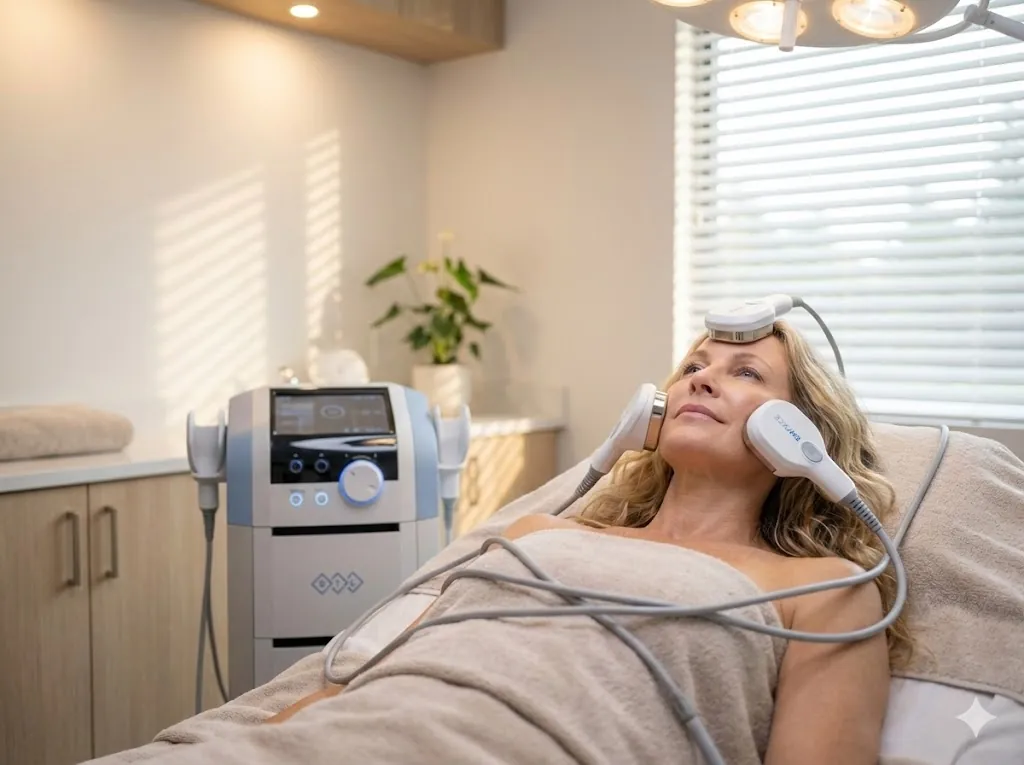
When people consider Ultherapy for the lower face, the concern is usually one of three things: a jaw edge that has started to blur, the first signs of jowls, or neck and under-chin skin that has loosened. Ultherapy uses micro-focused ultrasound to heat deeper supporting layers, with on-screen imaging to confirm depth, and change develops gradually over the following months. It suits mild to moderate laxity; it is not a substitute for surgery when there is significant excess skin. Nerve-related reactions are listed by the manufacturer as uncommon and usually temporary, and line planning is designed around them. A physician assessment decides whether it suits you.
What does Ultherapy reach under the jaw and on the neck?
Ultherapy, made by Merz, focuses ultrasound energy into small thermal points at set depths below the skin, reaching the supporting layers that include the SMAS. The handpiece carries real-time ultrasound imaging, so the clinician sees the tissue layers on screen and confirms the energy is landing where planned.
That visual check matters more along the jaw and neck than on the cheeks. Skin, fat, fascia and muscle are thinner here and sit closer to bone and to structures that need to be avoided. Transducers of different depths are combined according to how thick each person's tissue is.
Which jawline and neck concerns line up with Ultherapy?
Mild to moderate laxity tends to fit: a jaw edge that has lost some crispness, early jowling beside the mouth, loosening skin under the chin that softens the profile, and early neck laxity with fine horizontal lines. The aim is gradual firming and a cleaner contour, not a dramatic change.
Assessment usually involves looking at you in profile, with the head tilted up and down, and gently pinching the skin to work out whether the issue sits in the skin, in the fat beneath it, or in the deeper support. Two people with "a blurry jawline" can have quite different causes and quite different plans.
When is Ultherapy alone unlikely to be enough?
It can still be part of a plan, but on its own it often falls short when:
- The double chin is mainly fat. That is a volume issue rather than a laxity issue, and usually calls for a fat-focused approach, with Ultherapy handling firmness.
- Neck skin is clearly redundant or sagging heavily. In that case a surgical opinion may be more appropriate, and the physician will say so.
- The jawline looks soft because of a recessed chin or bone structure. That is structural, and other options such as filler may come into the discussion.
- Deep horizontal neck lines are the main issue rather than looseness. Those lines have different causes and may need a different approach.
Can Ultherapy damage a nerve?
It is the most common question about this area. Merz's published safety information lists uncommon reactions including temporary localised numbness, tingling and localised muscle weakness, usually resolving over time. Planning avoids the central neck over the trachea and thyroid and the main vessel paths, and adjusts lines and depth along the jaw edge to individual anatomy.
To be straightforward: every energy-based treatment carries some degree of risk. Risk is managed by careful assessment of anatomy and tissue thickness, imaging to confirm depth, choosing transducers and energy by zone, and responding to your feedback during the session. If you notice an uneven smile, one corner of the mouth moving differently, or numbness that is not easing, contact the clinic so you can be seen.
Who should not have Ultherapy on the jaw and neck?
Ultherapy is generally not done during pregnancy, over open wounds, broken skin or active infection, over severe or cystic acne, over metal implants in the area, or with a pacemaker or other implanted electronic device. A recent thread lift, filler or energy treatment in the same area that has not fully settled also needs discussion first.
Bleeding disorders, blood-thinning medication, a tendency to scar and autoimmune conditions should be mentioned at consultation. Thyroid conditions or previous neck surgery call for a specific conversation about the plan.
How long does swelling or tenderness last?
Short-lived redness and mild swelling are common. Some people have a few days of deep tenderness along the jaw or neck, more noticeable when chewing, looking down or pressing on the area, which eases progressively. Small bruises or patches of tingling can occur. Most people return to normal work, though a lighter schedule for a day or two is sensible.
Aftercare is simple: gentle cleansing, moisturiser and sunscreen, and no vigorous massage of the area for the first few days. Resist the urge to keep pressing on tender spots to check them. Asymmetry, worsening pain or numbness are reasons to call the clinic.
When will I see a change, and when is the review?
Some people feel slightly firmer soon after, but the main change comes from collagen remodelling and is gradual. According to Merz, change typically develops over about two to three months and can continue for some time after; individual results vary. The physician schedules the review, usually once there has been time for change to show, and compares with your pre-treatment photos.
For your own comparison, keep photos consistent: the same light, the same angle and the same head position, chin neither raised nor tucked. Profile shots matter most, because jawline and neck change is easiest to see from the side.
Can the jawline and neck be planned alongside other treatments?
Yes, with the physician setting the order and spacing. A common pairing of ideas is Ultherapy for deeper support and firming, with Thermage addressing the skin's own tightness and texture. If a soft jaw is partly due to a recessed chin, filler may come into the conversation. If you already have filler, tell the clinic where and when it was placed so lines and timing can be planned around it.
How should I prepare for the consultation?
- Arrive without makeup and without heavy products on the neck.
- Bring recent front and side photos, and if you like, photos from a time you felt your jawline looked the way you want.
- List medications, implants and aesthetic treatments from the past year with dates and areas.
- Prepare questions such as: is my jawline concern laxity, fat or structure; which areas of my neck will be avoided; when will the review be?
Where is Skin Art MD?
Skin Art MD is in Burnaby's Metrotown neighbourhood at #101 – 4378 Beresford St, near Metrotown SkyTrain Station on the Expo Line. The clinic is open Tuesday to Sunday, 10:00 to 18:00, and closed on Mondays. Whether Ultherapy suits you and which areas are treated is decided at a physician assessment. This article is general information and not individual medical advice.