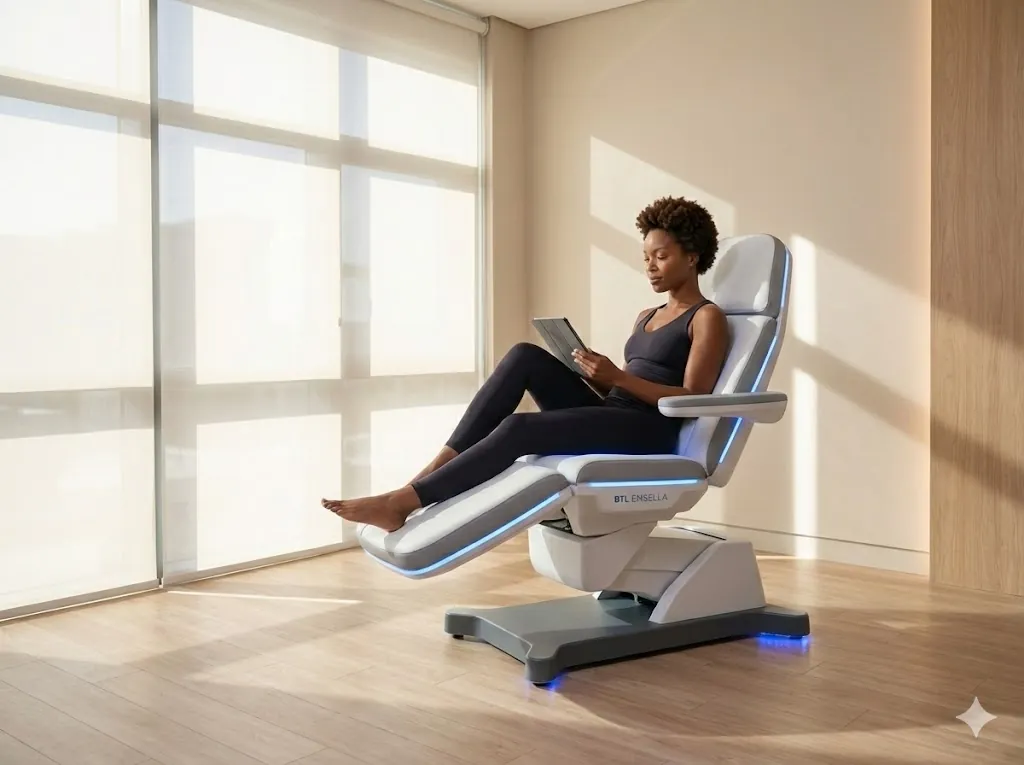
Emsella is a chair-based treatment that uses high-intensity focused electromagnetic (HIFEM) energy to contract the pelvic floor muscles while you sit fully clothed. It is used for urinary incontinence, pelvic floor weakness and postpartum recovery, usually as a series of 28-minute sessions, and a physician assessment decides suitability.
Let's talk about something that affects millions of people but nobody wants to bring up at brunch: pelvic floor weakness. Sneeze-peeing. Laughing and crossing your legs. Urgently mapping every bathroom in every building you enter. Declining trampoline parks, jumping jacks, and running because... well, you know.
If any of this sounds familiar, you're not alone. At Skin Art MD at Metrotown, Emsella is available: a chair-based treatment that strengthens the pelvic floor with electromagnetic energy while you sit fully clothed. No undressing and no invasive procedure.
What Is Emsella?
Emsella is a medical-grade medical device that uses High-Intensity Focused Electromagnetic (HIFEM) technology to stimulate deep pelvic floor muscle contractions — the kind your body literally cannot achieve on its own, no matter how diligently you do your Kegels.
According to the manufacturer, a single 28-minute Emsella session delivers approximately 11,200 supramaximal pelvic floor contractions — far more than a home Kegel routine involves.
How HIFEM Technology Works
- Electromagnetic energy passes through the treatment chair and into your pelvic floor muscles
- The energy triggers supramaximal contractions — contractions that are more intense than anything achievable voluntarily
- These contractions activate the pelvic floor musculature together, rather than relying on voluntary effort
- The repeated intense contractions induce muscle remodeling: strengthening, tightening, and restoring neuromuscular control
- Over a series of sessions, the pelvic floor can become stronger and more responsive
Think of it as an intense workout for muscles you can't easily target in the gym — except the machine does all the work while you sit comfortably.
What Is Emsella Used For?
Emsella is mainly used for stress, urge and mixed urinary incontinence, and is also discussed for pelvic floor weakness, postpartum recovery, age-related pelvic changes and intimate comfort.
Urinary Incontinence
The most common reason for treatment:
- Stress incontinence: Leaking during coughing, sneezing, laughing, jumping, or exercise
- Urge incontinence: Sudden, strong urges to urinate that are difficult to control
- Mixed incontinence: Combination of stress and urge symptoms
In a 2019 multicenter study published in Lasers in Surgery and Medicine, 95% of participants reported improved quality of life, and 75% reported reduced pad use.
Pelvic Floor Weakness
Not all pelvic floor concerns involve incontinence. Weakness can manifest as:
- A feeling of heaviness or pressure in the pelvic area
- Difficulty fully emptying the bladder
- Lower back pain related to pelvic floor dysfunction
- Reduced core stability and strength
- Postpartum recovery challenges
Intimate Wellness
Pelvic floor strength is linked to intimate comfort and confidence. A stronger pelvic floor may help with:
- Sensation during intimacy
- Control and confidence
- Blood flow to the pelvic region
- Comfort in intimate relationships
Postpartum Recovery
Pregnancy and childbirth are common causes of pelvic floor weakening. Emsella can provide:
- Non-invasive pelvic floor rehabilitation after vaginal delivery
- Support for C-section recovery (the pelvic floor is affected regardless of delivery method)
- Gradual restoration of pre-pregnancy pelvic floor strength
- Treatment typically considered 3+ months postpartum (consult with your OB/GYN first)
Age-Related Changes
Hormonal changes during perimenopause and menopause naturally weaken pelvic floor tissues:
- Emsella strengthens pelvic floor muscles that can weaken with hormonal change
- It may help support continence through hormonal transitions
- It can be part of overall pelvic health care alongside hormonal management
What Happens During an Emsella Session?
You sit fully clothed on the Emsella chair for 28 minutes while electromagnetic pulses contract your pelvic floor muscles; intensity is adjusted to your comfort, and you can go about your day afterward.
What a Session Looks Like
Here is what a session involves:
-
Arrive fully clothed. Yes, really. You don't need to change into a gown, undress, or do anything remotely awkward. Wear comfortable clothes (avoid metal zippers/buttons near the pelvic area — activewear or loose pants are perfect).
-
Sit in the Emsella chair. It looks like a modified regular chair. You literally just... sit down.
-
The treatment begins. You'll feel the electromagnetic pulses activating your pelvic floor muscles. The sensation is strong and unusual — it feels like rhythmic contractions and vibrations, and it usually becomes easier after the first few minutes.
-
28 minutes later, you're done. Stand up, thank the chair, and go about your day. Most people resume normal activities right away; mild muscle soreness is possible.
Comfort level: We start at a lower intensity and gradually increase it to your comfort level.
How Many Sessions?
| Protocol | Sessions | Frequency | Typically used for |
|---|---|---|---|
| Standard | 6 sessions | Twice per week for 3 weeks | Mild to moderate incontinence |
| Enhanced | 8-10 sessions | Twice per week | Moderate to severe cases |
| Maintenance | 1 session/month | Monthly | Sustaining results long-term |
Improvement may be noticed after the first few sessions, with full results developing over the 2-4 weeks following their completed treatment series as muscle remodeling continues.
Emsella Pricing
Pricing depends on the protocol set at your assessment; contact us for current pricing.
What Does the Research on Emsella Show?
Published studies, some sponsored by the manufacturer, report improvements in incontinence symptoms and quality of life and increased pelvic floor muscle thickness on imaging.
Published Study Highlights:
-
A 2019 multicenter study published in Lasers in Surgery and Medicine reported that 95% of participants had improved quality of life after Emsella treatment, with 75% reporting reduced pad usage.
-
MRI studies have reported measurable increases in pelvic floor muscle thickness following Emsella treatment.
-
A 2020 study reported statistically significant improvements in both stress and urge incontinence symptoms, with results maintained at 6-month follow-up.
How Does Emsella Compare With Other Pelvic Floor Options?
Emsella is a non-invasive treatment for pelvic floor concerns that requires no undressing or insertion, and most people resume normal activities right away.
| Treatment | Invasiveness | Time Investment | Effectiveness | Downtime |
|---|---|---|---|---|
| Emsella | Non-invasive, clothed | 28 min/session | Studied for incontinence (see above) | Same-day return typical |
| Manual Kegels | Non-invasive | Daily, indefinite | Variable (compliance issues) | Not applicable |
| Biofeedback therapy | Minimally invasive | Weekly visits, months | Moderate | Minimal |
| Vaginal laser | Mildly invasive | 15-20 min/session | Good for some conditions | 1-3 days |
| Surgery (sling) | Invasive | Hospital procedure | High but with risks | Weeks |
Emsella's distinguishing features are that it requires no undressing, no insertion and no surgery; whether it or another option is suitable is decided at a physician assessment.
Who Is Emsella Usually Discussed For?
Emsella is generally discussed for adults with pelvic floor weakness or urinary incontinence — including after childbirth, around menopause or after prostate surgery — and a physician assessment decides suitability.
It is commonly discussed for:
- Postpartum mothers (3+ months post-delivery) rebuilding pelvic strength
- Women in perimenopause/menopause managing hormonal pelvic changes
- Athletes seeking core and pelvic floor optimization
- Men with pelvic floor concerns such as urinary control, including after prostate surgery
- Anyone who laughs, sneezes, or jumps and has to think about it first
- Preventative wellness — strengthening the pelvic floor before problems develop
Age range: Pelvic floor concerns occur from the 20s (postpartum) to the 70s and beyond; pelvic floor health matters at every age.
Can Emsella Be Combined With Other Treatments?
Yes — Emsella is sometimes paired with vaginal radiofrequency, hormonal assessment, core exercise or abdominal HIFEM when a concern goes beyond the pelvic floor muscles; a physician decides whether a combination is suitable.
Emsella can be combined with:
- Ultra Femme 360 — radiofrequency for vaginal tightening and tissue rejuvenation, complements Emsella's muscular strengthening
- Hormonal assessment — hormonal changes can contribute to pelvic floor weakening
- Core strengthening — Emsella provides the pelvic foundation; targeted exercise builds on it
- Emsculpt — HIFEM for abdominal and glute muscles, creating a complete core stabilization approach
What Do People Ask About Emsella?
Common questions cover whether sitting is enough, comfort, privacy, how soon changes appear, treatment for men, IUDs and implants, C-sections and how long results last.
Q: Does Emsella work if I just sit there? A: The HIFEM technology does not require any effort from you — the electromagnetic pulses directly stimulate your muscles at an intensity that voluntary contraction cannot reach. Published studies, including manufacturer-sponsored ones, report improvement in incontinence symptoms for many participants.
Q: Does it hurt? A: It is usually described as unusual rather than painful. You'll feel strong muscle contractions and a tingling/vibrating sensation. We control the intensity and always start lower, building up as you acclimate.
Q: Will people know I'm getting this treatment? A: Emsella is private and discreet. You walk in wearing regular clothes, sit in a chair, and walk out. There's no visible evidence of treatment whatsoever.
Q: How soon will I notice improvement? A: Improvement may be noticed after the first few sessions. Full results develop over 2-4 weeks after completing the treatment series as muscle remodeling continues. Maintenance sessions may help sustain results.
Q: Is it only for women? A: No. Emsella is also used for men. Male pelvic floor weakness can cause urinary control issues, particularly after prostate surgery. We see clients of all genders.
Q: Can I do Emsella if I have a metal IUD? A: Generally no — metal implants in the pelvic area are a contraindication for HIFEM treatment. Copper IUDs are not compatible. If you have a hormonal IUD, we'll discuss it during your consultation. Metal hip replacements or other metal implants in the treatment area would also need to be assessed.
Q: What about after a C-section? A: Emsella can be considered for post-C-section recovery. The pelvic floor is affected by pregnancy regardless of delivery method. We typically recommend waiting 3+ months post-delivery and clearing with your OB/GYN first.
Q: How long do results last? A: Results from a full treatment series typically last 6-12 months. Monthly maintenance sessions may help sustain results. Like any muscle, the pelvic floor benefits from ongoing conditioning.
How Do I Book an Emsella Consultation in Burnaby?
You can book a consultation at Skin Art MD at Metrotown, Burnaby. We'll discuss your concerns in private and explain the treatment, and a physician assessment decides whether Emsella or another option is suitable.
Skin Art MD at Metrotown — Modern aesthetic medicine and intimate wellness in Burnaby, BC. Serving Burnaby, Vancouver, New Westminster, Coquitlam, and Metro Vancouver.