The Longevity Peel is a physician-supervised, medium-depth chemical peel that uses a blend of acids to exfoliate the outer skin and reach the papillary dermis, prompting collagen remodeling. It is used for texture, pigment and fine lines, typically involves about 7–10 days of visible peeling, and a physician assessment decides suitability.
In medical aesthetics, skin rejuvenation has moved beyond simple exfoliation toward biochemical modulation. At Skin Art MD in Burnaby, patients are increasingly looking for treatments grounded in clinical evidence. The Longevity Peel offers a multi-layered approach to skin resurfacing that addresses both the epidermis and the underlying dermal architecture. Learn more about Longevity Peel to understand how this formulation differs from standard spa-grade treatments.
How Does the Longevity Peel Work?
The Longevity Peel is not a singular acid but typically a synergistic blend of keratolytic agents designed to induce controlled chemo-exfoliation. To understand how it works, one must look at the cellular and biochemical pathways it activates.
1. Keratolysis and Desmosome Dissolution
At the corneal layer, the primary mechanism of any high-potency chemical peel is the disruption of desmosomes—the protein bridges that hold keratinocytes together. By lowering the pH of the skin, the Longevity Peel’s active acids (often including Trichloroacetic Acid or specialized Alpha-Hydroxy Acid complexes) facilitate the shedding of the stratum corneum. This immediate action triggers a rapid signaling cascade to the basal layer of the epidermis, stimulating accelerated mitotic activity.
2. Protein Denaturation and Dermal Remodeling
Unlike superficial peels, the Longevity Peel is designed to reach the papillary dermis. Here, the mechanism shifts from simple exfoliation to protein denaturation. This controlled injury stimulates the release of pro-inflammatory cytokines and growth factors. According to the "wound healing response" model, this leads to the activation of fibroblasts, the primary cells responsible for synthesizing Type I and Type III collagen, as well as elastin and glycosaminoglycans (GAGs).
3. Melanogenesis Inhibition
Pigmentation is a common reason people seek treatment. The Longevity Peel often incorporates secondary agents that inhibit tyrosinase, the rate-limiting enzyme in melanin production. By slowing this enzymatic pathway, the peel removes existing pigment through turnover and may help limit new pigment formation during the healing phase. Book a Consultation to have your skin analyzed by our medical team.
What Does the Research on Chemical Peels Show?
Published studies on the acids used in peels like this one report more uniform penetration with multi-acid blends, improvement in photoaging scores and increased dermal thickness with medium-depth peels.
When evaluating any skin resurfacing modality, clinical data matters. The components of the Longevity Peel have been studied in the medical literature:
- Fischer et al. (Journal of Cosmetic Dermatology): This study reported that multi-acid chemical peels provide a favourable safety profile and more uniform penetration compared to high-concentration monopeels, with the combined acids allowing deeper penetration with less surface trauma.
- Monheit et al. (Dermatologic Surgery): Research into medium-depth chemical peels has shown improvements on the Glogau Photoaging Scale, and the controlled necrosis induced by these peels was associated with a measurable increase in dermal thickness over the six months after treatment.
- Obagi et al. (Journal of the American Academy of Dermatology - JAAD): This research focused on skin conditioning and the use of trichloroacetic acid (TCA) in various concentrations, suggesting that physician-administered peels can treat actinic keratosis and solar elastosis with precision.
How Is Suitability for a Longevity Peel Assessed?
Suitability is assessed by a physician-supervised screening of Fitzpatrick skin type, PIH risk, medical history and current medications, because medium-depth peels are not appropriate for everyone.
At Skin Art MD, a Longevity Peel is a medical-grade procedure that requires an understanding of the Fitzpatrick Skin Scale, and clinical protocols are overseen by a physician so that every patient is screened before treatment.
The Evaluation Process
- Skin Type Classification: We assess the patient's Fitzpatrick type to determine the risk of post-inflammatory hyperpigmentation (PIH). Patients with deeper skin tones require specific pre-conditioning protocols.
- Medical History Review: We screen for a history of keloid scarring, recent oral retinoid (acne medication) use, and active viral infections (such as Herpes Simplex).
- Bilingual Consultation: Understanding medical instructions is vital. Our team offers consultations in both English and Mandarin so that patients in Burnaby and the Greater Vancouver area understand their pre- and post-care requirements.
Book a Consultation to find out whether the Longevity Peel is suitable for you.
How Does the Longevity Peel Compare With Other Resurfacing Options?
The Longevity Peel reaches the papillary dermis, involves several days of downtime, and requires physician oversight.
| Feature | Longevity Peel | Superficial AHA Peel | Fractional Laser |
|---|---|---|---|
| Depth of Penetration | Papillary Dermis | Stratum Corneum | Deep Dermis |
| Downtime | 5–10 Days | Minimal | 3–7 Days |
| Primary Benefit | Texture, Pigment, Fine Lines | Surface Glow | Deep Scars, Laxity |
| Mechanism | Chemical Denaturation | Enzymatic Exfoliation | Thermal Micro-Fractional Injury |
| Physician Oversight | Required | Recommended | Required |
What Happens During a Longevity Peel?
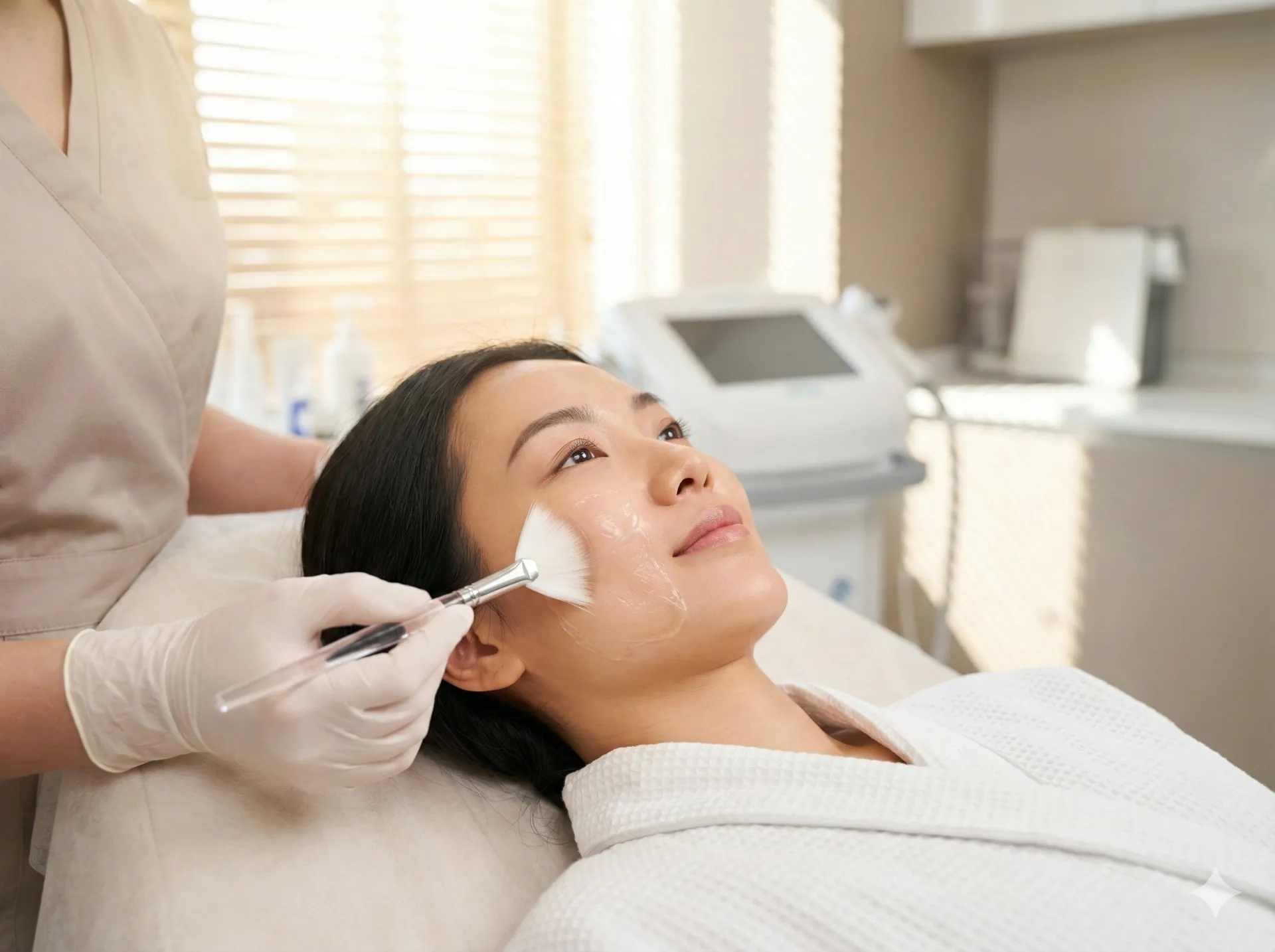
The skin is degreased, the acid solution is applied in layers while a warm, tingling sensation is managed with cooling fans, and the peel is then neutralized or self-neutralizes before a protective balm is applied.
Unlike high-energy lasers, which can involve significant heat, the peel process is a controlled chemical reaction.
- Preparation: The skin is thoroughly degreased to ensure even acid penetration.
- Application: The solution is applied in layers. A warm, tingling sensation is common and is managed with cooling fans.
- Neutralization/Completion: Depending on the specific formula, the peel is either neutralized or allowed to self-neutralize. A post-peel balm is applied to protect the compromised skin barrier.
What Is Recovery Like After a Longevity Peel?
Expect redness and tightness for the first two to three days, shedding from about day four, and roughly 7–10 days of visible peeling in total; the skin must not be peeled off by hand.
The "Longevity" in the peel's name refers to the long-term skin health it aims to support, but the immediate recovery phase is crucial.
Over the first 48 to 72 hours, the skin may appear erythematous (red) and feel tight. By day four, the shedding process typically begins.
It is imperative that patients do not manually peel the skin; premature removal of the epidermis can lead to scarring or PIH.
The acid components used in these medical-grade formulations are used for the treatment of photodamage and certain pigmentary disorders, and following the physician's aftercare instructions is an important part of a safe recovery.
How Does Skin Art MD Approach Chemical Peels in Burnaby?
At Skin Art MD, high-potency chemical peels are physician-supervised, explained in English or Chinese, and tracked with skin analysis over the course of treatment.
- Physician-Led Care: Treatments are carried out under physician supervision.
- Bilingual Accessibility: Our staff speak English and Chinese, serving the diverse Burnaby community.
- Skin Analysis: We combine chemical resurfacing with skin analysis to track your progress objectively.
Book a Consultation to discuss whether a chemical peel is suitable for your skin.
What Do People Ask About the Longevity Peel?
Common questions cover the number of treatments, comfort, downtime, darker skin tones and cost.
How many treatments will I need?
A single Longevity Peel can improve skin clarity and texture, and a series of 3 treatments spaced several weeks apart is commonly used. Individual results depend on the severity of the skin concerns being addressed.
Is the Longevity Peel painful?
During the application, a sensation of heat and tingling is typical. This usually lasts only 5–10 minutes. Our clinical team uses localized cooling techniques to keep you comfortable throughout the procedure.
How long is the downtime?
Expect approximately 7 to 10 days of visible peeling. During the first few days, the skin may look like a mild sunburn, followed by the shedding phase. We recommend avoiding major social events during this window.
Can I get this treatment if I have a darker skin tone?
It requires caution. Patients with higher Fitzpatrick types (IV-VI) undergo a pre-conditioning phase with specific tyrosinase inhibitors to reduce the risk of hyperpigmentation, and the protocol is customized during your physician evaluation.
What is the cost of a Longevity Peel?
Contact us for current pricing, as costs vary with the specific formulation used and the plan set at your assessment.
How Do I Book a Longevity Peel Assessment in Burnaby?
You can book a professional skin assessment at Skin Art MD in Burnaby; the medical team guides you from the initial consultation through post-treatment recovery, and a physician assessment decides whether the peel is suitable.
Book a consultation — available in English and Chinese.
Disclaimer: This article is for educational purposes only and does not constitute medical advice. Please consult with a qualified healthcare professional before undergoing any treatment.