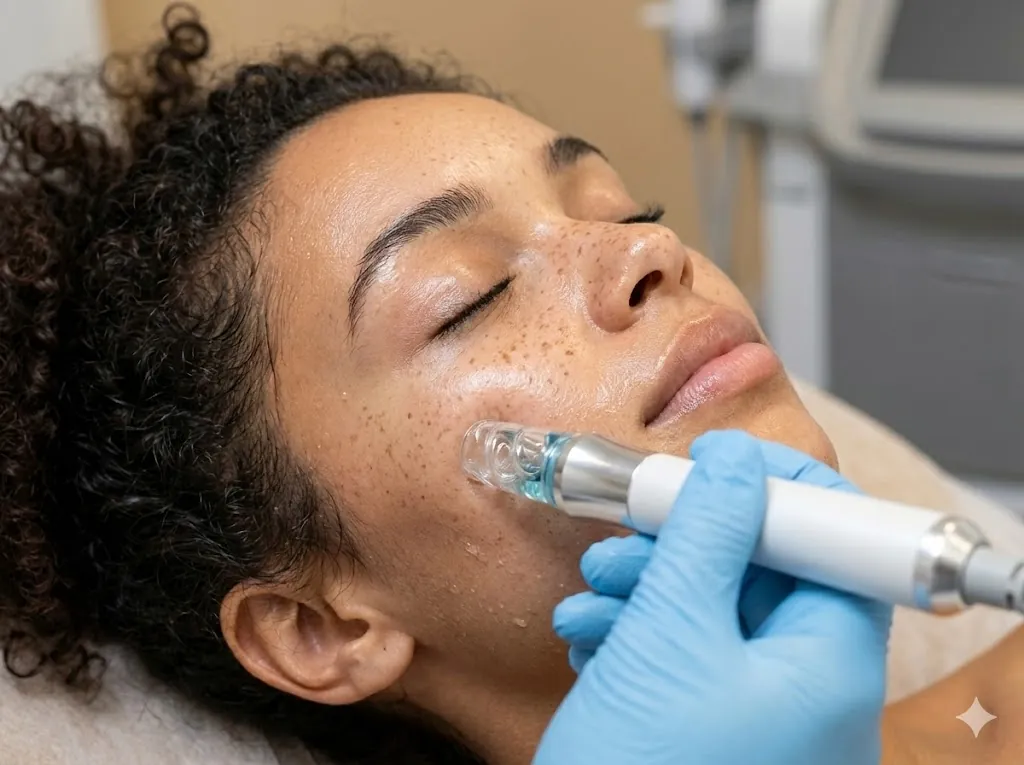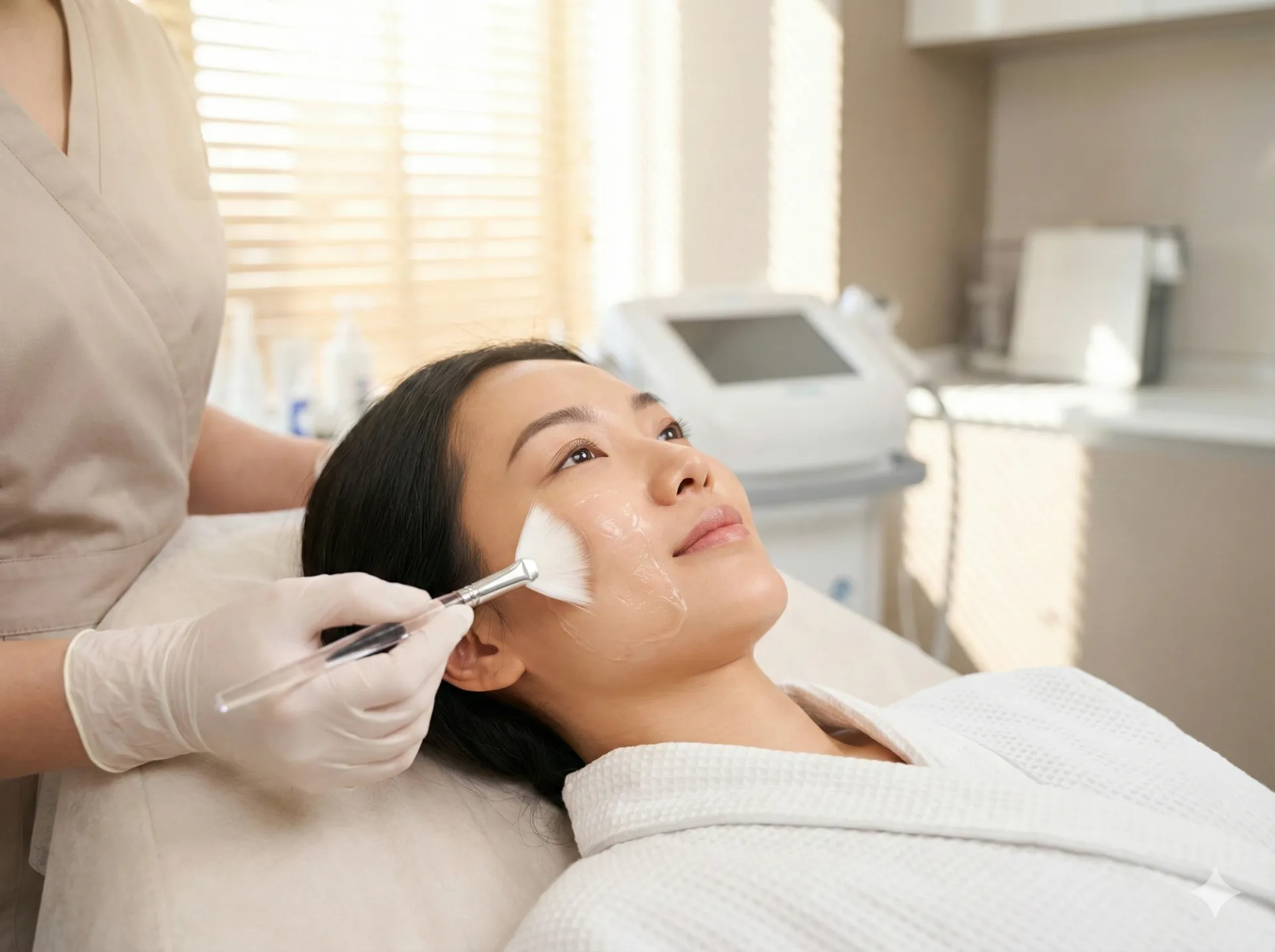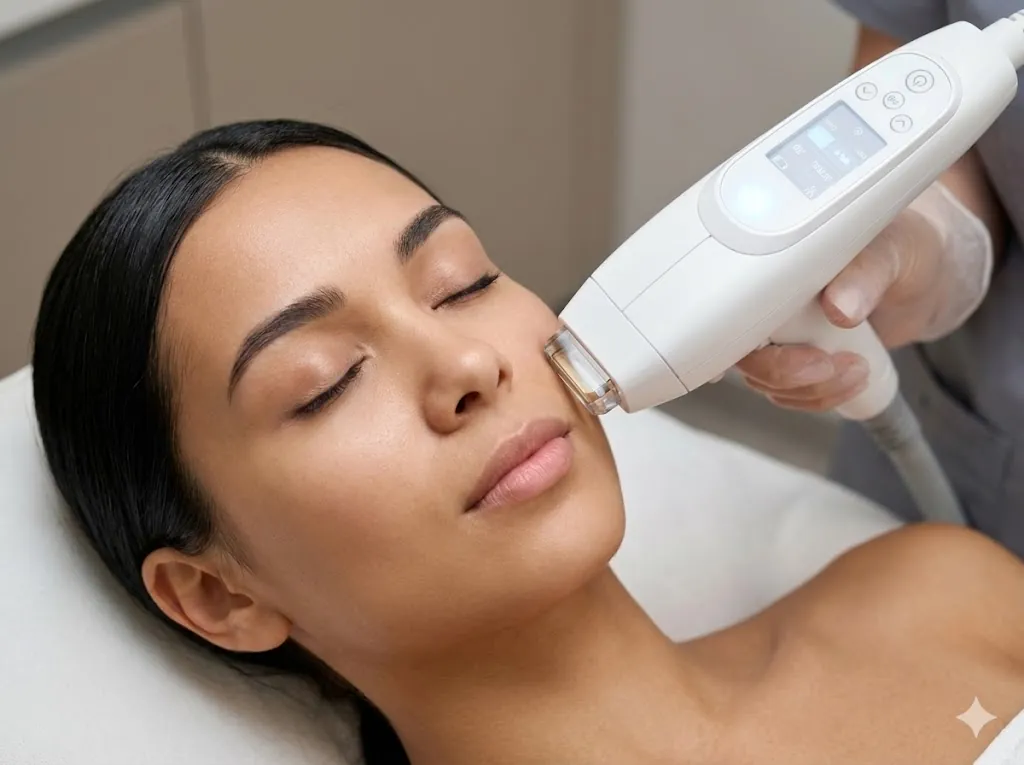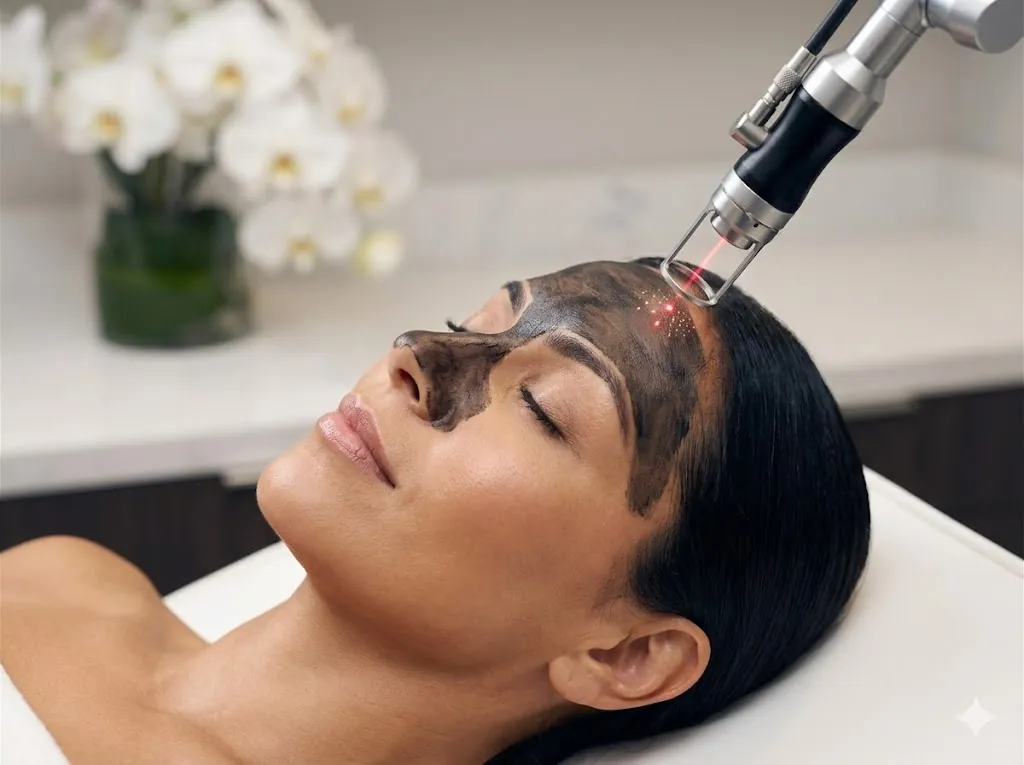
A V-Carbon Peel is a carbon and acid peel that uses no laser: a film of activated vegetable carbon with mandelic, ferulic and citric acids is applied, activated with a spray, then neutralized and removed after about 5 to 10 minutes. The carbon helps lift oil and debris from pores while the acids exfoliate the surface. It is mainly used for enlarged pores, oiliness, mild acne and dullness.
In the ever-evolving landscape of medical aesthetics, few treatments have gained as much traction in 2026 as the V-Carbon Peel. It is often compared with the laser "Hollywood Peel", but V-Carbon at Skin Art MD is a different, laser-free treatment, chosen by people in the Greater Vancouver area who want a fresher look with a short recovery. At Skin Art MD in Burnaby, BC, near Metrotown, this treatment is delivered under the guidance of Dr. Sharon Fong. Whether you are searching for V-Carbon Peel Burnaby BC or are curious about how this technology differs from standard chemical peels, this comprehensive guide will explore the cellular mechanisms, clinical evidence, and practical benefits of this trending treatment. Learn more about V-Carbon Peel
How does the V-Carbon Peel work?
It works in two phases: activated carbon adsorbs oil and debris from the pores while the acids exfoliate the surface, then the film is neutralized and removed. No laser is used at any step.
The V-Carbon Peel is a peel system made in Italy by Promoitalia with three parts: a carbon film, an activating spray and a neutralizing step. The spray lets the clinician adjust how deep the peel works, so it is a superficial to medium-depth peel matched to your skin.
1. The Adsorption Phase
The process begins with the application of a carbon-enriched film. This is no ordinary charcoal mask; it is a film of activated vegetable carbon with mandelic, ferulic and citric acids. Because activated carbon is highly porous, it has a massive surface area relative to its size. This allows it to act like a vacuum, adsorbing (not just absorbing) excess sebum, cellular debris, and environmental pollutants from deep within the follicular ostia (pores).
2. Spray Activation, Acid Exfoliation and Neutralization
A spray is misted over the film to activate the ingredients; slight warmth or tingling is normal. The film stays on for about 5 to 10 minutes:
- Acid Exfoliation: The mandelic, ferulic and citric acid complex loosens dead cells on the surface, which can leave skin looking fresher and more even.
- Neutralization: The film is removed and the skin is neutralized and soothed. No laser energy or laser heat is applied at any point.
Is a V-Carbon Peel the same as a carbon laser peel?
No. Treatments sold as a Hollywood peel or carbon laser peel pass a laser over carbon on the skin, and much of the published research on "carbon peels" studies that laser version. V-Carbon is a different product: the whole treatment is the carbon film, the activating spray and a neutralizing step, so findings from laser studies do not describe it.
- What V-Carbon does: The carbon helps draw oil and debris out of the pores while the acids loosen the surface layer of dead cells.
- What it does not do: No laser energy or laser heat is applied to the skin. Peel depth is adjusted through the activating spray instead.
- Who decides: People often look at both for oil, pores and dullness, and a physician can explain which approach suits your skin, including if you are searching for a V-Carbon Peel Metrotown.
Under the supervision of Dr. Sharon Fong, Skin Art MD tailors peel depth and session spacing to the individual's skin type, with pigment rebound in mind.
How does a V-Carbon Peel compare with a chemical peel or microneedling?
The V-Carbon Peel works mainly on pores, oil and glow with a short recovery, while chemical peels and microneedling work deeper on pigmentation, lines and scars and usually involve several days of peeling or redness.
It is helpful to see how it compares with other treatments available in the Burnaby and Vancouver markets.
| Feature | V-Carbon Peel | Traditional Chemical Peel | Microneedling |
|---|---|---|---|
| Primary Mechanism | Carbon + acid peel, activated by a spray; no laser | Chemical Exfoliation | Mechanical Micro-trauma |
| Typical Recovery | Usually same day; redness usually fades in 1 to 2 hours | 3–7 days (peeling) | 2–4 days (redness) |
| Sensation | Low (Tingling/Warmth) | Moderate (Stinging) | Moderate (Numbing required) |
| Commonly Used For | Pores, Glow, Acne | Pigmentation, Deep Lines | Scars, Texture, Sagging |
| Immediate Result | Yes | No (Takes days to peel) | No (Takes weeks for collagen) |
Who is the V-Carbon Peel typically considered for?
It is commonly considered for enlarged pores, oily or mildly acne-prone skin, dullness and early photoaging, while a physician assessment decides suitability and rules out contraindications.
Peel depth is chosen for your skin type and pigment history, so a professional evaluation is essential. Many patients ask, "does a carbon peel hurt?" The answer is generally no; most people feel slight warmth or mild tingling when the spray is applied, and numbing is not needed.
Common concerns people bring to the Burnaby clinic include:
- Enlarged pores and blackheads
- Dull, lackluster skin tone
- Mild acne and oily skin
- Fine lines and early signs of photoaging
Dr. Sharon Fong and her bilingual team (English and Mandarin) conduct thorough assessments to rule out contraindications such as active skin infections, recent use of oral prescription retinoids for acne, a recent tan, an active cold sore, or very sensitive, inflamed skin. For those seeking V-Carbon Peel Vancouver, a physician-led assessment is an important safety step.
What are the limitations and side effects of a V-Carbon Peel?
The peel works on surface rejuvenation and does not replace surgery or deep fractional CO2 lasers for laxity or deep wrinkles; side effects are usually mild, temporary redness.
While the V-Carbon Peel is effective for surface rejuvenation, it has limitations. It is not a replacement for surgical intervention or deep fractional CO2 lasers when addressing significant skin laxity or deep-set wrinkles. No laser is used in V-Carbon; the treatment uses Promoitalia V Carbon products, applied in a physician-led clinic.
As with any peel, temporary redness, irritation or pigment change is possible, which is why peel depth is chosen for your skin.
Common side effects are mild and temporary: redness usually fades within 1 to 2 hours, and mild flaking, if any, settles in 2 to 3 days. Patients are advised to avoid direct sun exposure and wear high-SPF sunscreen following the treatment to protect the newly revealed skin cells.
Why Choose Skin Art MD in Burnaby?
Located conveniently for residents of Metrotown, Vancouver, and Coquitlam, Skin Art MD combines medical judgement with aesthetic design.
- Physician-Led Care: Every protocol is overseen by Dr. Sharon Fong, ensuring medical-grade safety.
- Genuine Products: We use Promoitalia V Carbon products, with no laser, for people from Burnaby, Coquitlam (V-Carbon Peel Coquitlam) and beyond.
- Bilingual Service: Our staff provides consultations in both English and Chinese, ensuring clear communication of your aesthetic goals.
- Personalized Plans: We don't believe in a one-size-fits-all approach. Your V-Carbon treatment may be part of a larger, holistic anti-aging strategy.
What else do people ask about the V-Carbon Peel?
The questions below cover the first step, event timing, booking, related technologies, session length, treatment series and body areas.
1. What is the first step?
The first step is a comprehensive skin analysis at our Burnaby clinic, where a physician assessment determines whether the V-Carbon Peel suits your concerns.
2. Can a V-Carbon Peel be done before an event?
Yes. Skin often looks brighter after one visit and redness usually fades within 1 to 2 hours, though heavy makeup is best avoided for the first 24 hours if you can. It is often scheduled 1–2 days before events such as weddings or galas.
3. How is a consultation booked?
Book a consultation. Our team will walk you through the process and answer any specific questions you have about your skin type.
4. Are other energy-based technologies discussed at the same visit?
Sometimes. Patients occasionally ask about other radiofrequency technologies, such as Forma-I, which is used to target the meibomian glands in dry-eye care. Which technologies fit a given concern is decided at a physician assessment.
5. Is the V-Carbon Peel a gentle introduction to medical aesthetics?
The V-Carbon Peel is a relatively low-risk, superficial treatment, which is why it is often an entry point into medical aesthetics.
6. How long does a V-Carbon Peel take?
The V-Carbon Peel is often called a "lunchtime peel" because it takes about 15 to 20 minutes, with the film on the skin for 5 to 10 of them. Most people return to their daily activities in Burnaby or Metrotown right afterward with a visible glow.
7. Is a series of peels more effective than one?
A single carbon peel provides a short-term boost, while a series of treatments can lead to longer-lasting improvements in oil production and pore size, reducing the need for heavy daily coverage.
8. Can the V-Carbon Peel be used on the body?
The V-Carbon Peel is primarily used on the face, neck, and décolletage. For laxity or texture on larger body areas such as the upper arms, other technologies such as Morpheus8 or BodyTite are generally better suited; a physician assessment decides which options apply.
How long do carbon peel results last?
The immediate glow usually lasts about 2–3 weeks, while the longer-term benefits to pore size and texture accumulate with multiple sessions.
If you are wondering how long does carbon peel last for your skin, or whether the treatment suits you, a physician assessment at Skin Art MD is the next step. Our medical team in Burnaby can create a personalized treatment plan. Book a consultation — available in English and Chinese.
Disclaimer: This article is for educational purposes only and does not constitute medical advice. Please consult with a qualified healthcare professional before undergoing any treatment.