Microneedling cost in Burnaby depends on what is being treated, how large the area is, how deep the treatment needs to go, whether anything is added (such as PRP), and how many sessions a plan includes. A single session price says little on its own. At Skin Art MD in Burnaby (Metrotown), the quote is given after an assessment, because those factors are only clear once someone has looked at your skin.
This guide explains, as of October 2026, what changes the price of medical microneedling, how many sessions people typically plan for, how far apart they are spaced, how to plan around downtime, and who may be advised to wait.
What is medical microneedling, and how is it different from an at-home roller?
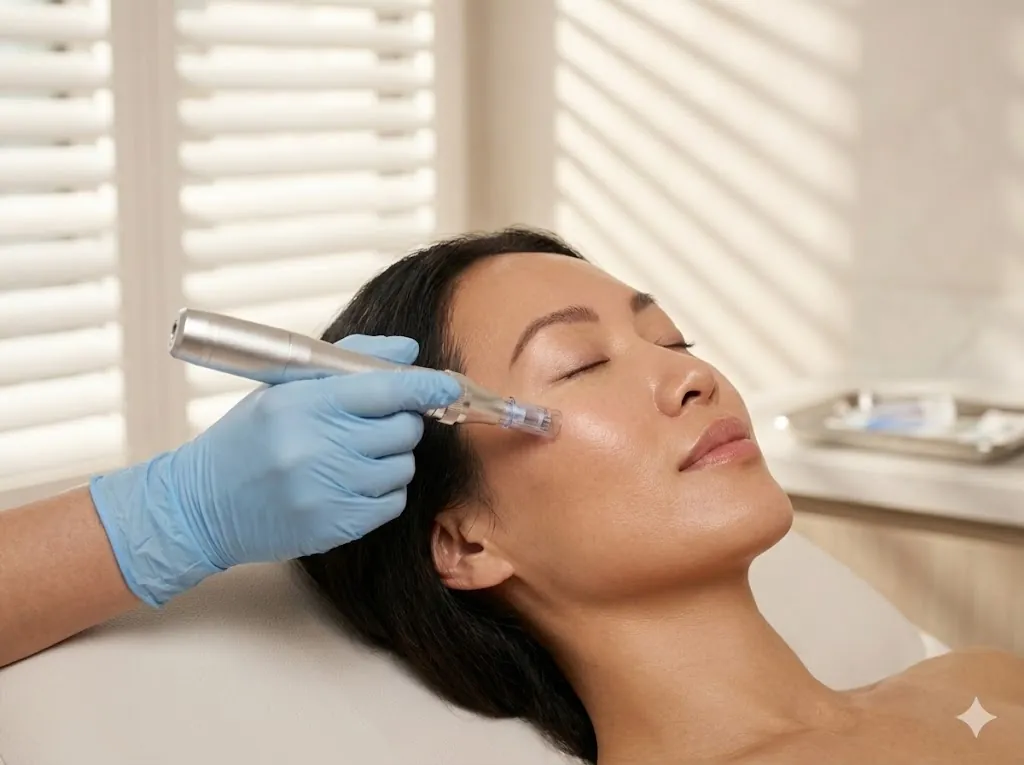
Medical microneedling is a clinic treatment that uses a motorised pen with a single-use sterile needle cartridge to create tiny, controlled channels in the skin; at-home rollers are a different tool with a different purpose.
At Skin Art MD, microneedling is performed with a microneedling pen (Dermapen 4). The needles move in and out vertically, and depth is set zone by zone: deeper over scarred cheeks, shallower over the forehead and around the eyes. A numbing cream is applied first, and the cartridge is discarded after each client.
At-home rollers are sold for cosmetic use at much shallower depths. Rolling drags needles across the skin at an angle, depth cannot be adjusted for different areas, and a roller that is reused at home is hard to keep clean. Many people search for "microneedling near me" after trying a roller and finding it does little for scarring; that is mostly a difference in depth and control, not in effort.
The comparison matters for cost: a clinic session includes an assessment, numbing, sterile single-use supplies, clinician time and aftercare guidance, so it is not priced like a home device.
What changes the price of microneedling?
Five things move a microneedling quote the most: the concern, the area, the depth and technique, add-ons, and the number of sessions in the plan.
The concern being treated
Different concerns call for different settings. Rough texture and enlarged-looking pores are often treated at moderate depths, while pitted acne scars (ice pick, boxcar and rolling types) usually need deeper passes in the affected zones and more sessions. Some scar types respond better when microneedling is combined with, or replaced by, another approach; that is decided at assessment.
The treatment area
Full face is the most common area. Face and neck, or face, neck and décolletage, take longer and use more product. Body areas such as stretch marks on the abdomen or thighs are priced separately because the surface area and time are different.
Depth, device and technique
Deeper treatment of scarred areas takes more time and more passes than a light treatment for texture. Some people are better suited to radiofrequency microneedling (Sylfirm X) instead of mechanical microneedling, which is a different device with different pricing. Our post on microneedling for texture, acne scars and pores explains how the treatment works in more detail.
Add-ons such as PRP
Some people ask about adding platelet-rich plasma (PRP), which is prepared from a small sample of your own blood and applied during the session. It adds a blood draw, processing time and supplies, so it changes the quote. Whether it is worth discussing for you is a question for the assessment; you can read how PRP is prepared on our PRP treatment page.
Number of sessions and packages
The total cost of a plan depends far more on the number of sessions than on any single visit. A plan for mild texture may involve fewer sessions than a plan for deeper acne scarring. Your quote will show the number of sessions recommended and how they are spaced.
How many microneedling sessions will I need?
Many people plan for a course of about 3 to 6 sessions, spaced roughly 4 to 6 weeks apart, but the number for you depends on your concern and how your skin responds. Individual results vary.
Collagen remodelling happens gradually, so changes in texture are usually assessed over the course of a series rather than after one visit. Pores and general texture may need fewer sessions than deeper acne scars. People with more extensive scarring may be advised that microneedling is one part of a longer plan.
After the initial course, some people choose occasional maintenance sessions. That is optional, and it is discussed once you can see how your skin has responded.
How far apart should microneedling sessions be?
Sessions are typically spaced about 4 to 6 weeks apart so the skin has time to complete its repair response before the next treatment.
Booking sessions closer together does not speed things up and adds irritation. If you have a deadline such as a wedding or a trip, tell us at the consultation so the schedule can be worked backward from that date, with the last session well before the event.
What is the downtime after microneedling?
Most people have redness similar to a mild sunburn for about one to two days, sometimes with light swelling, tightness or a little flaking over the following days. Deeper treatments over scarred areas can take a little longer to settle.
For planning:
- Day of treatment: skin is red and warm. Most people go home and skip makeup.
- Days 1 to 2: redness fades for many people; some flaking or dryness may begin.
- Days 3 to 7: skin usually looks close to normal, though it can feel dry. Mineral makeup is often allowed after the first day or two; follow the instructions you are given.
If you have work photos, a presentation or an event, it is reasonable to book microneedling at least a week ahead.
How should I prepare my skin before microneedling?
Preparation is about avoiding irritation and telling us anything that changes suitability. You will receive specific instructions at the consultation, and common ones include:
- Pausing retinoids, exfoliating acids and scrubs for several days beforehand, as advised.
- Avoiding sunburn and tanning in the weeks before treatment.
- Telling us about any blood-thinning medication or supplements, without stopping a prescribed medication on your own.
- Mentioning a history of cold sores, since treatment around the mouth can trigger a flare.
- Arriving with clean skin and no makeup if possible.
What aftercare is needed after microneedling?
Aftercare is simple but matters: keep the skin clean, calm and protected while the channels close.
Typical instructions include using a gentle cleanser and a plain moisturiser, avoiding active ingredients (retinoids, acids, vitamin C serums) for several days, using sunscreen every day and avoiding direct sun, and skipping heavy workouts, saunas, hot tubs and swimming for a day or two. Do not pick at flaking skin.
Contact the clinic if redness, swelling or pain increases after the first couple of days, or if you notice pustules, crusting or blistering.
Who should wait before having microneedling?
Some people are advised to wait or to choose a different treatment. Raise any of these at your consultation:
- Active inflamed acne or a skin infection in the treatment area, including an active cold sore.
- Oral isotretinoin within roughly the past 6 months: the timing is reviewed by the medical team.
- Pregnancy or breastfeeding: elective treatments are usually postponed.
- A history of keloid or raised scarring.
- Active eczema, psoriasis or rosacea flares in the area.
- Blood-thinning medication or a bleeding disorder.
If you are unsure whether a skin condition or medication affects your suitability, it can also help to speak with your family physician.
Why is the quote given after an assessment?
Because the factors that set the price, such as scar type, area, depth, add-ons and number of sessions, can only be judged once your skin has been examined and your history reviewed.
Skin Art MD is a physician-led clinic; device treatments such as microneedling are carried out by trained staff under the oversight of our medical team. At the consultation we look at your concern, ask about medications and past treatments, check for anything that means you should wait, and explain whether microneedling, radiofrequency microneedling or another approach fits. You then receive a quote for the plan rather than a single-session figure that may not reflect what you need.
Frequently asked questions
Does microneedling hurt?
A numbing cream is applied before treatment. Most people describe a scratching or vibrating sensation, and areas over bone such as the forehead can feel more noticeable. Sensitivity varies from person to person.
Is one session of microneedling enough?
Some people notice a change in skin texture after one session, but most plans involve a series because collagen remodelling is gradual. Individual results vary.
How long does a session take?
A typical appointment is about 45 to 60 minutes, including time for the numbing cream to work.
Can I do microneedling at home instead?
At-home rollers work at shallow depths and cannot be adjusted by area or sterilised like a single-use clinic cartridge. They are not a substitute for a clinic treatment aimed at acne scars.
Can microneedling be combined with other treatments?
Sometimes. PRP can be added during a session, and some people combine microneedling with other treatments over a longer plan. Spacing between treatments is set at assessment.
When can I wear makeup again?
Many people wait at least 24 to 48 hours. Follow the aftercare instructions you receive.
Booking a microneedling consultation in Burnaby
If you are comparing microneedling costs or wondering how many sessions you might need, the first step is a consultation at Skin Art MD in Burnaby (Metrotown), serving Greater Vancouver. You can read more on our microneedling treatment page or book a consultation to have your skin assessed and receive a quote for your plan.