People with melasma that keeps coming back, or a face that flushes and stays red, often end up reading about Sylfirm X. Its approach is different from a laser that simply breaks up pigment. It is RF microneedling: insulated needles deliver radiofrequency energy into the dermis, with one mode aimed at the abnormal vessels and basement-membrane damage associated with melasma and redness, and another aimed at collagen. Melasma itself is chronic and tends to relapse, so the realistic goal is improvement and control. Skin Art MD's Sylfirm X page describes a typical course of 3 to 4 sessions about 4 weeks apart. A physician assessment decides whether it suits you.
What is Sylfirm X, and how is it different from standard microneedling?
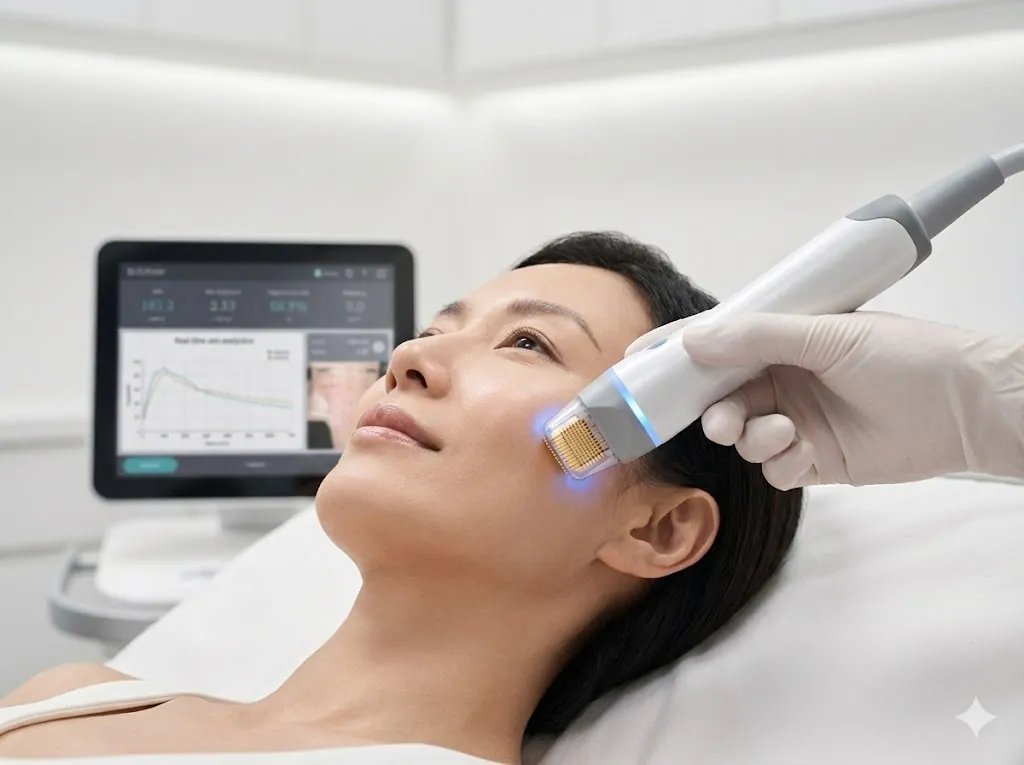
Sylfirm X, made by Viol in Korea, is a bipolar RF microneedling device. Standard microneedling relies on tiny punctures to prompt repair; RF microneedling adds radiofrequency heat released at the needle tips, at a chosen depth in the dermis. The needles are insulated so energy concentrates at the tip, limiting heat to the surface, which is one consideration for skin prone to post-inflammatory darkening.
The device has two pulse modes, which is why it comes up so often for melasma and redness:
- RP (repeated pulse) mode delivers short, selective RF pulses aimed at the overgrown, dilated vessels behind persistent redness and at the basement-membrane damage associated with melasma.
- CP (continuous pulse) mode sends sustained heat into the dermis to trigger collagen contraction and renewal, and is used more for pores, texture, acne scars and mild laxity.
The physician chooses modes and settings for each concern, and some sessions use both.
Why is melasma so stubborn?
Melasma is a chronic, relapsing pigment condition, usually on the cheeks, forehead and upper lip and roughly symmetrical. It is linked to UV and visible light, hormonal change such as pregnancy or oral contraceptives, heat and repeated friction. It is not just "extra pigment" in the surface; researchers describe changes in dermal blood vessels and damage to the basement membrane as part of the picture. That helps explain why aggressive, pigment-only treatments can sometimes make it rebound.
Two things therefore come before any device discussion. First, a physician needs to confirm that it is melasma, since freckles, sun spots, Hori's naevus and post-inflammatory pigmentation are handled differently. Second, melasma is a long-term management issue: sun protection, heat avoidance and gentle skincare are the foundation, and a device is one part of the plan.
How does Sylfirm X approach melasma and redness?
For melasma, RP mode works around the dermal-epidermal junction on abnormal vessels and damaged basement membrane. The idea is to change the environment that keeps pigment returning rather than to shatter pigment directly. For persistent redness, RP mode targets the dilated small vessels. Change is gradual and is judged across a course, not after one visit.
Responses vary. Some people see a more even tone and less flushing after a course; for others the change is modest. Season, sun exposure, hormones and daily habits all play a part, which is why progress is assessed with consistent photos rather than impressions from one week to the next.
How are sessions usually spaced?
Skin Art MD's Sylfirm X page describes a typical course of 3 to 4 sessions about 4 weeks apart, with the exact number depending on the concern. Melasma and rosacea-related redness often need ongoing maintenance, while acne-scar improvement tends to level off after a defined course. A facial session takes around 45 to 60 minutes, plus numbing time.
Why wait weeks between sessions? The skin needs time to repair and rebuild after each one. Shortening the gap does not speed things up and may add irritation, which is precisely what melasma-prone skin should avoid. Many people prefer to start a course in autumn or winter, when sun management is easier; that is worth raising at the consultation.
What happens on treatment day?
The physician reviews your skin and goals, maps the areas and settles on mode and settings. Numbing cream goes on for roughly 30 to 40 minutes. During treatment most people feel mild warmth and light prickling, and depth and energy are adjusted zone by zone. A calming serum or sheet mask follows, and you leave with written aftercare instructions.
What does skin do in the days afterwards?
Redness and mild swelling for 24 to 48 hours are common, and pinpoint scabs may appear and usually clear within 3 to 5 days. Skin can feel dry, tight and sensitive during this period. Most people can work normally, though they may want a day or two before important appearances.
Aftercare essentials:
- No strenuous exercise, hot baths, saunas or steam rooms for 24 hours.
- No exfoliants, retinoids, vitamin C or other strong actives for at least a week.
- Let the tiny scabs fall away on their own.
- Use broad-spectrum SPF 30 or higher every day, which matters even more if you have melasma.
- Contact the clinic if redness worsens, pus appears, pain increases or blisters form.
Who should wait or check first?
Sylfirm X is generally not done during pregnancy or breastfeeding, over active infection, open wounds or widespread inflamed acne, during an active cold sore (a history of cold sores should also be mentioned), with a pacemaker or metal implants in the area, with a metal allergy, with a tendency to keloids or significant scarring, after recent oral retinoid medication, or with a bleeding disorder or blood-thinning medication.
Recent lasers, peels or injectables in the same area should be mentioned so spacing can be planned.
Can melasma come back after a course?
Yes, it can. Melasma is sensitive to sun, hormones and heat, and no treatment stops it from ever recurring. What happens after the course often decides how long improvement lasts: daily sunscreen, including on cloudy days and near windows; limiting long periods of intense heat; avoiding rubbing and over-cleansing; and maintenance sessions if the physician recommends them.
How should I prepare for the consultation?
- Arrive without makeup so pigment and redness can be seen in natural light.
- Be ready to describe when the patches appeared, whether they relate to pregnancy, medication or sun, and what treatments or brightening products you have tried.
- List medications, allergies (including metal) and aesthetic treatments from the past year.
- Follow the clinic's instructions on pausing retinoids, vitamin C and acids for 3 to 5 days beforehand, and mention any history of cold sores.
Where is Skin Art MD?
Skin Art MD is in Burnaby's Metrotown neighbourhood at #101 – 4378 Beresford St, near Metrotown SkyTrain Station on the Expo Line. The clinic is open Tuesday to Sunday, 10:00 to 18:00, and closed on Mondays. Whether Sylfirm X suits you, which mode is used and how many sessions make sense is decided at a physician assessment. This article is general information and not individual medical advice.