Pores cannot be closed, shrunk away or removed. They are the openings of hair follicles and oil glands, and their basic size is largely inherited. What can change is how visible they look. Oil, congestion, sun damage and loosening skin all make pores look larger, and each cause points to a different kind of care. A skin assessment helps work out which causes apply to you before choosing a treatment.
This article explains why pores look large, what a sensible routine at home covers, which in-clinic options at Skin Art MD in Burnaby are matched to which cause, and what to expect from them. It is general information, not a diagnosis or a treatment plan, and individual results vary.
Why do my pores look so big?
Pores look large when something stretches the opening or weakens the skin around it. The common causes are oil production, congestion, loss of firmness from sun exposure and age, genetics, and a history of acne.
It helps to think of these as separate causes, because most people have more than one:
- Oil. Active oil glands, often on the nose, forehead and chin, keep the pore opening busy and shiny, which makes it more noticeable. Oil production is influenced by hormones, climate and genetics.
- Congestion. Dead skin cells and sebum can pack into the pore. Blackheads and the "dotted" look on the nose are usually congestion, not a larger pore.
- Sun damage and loss of elasticity. Over years, UV exposure and ageing reduce the collagen and elastin that support each pore. On the cheeks, pores can start to look elongated or teardrop-shaped rather than round.
- Genetics and skin type. Pore size is largely hereditary. Oilier and thicker skin types tend to have more visible pores.
- Acne history. Repeated inflammation, picking or aggressive extraction can leave pores looking stretched, sometimes alongside shallow scarring.
Our large pores concern page includes a self-check that walks through these patterns.
Can pores actually shrink or close?
No. Pores do not open and close, and no treatment removes them. What treatment can do is make them look smaller by clearing what is inside, reducing surface shine, and supporting the skin around the opening.
Steam, cold water and "pore-closing" toners can change how skin looks for a short time, but they do not change pore structure. Be cautious with any product or service that promises to close or erase pores.
What helps at home?
A consistent routine handles the basics: gentle cleansing, a retinoid if it suits your skin, daily sunscreen and products that do not clog pores. It will not change genetics, but it often makes a visible difference to congestion and shine.
- Cleansing. Wash twice a day with a gentle cleanser. Harsh scrubs and over-washing can irritate skin and push oil production the other way.
- Exfoliating acids. Salicylic acid (a BHA) is oil-soluble and works inside the pore, which is why it is common in products for blackheads. Start slowly.
- Retinoids. Over-the-counter retinol and similar products support cell turnover. They can cause dryness and irritation at first, and they are generally avoided in pregnancy. Prescription-strength options are a conversation for your family physician or dermatologist, and a pharmacist can help you choose an over-the-counter product.
- Sunscreen. Daily broad-spectrum sunscreen protects the collagen around pores from further UV damage. This is a long-term step, so the effect is gradual.
- Non-comedogenic products. Choose moisturizers and makeup labelled non-comedogenic, and remove makeup fully at night.
- Hands off. Squeezing can stretch pores and lead to marks. Extraction is better left to a trained provider.
If you have active, inflamed acne, start with your family physician, because treating acne is a separate medical question from pore appearance.
Which in-clinic options fit which cause?
In-clinic treatment works better when it is matched to the cause: cleansing facials for congestion and oil, peels for surface texture, and collagen-focused devices for pores linked to loss of firmness or acne history. Many plans combine a cleansing option with a collagen-focused one.
Congestion and oil: deep-cleansing facials
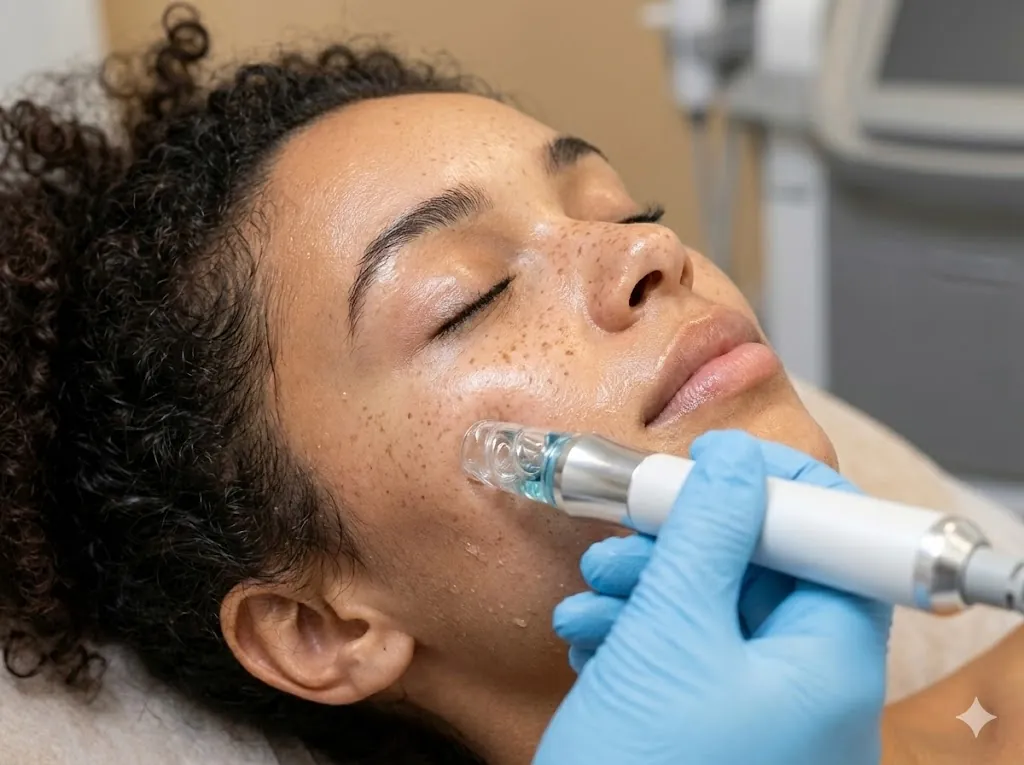
HydraFacial and HydraPeel use suction to clear debris from pores while delivering serums. HydraPeel adds a glycolic and salicylic acid step for exfoliation; HydraFacial is a shorter cleanse, extract and hydrate visit. Both are non-laser and most people return to normal activities the same day. The clearer look shows soon after a session and fades as pores refill, so they are often repeated about every four to six weeks. Our HydraPeel deep-cleanse article covers the steps in more detail. For oily skin, the V-Carbon peel, a carbon and acid peel without a laser, is another cleansing option.
Rough surface texture: exfoliating peels
The Longevity Peel is an acid-based chemical peel that removes the outer layer of dull cells. It is aimed at rough texture, uneven tone and fine lines rather than at congestion. Shedding usually follows for three to five days, depending on depth. Lighter peels are often planned as a series about four to six weeks apart, and the physician sets the depth after assessment.
Loss of firmness, sun damage and acne history: collagen-focused treatments
When pores look stretched because the surrounding skin has lost support, the goal is to prompt collagen renewal around them.
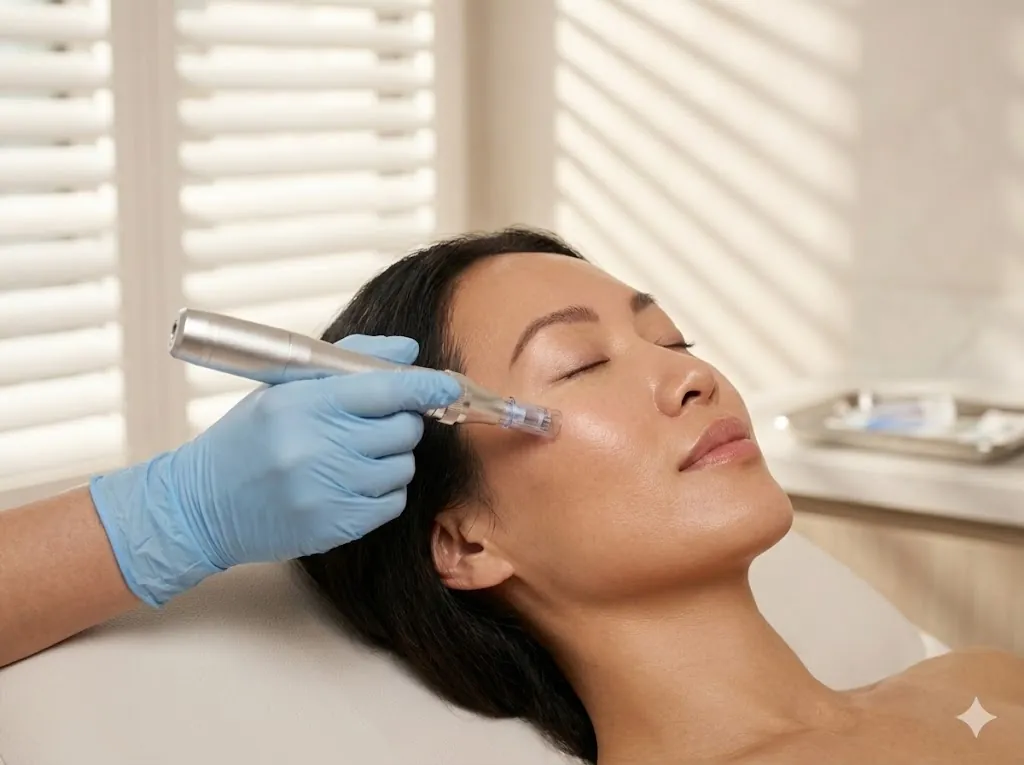
- Microneedling creates controlled micro-channels that trigger the skin's repair response.
- Sylfirm X is a radiofrequency (RF) microneedling device that adds RF energy through insulated needles. A session takes about 45 to 60 minutes plus time for numbing cream, and a course is commonly three to six sessions about four to six weeks apart.
- PicoSure with the Focus lens is a picosecond laser that splits energy into many tiny spots to prompt skin renewal. It is discussed for texture, enlarged-looking pores and shallow acne scars, with a common course of two to six sessions about four to six weeks apart.
Collagen changes are gradual and build over weeks to months. Temporary redness, swelling or flaking are expected after these treatments, and the team reviews risks, skin type, medications and recent sun exposure before starting.
How many sessions will I need, and how long does it last?
It depends on the cause, the treatment and your skin, so session counts are ranges, not promises. Cleansing facials are maintenance; collagen-focused treatments are usually a series.
Pores refill with oil and debris, so the effect of a facial is temporary by nature. Collagen-focused treatments change the skin more gradually, but ageing and sun exposure continue, so many people plan periodic maintenance. Genetics still sets the baseline: the realistic goal is pores that look finer and skin that looks smoother, not skin without visible pores. Individual results vary.
Why start with an assessment?
Because the same-looking pores can have different causes, and the cause decides the plan. An assessment also checks whether a treatment suits your skin type, history and timing.
At Skin Art MD, a physician-led clinic, the first step is a consultation. A VISIA skin analysis can be part of it: a multi-spectral facial scan that maps pores, texture, spots and redness, giving a baseline the team can review with you and compare later. Device treatments are carried out by trained staff under physician oversight.
FAQ
Can large pores be removed for good?
No. Pores are a normal part of skin and cannot be removed. Treatment aims to make them look smaller, and maintenance is usually part of the plan.
For large pores, should I choose a facial or RF microneedling?
It depends on the cause, because they address different things. Facials suit congestion and oil, while RF microneedling targets pores linked to loss of firmness or acne history. Many plans use both.
Do pore strips or "pore-minimizing" products work?
Strips lift the top of blackheads for a short time. Pore-minimizing products usually work by mattifying or blurring the surface. Neither changes pore structure.
Can I treat pores if I have active acne?
Active, inflamed acne should be assessed first, ideally with your family physician. Some treatments are postponed until breakouts settle.
Will one session be enough?
Some people notice a difference after one visit, especially after a cleansing facial, but most collagen-focused plans are a series. Results vary.
Does skin colour affect which option is suitable?
Yes. Skin type and tone affect the risk of pigment changes after some devices and peels, which is one reason the team assesses before recommending settings or a series.
Booking
If large pores are your main concern, you can book a consultation at Skin Art MD in Burnaby (Metrotown), serving Greater Vancouver. The team will look at oil, congestion, texture and firmness, review your history, and explain which options may fit and what a realistic plan looks like.