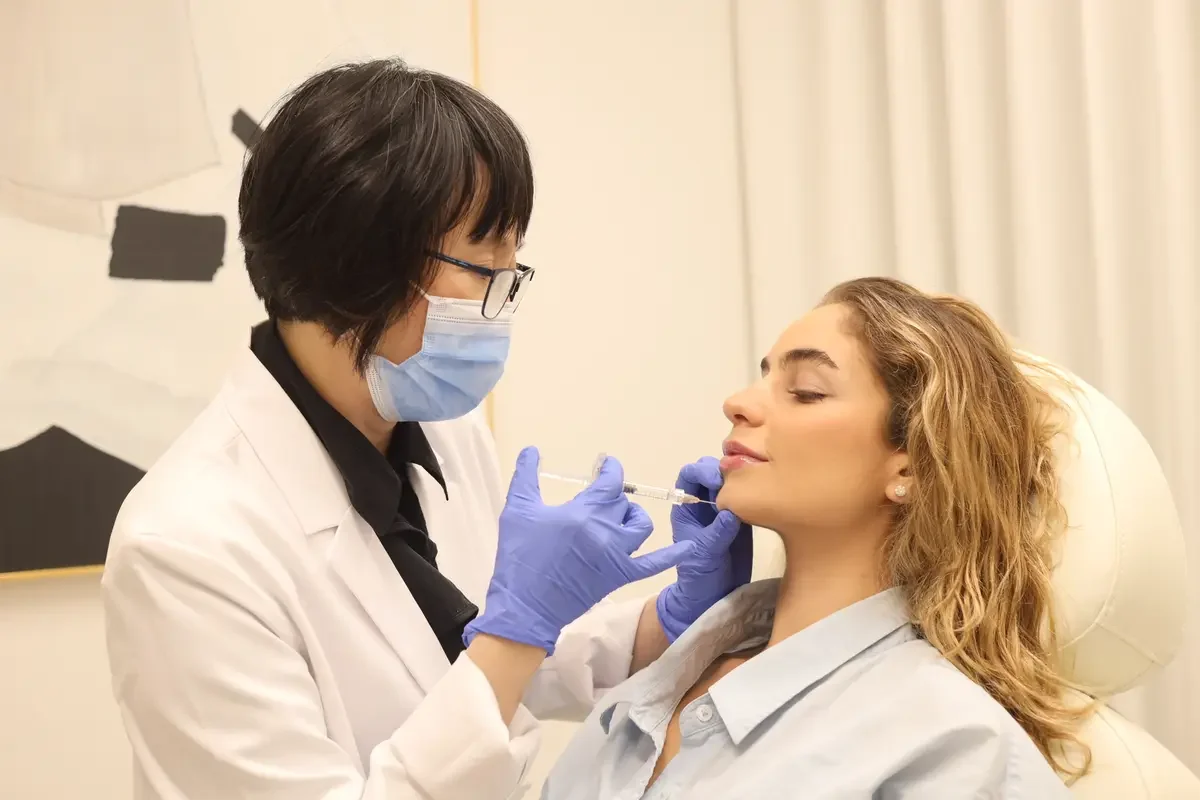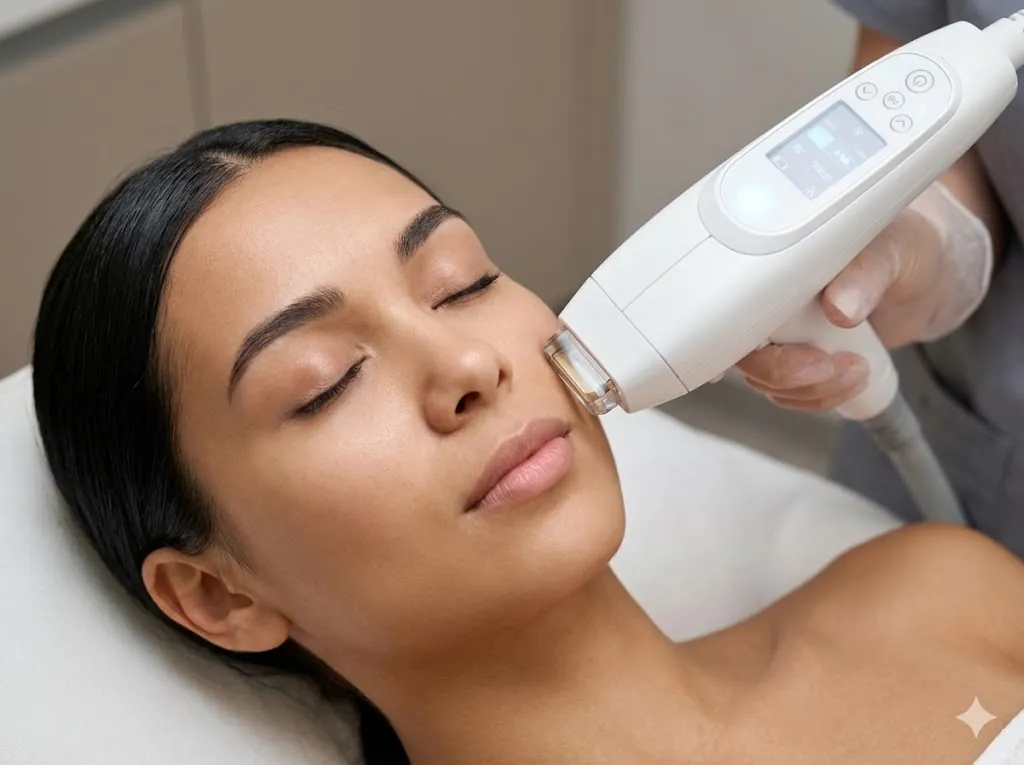
A DPL Photo Facial is a light-based skin treatment that uses Dynamic Pulsed Light, a refined form of IPL filtered to a narrow band of roughly 500 to 600 nm. That light is absorbed by red and brown targets, so it is discussed for facial redness, sun spots and uneven tone. A physician assessment decides suitability.
What is a DPL Photo Facial?
DPL stands for Dynamic Pulsed Light, a refined form of IPL also called photofacial or photo rejuvenation. It filters broad-spectrum light into a band of roughly 500 to 600 nm, a range absorbed by both red targets such as blood vessels and brown targets such as pigment. At Skin Art MD in Burnaby, the DPL Photo Facial is discussed for redness, sun spots and uneven tone, and a physician assessment decides suitability.
Because the light is filtered into a narrower band, more of the delivered energy reaches the intended targets rather than being spread across a wide wavelength range. The treatment is light-based rather than a laser, which makes it suited to broad concerns such as facial redness and scattered spots; laser options like PicoWay and PicoSure are directed at more targeted pigment or texture work.
A few practical points about the treatment itself:
- Energy settings are matched to skin type, and are set conservatively when the risk of pigment rebound is higher, as in melanin-rich skin.
- Pulsing is shaped to deliver energy evenly, and cooling during treatment keeps the skin comfortable.
- Gentle warming over a series of sessions can support collagen.
Suitability, including skin type, history and recent sun exposure, is decided by a physician assessment at the clinic, which is physician-led and located in Burnaby near Metrotown.
What is DPL and how is it different from standard IPL?
Standard IPL uses a wide range of wavelengths, while DPL filters the light into a narrower band so more energy reaches the intended targets. DPL stands for Dynamic Pulsed Light, and it is best understood as a refined form of IPL rather than a separate category of treatment. The filtering step matters: light in roughly the 500 to 600 nm range is absorbed by both haemoglobin, which carries redness, and melanin, which carries spots, so the energy is directed at the concerns a DPL Photo Facial is typically used for.
A few design details separate DPL from standard IPL:
- Filtered band: narrowing the spectrum concentrates energy on red and brown targets instead of spreading it across a broad range.
- Dynamic pulsing: pulses are shaped to deliver energy evenly across the treatment area.
- Cooling: built-in cooling keeps the skin comfortable during passes.
- Collagen support: gentle warming may support collagen over a series of sessions.
DPL remains light-based rather than a laser, so it is generally discussed for broad concerns such as redness and scattered spots, while laser options suit more targeted pigment or texture work. Settings are matched to skin type, and energy is set conservatively where the risk of pigment rebound is higher, as in melanin-rich skin. At Skin Art MD in Burnaby, a physician assessment decides suitability.
What does a DPL Photo Facial treat?
At Skin Art MD in Burnaby it is discussed for redness, sun spots and uneven tone, with the face as the main area. DPL, or Dynamic Pulsed Light, is a refined form of IPL that filters broad-spectrum light into a band of roughly 500 to 600 nm — a range absorbed by both red targets (blood vessels) and brown targets (pigment). That dual absorption is why a single pass can address more than one concern at once.
Concerns commonly raised in a consultation include:
- Facial redness or flushing
- Sun spots, age spots and freckles
- Uneven skin tone
- Visible small capillaries
- Early signs of ageing
The face is the main treatment area, and specific zones are often discussed individually: the cheeks and nose, where flushing and visible capillaries tend to concentrate; the forehead and chin, for spots and tone; and the neck and décolletage, as sun-exposed skin. Age spots on the backs of the hands can also be discussed.
DPL is light-based rather than a laser, so it suits broad concerns such as redness and scattered spots rather than highly targeted pigment or texture work. A physician assessment at Skin Art MD decides suitability, taking into account skin type, history and recent sun exposure. Individual results vary.
Who is a DPL Photo Facial for, and who may be advised to wait?
A physician assessment decides suitability, including skin type, history and recent sun exposure. At Skin Art MD in Burnaby, a physician-led skin clinic, that assessment comes before any DPL plan is set, and it is what separates a reasonable candidate from someone who should wait.
DPL is typically discussed for concerns such as facial redness or flushing, sun spots, age spots and freckles, uneven skin tone, visible small capillaries and early signs of ageing. Because the filtered light band is absorbed by both red and brown targets, it suits scattered concerns across the face rather than a single isolated lesion. Settings are also planned with skin type in mind — energy is set conservatively when the risk of pigment rebound is higher, as in melanin-rich skin.
A physician may advise waiting in several situations:
- Pregnancy or breastfeeding
- Skin infection, cold sore or open wound in the treatment area
- A recent tan, sun exposure or self-tanner
- Photosensitizing medication (raised at booking)
- Melasma or a history of keloid scarring, which need physician assessment first
At Skin Art MD, plans sit within the care of medical director Dr. Charles Jiang, a licensed physician in British Columbia. Individual results vary, and a physician assessment decides suitability.
What happens during a DPL visit, step by step?
A session commonly takes 20 to 45 minutes depending on the area, and most people feel a light snap and warmth. At Skin Art MD in Burnaby, a DPL visit follows a simple sequence, and a physician assessment decides suitability before any treatment plan is set.
Before the visit. Preparation is mostly about avoiding surprises. Sun and tanning are typically set aside for about four weeks beforehand, and it helps to arrive with a clean face. Medications, pregnancy and recent procedures should be mentioned at booking, along with cold sores, keloid scarring or melasma. If the physician advises, retinoids and strong exfoliants are paused for a period.
During the session. The skin is cleansed and protective eyewear is provided. A cool gel is applied to help light transmission, then the handpiece glides over the skin delivering pulses of light. Cooling keeps the skin comfortable throughout, and the sliding passes spread energy evenly rather than in overlapping stamps.
After the session. Mild redness usually settles within hours. Spots may darken over the first few days and flake off within about 7–10 days. Daily sunscreen and gentle products support the skin in between, and picking at flaking spots is best avoided. Tone may look brighter within about 1–3 weeks, with a course typically spanning 3–6 sessions.
What is recovery like after a DPL Photo Facial?
Most people resume normal activities the same day, with temporary redness possible. Because DPL is light-based rather than a laser, downtime tends to be minimal, though the skin can look flushed for a few hours after the session.
Mild redness usually settles within hours. Spots may darken over the first few days and then flake off within about 7–10 days — this darkening is part of how pigment clears, not a sign that something has gone wrong. Tone may look brighter within about 1–3 weeks, and results vary from person to person.
A few simple habits support recovery:
- Wear sunscreen daily and avoid tanning.
- Use gentle products and do not pick at flaking spots.
- Tell the clinic about any cold sores, keloid scarring or melasma history beforehand.
DPL is light-based rather than a laser, so it suits broad concerns such as redness and scattered spots; laser options such as PicoWay and PicoSure suit more targeted pigment or texture work. A session commonly takes 20–45 minutes depending on the area, and a course is typically 3–6 sessions. A physician assessment at Skin Art MD in Burnaby decides suitability, and the plan is set with physician oversight.
How many sessions are needed, and when do results show?
A course is typically 3 to 6 sessions, and tone may look brighter within about 1 to 3 weeks. DPL is a light-based treatment rather than a laser, and it works gradually, so the plan is built around a series rather than a single visit.
Sessions in a typical course are spaced around 4 weeks apart. The physician sets the plan and adjusts it as the skin responds; results vary from person to person. Tone and redness often change gradually across a series rather than after one appointment, and daily sun protection helps results last. Periodic maintenance may be discussed once the initial course is complete.
A few practical points shape the schedule:
- Spacing of about 4 weeks between sessions is typical.
- The number of sessions depends on the concerns being addressed and how the skin responds.
- Sun protection between visits supports the outcome.
Suitability and the exact plan are decided by a physician assessment at Skin Art MD, the physician-led skin clinic in Burnaby, BC, with Dr. Charles Jiang as medical director. Individual results vary.
Can DPL be combined with other skin care, and how does it compare with lasers?
DPL is light-based rather than a laser, so it suits broad concerns such as redness and scattered spots, while laser options such as PicoWay and PicoSure suit more targeted pigment or texture work. The two approaches are not mutually exclusive. DPL is sometimes paired with PicoSure or PicoWay when redness and pigment need to be addressed together, and a physician assessment at Skin Art MD in Burnaby decides whether a combined plan is appropriate.
Several practical points shape that decision:
- Different targets. DPL filters light into a band absorbed by both red (blood vessels) and brown (pigment) targets, which is why it is discussed for overall tone and flushing. PicoWay and PicoSure are laser platforms used for more targeted pigment or texture work.
- Settings and technique. With any light-based treatment, settings matter. At Skin Art MD, plans sit within the care of the clinic's medical director, Dr. Charles Jiang, a licensed physician in British Columbia. Sliding passes spread energy evenly to avoid striped marks, and settings are planned conservatively for reactive, flushed skin.
- Sequencing. Spacing between different treatments is set by the physician, and recent sun exposure or photosensitizing medication is reviewed first.
Suitability, including skin type and history, is decided by physician assessment rather than by device category alone.
Frequently asked questions
What is a DPL Photo Facial and what does it treat?
DPL stands for Dynamic Pulsed Light, a refined form of IPL that filters light into a band of roughly 500 to 600 nm absorbed by red and brown targets. At Skin Art MD in Burnaby it is discussed for redness, sun spots and uneven tone, and a physician assessment decides suitability.
What is DPL laser and is DPL actually a laser?
DPL is light-based rather than a laser, so it is more accurately called filtered pulsed light than a DPL laser. It suits broad concerns such as redness and scattered spots, while laser options like PicoWay and PicoSure suit more targeted pigment or texture work.
How is DPL different from standard IPL?
Standard IPL uses a wide range of wavelengths, while DPL filters the light to a narrower band so more energy reaches the intended targets. Light in about the 500 to 600 nm range is absorbed by both haemoglobin for redness and melanin for spots, and pulsing is shaped to deliver energy evenly.
What happens during a DPL visit and how long does it take?
A session commonly takes 20 to 45 minutes depending on the area. The skin is cleansed, protective eyewear is provided, a cool gel is applied, and the handpiece glides over the skin delivering pulses of light while cooling keeps the skin comfortable.
What is recovery like after a DPL Photo Facial?
Mild redness usually settles within hours and most people resume normal activities the same day. Spots may darken over the first few days and flake off within about 7 to 10 days, so daily sunscreen and gentle products are advised and picking should be avoided.
How many DPL sessions are needed and when might tone look brighter?
A course is typically 3 to 6 sessions spaced around 4 weeks apart, and periodic maintenance may be discussed. Tone may look brighter within about 1 to 3 weeks, though results vary and daily sun protection helps them last.
Who may not be suitable for DPL, and how is cost handled?
A physician assessment decides suitability, including skin type, history and recent sun exposure. Pregnancy or breastfeeding, skin infection or open wounds, a recent tan or self-tanner, photosensitizing medication, and melasma or a history of keloid scarring may mean waiting; pricing is personalized at consultation.
Next steps
If you are weighing DPL Photo Facial, a physician-led assessment at Skin Art MD in Burnaby can clarify whether it suits you. Book a consultation — available in English and Chinese. You can also read more on the DPL Photo Facial treatment page.
This article is for educational purposes only and does not constitute medical advice. Please consult with a qualified healthcare professional before undergoing any treatment.